
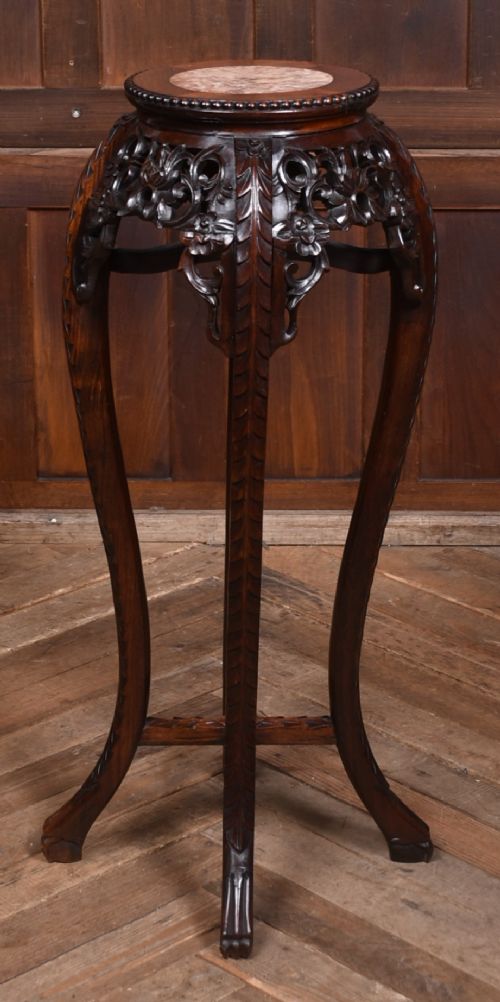


Chinese Marble Display Pedestal
A Chinese marble display pedestal brings tactile weight and botanical focus to a room, holding urns and plants aloft.
Chinese Marble Display Pedestal
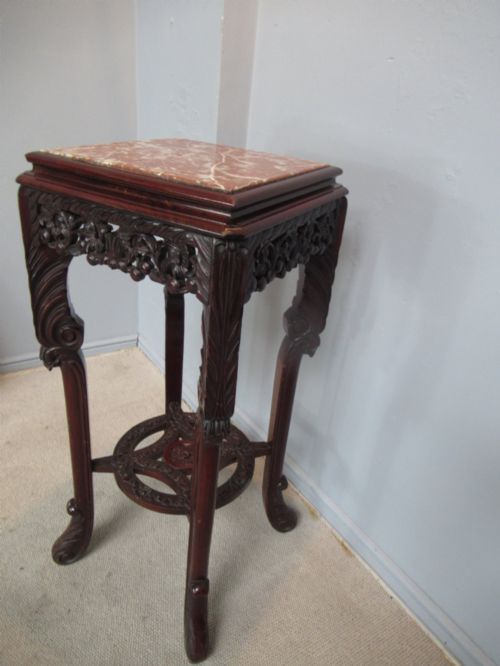
A chinese marble display pedestal stands as a functional focal point, most frequently encountered on this page as a plant stand, jardiniere stand, or occasional side table. These pieces serve to elevate heavy earthenware, bronze urns, and botanical specimens within domestic interiors.
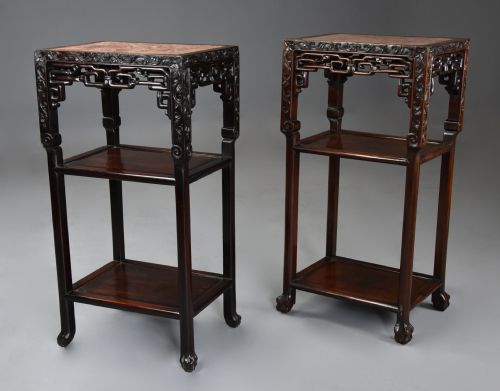
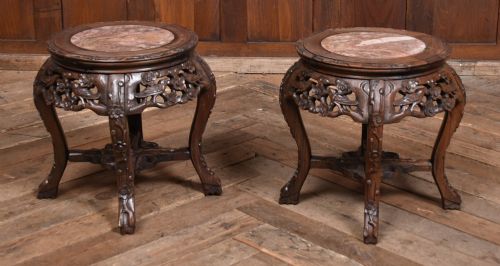
The objects span from the nineteenth century into the early twentieth century, encompassing Victorian interpretations and Qing Dynasty export pieces. Forms range from compact single-tier vase supports to larger rectangular or multi-tiered tables designed for specific display purposes.
Materials and construction methods
Craftsmen built these supports primarily using dense Asian timbers such as hardwood, rosewood, padouk, and hongmu, often selected for their ability to bear heavy weight. Marble inserts, including rouge marble, are snugly set into the wooden upper surfaces to provide a cool, stable resting place for wet pots and porcelain.
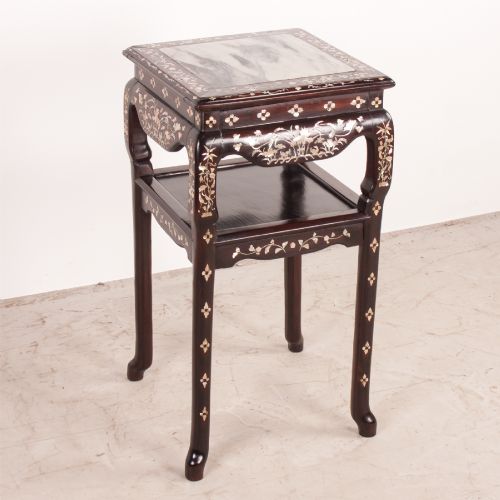
Joinery and surface detailing involve intricate hand-carving alongside selective mother-of-pearl inlay and ebonisation. Artisans combined traditional mortise and tenon framing with elaborate pierced aprons and cabriole or straight legs characteristic of Chinese export and Qing styles.
Listings feature items spanning the 1860s through the 1930s, encompassing both Victorian imports and Qing Dynasty export pieces.
Distinctions in construction and material grade
The upper tier of craftsmanship appears in the depth and clarity of the wood carving and the selection of the inset marble. Superior examples utilise dense, heavy timbers like padouk or rosewood with tightly figured grain, paired with richly veined marble slabs fitted flush into the frame.
Lesser versions rely on simpler joinery, softer timbers, or painted finishes, displaying less articulation in the pierced aprons and floral motifs. The weight of the timber and the rigidity of the assembled frame mark the primary divergence across the range.
The Chinese Marble Display Pedestal Glossary
- Jardiniere
- A large ornamental pot or container for plants, which these stands were specifically engineered to support.
- Padouk
- A heavy, durable tropical hardwood prized for its reddish hue and density, frequently utilised in nineteenth-century Chinese furniture.
- Rouge marble
- A deep red or reddish-brown variety of marble featuring prominent white or dark veins, commonly inset into nineteenth-century tabletop surfaces.
- Hongmu
- A traditional Chinese term translating to red wood, applied to dense, dark hardwoods used in fine Qing Dynasty furniture making.
- Mother-of-pearl
- An iridescent inner layer of shells used to create inlaid decorative motifs of flowers and geometric patterns on dark wood surfaces.
Chinese Marble Display Pedestal: Frequently Asked Questions
What were these stands originally used for?
These pieces served primarily to elevate heavy porcelain fishbowls, bronze urns, and potted plants within traditional interiors. Raising specimens off the floor protected wooden flooring from moisture and displayed botanical arrangements at eye level.
In reception rooms and parlours, they also functioned as small side tables for lamps, wine, or decorative ornaments. Their sturdy construction allowed them to bear substantial weight without tipping.
How do I distinguish Qing Dynasty pieces from later copies?
Examination of the timber weight, joinery tightness, and hand-carving depth provides the clearest indication of period authenticity. Nineteenth-century pieces typically exhibit dense hardwoods like rosewood or padouk with natural patina rather than heavy modern surface coatings.
Stylistic markers such as Qing Dynasty export carving conventions and traditional mortise construction help separate earlier examples from later twentieth-century interpretations.
Are these stands strong enough for heavy plants?
The dense tropical hardwoods and inset stone tops make these tables exceptionally sturdy and well-suited for heavy ceramic pots. Their original function required them to support large water-filled jardinieres and heavy bronze vessels safely.
Placing substantial planters on them remains practical today, provided the stone top is evenly loaded and the frame rests squarely on a level floor.
How do I care for the marble and hardwood surfaces?
Maintenance requires dusting the carved wooden frames regularly with a dry cloth and avoiding silicone-based polishes that build up over time. Natural wax applied sparingly helps preserve the finish of dense timbers like rosewood and padouk.
Marble inserts simply need wiping with a damp cloth, though coasters should be used beneath wet pots to prevent prolonged moisture contact with the surrounding wood frame.