
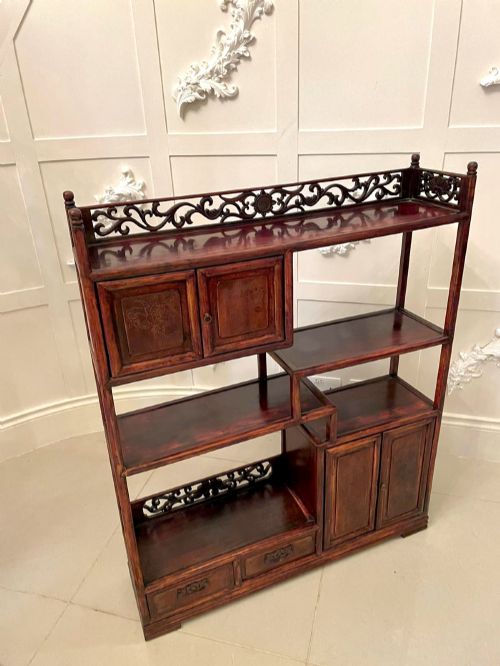
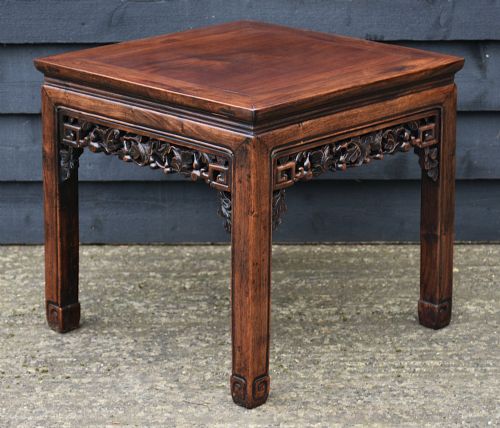
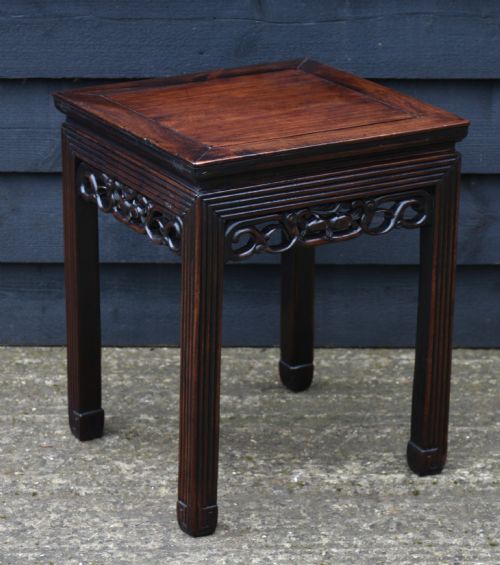
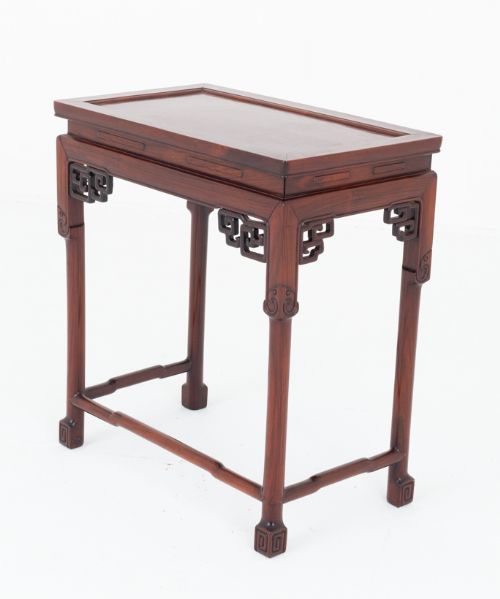


Chinese Hardwood Tea Stand
A Chinese hardwood tea stand brings rich texture and practical low form into a room, offering sturdy dense timber alongside traditional carving.
Chinese Hardwood Tea Stand
A chinese hardwood tea stand encompasses various low forms such as kang tables, opium tables, and occasional stands intended for functional display.
The pieces appearing on this page span the nineteenth century through the Edwardian period, reflecting Qing Dynasty influence and traditional craftsmanship.
Buyers frequently encounter square coffee tables, nests of tables, and multi-tier side tables made for intimate domestic spaces.
Materials and construction methods
Workshops utilised dense timbers including rosewood, hongmu, and amboyna, which provided the heavy weight and dark grain characteristic of these items.
Artisans employed intricate hand carving to decorate surfaces with motifs such as dragons, whilst occasional examples integrated marble or brass components.
Assessing quality and execution
Superior examples display crisp, deep hand carving where floral or dragon motifs retain sharp relief without blurring or softening.
Construction rigidity and timber selection separate finer tables from standard utility pieces, with dense rosewood and hongmu commanding attention for their solid heft.
The Chinese Hardwood Tea Stand Glossary
- Hongmu
- A dense tropical hardwood favoured in traditional Chinese furniture making for its deep reddish-brown colour and heavy weight.
- Kang table
- A low table traditionally placed upon a heated brick bed in northern China for serving tea or dining.
- Amboyna
- A highly figured, mottled wood utilised as a decorative veneer on select occasional tables.
- Chinoiserie
- European artistic styles reflecting Chinese motifs and decorative techniques.
- Qing Dynasty
- The final imperial dynasty of China, spanning from the seventeenth to the early twentieth century, which defined these traditional aesthetic forms.
Chinese Hardwood Tea Stand: Frequently Asked Questions
What is a Chinese hardwood tea stand used for?
These tables served primarily for serving tea, holding ceremonial objects, or supporting display items within traditional domestic settings. Their low profile suited sitting or kneeling arrangements.
Today, buyers utilise them as coffee tables, lamp tables, or prominent display stands in living spaces.
How do I identify a Qing Dynasty piece?
Authentic period pieces display traditional joinery methods without modern metal fasteners, alongside dense timber such as hongmu or rosewood.
Hand-carved motifs like dragons or floral patterns reflect the traditional craftsmanship characteristic of the nineteenth century and transitional eras.
How do I care for antique hardwood furniture?
Maintain stable room humidity to prevent timber from splitting or warping over time. Avoid placing tables near direct heat sources or strong sunlight.
Dust regularly with a dry cloth and occasionally apply natural wax to preserve the dark grain of rosewood and hongmu.