



Chinese Wooden Pedestal Stand
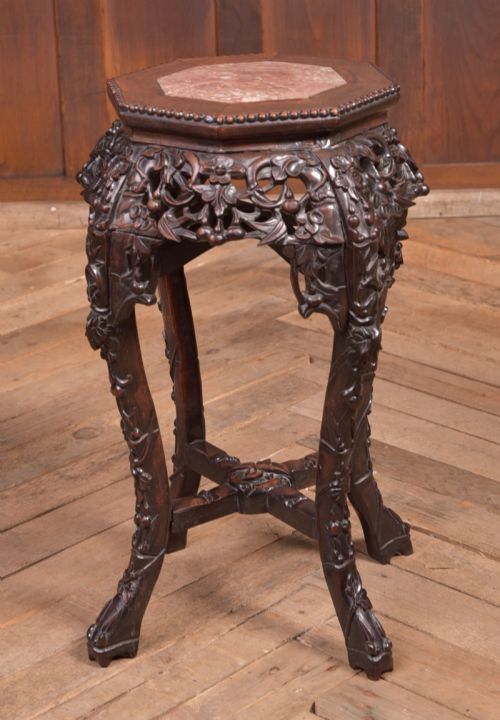
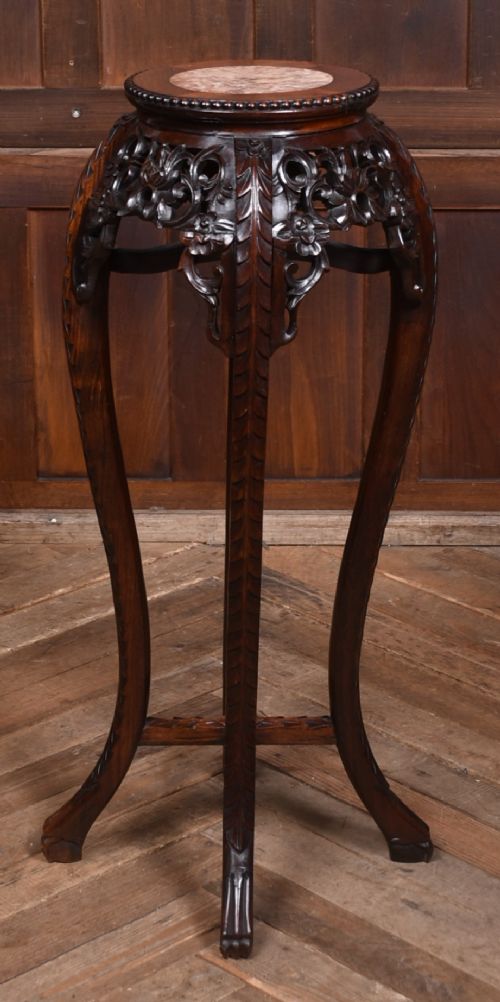
A chinese wooden pedestal stand grounds a heavy ceramic vessel or bronze urn with dense carved timber and inset stone.
Chinese Wooden Pedestal Stand
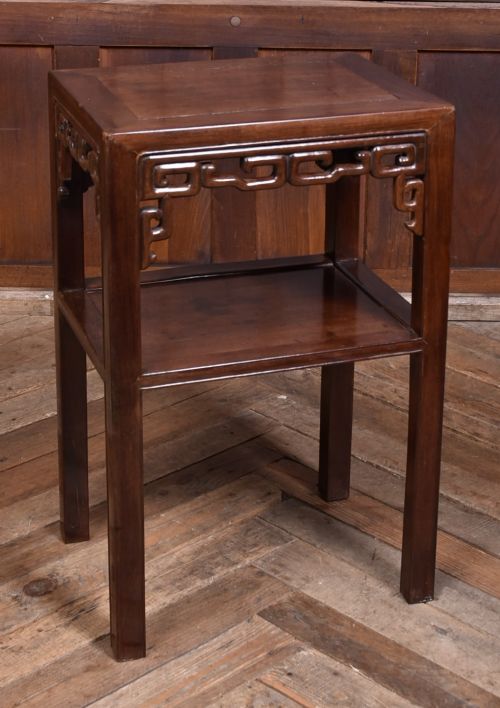
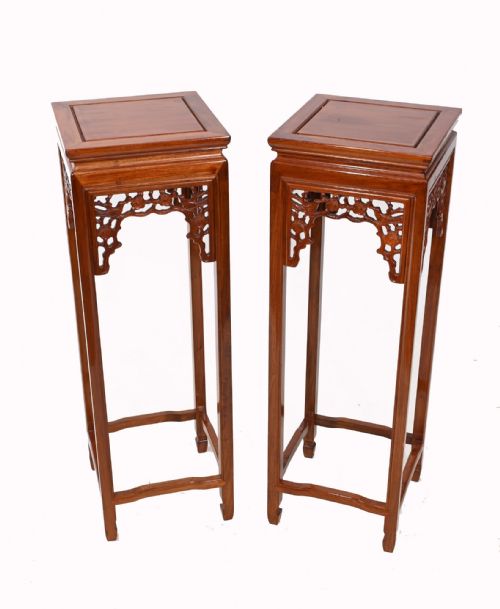
When you search for a chinese wooden pedestal stand, you encounter low plant supports, tall torchères, and multi-tiered urn tables designed to elevate decorative objects within a room. These domestic items function equally as vase tables, occasional side tables, and jardiniere stands.
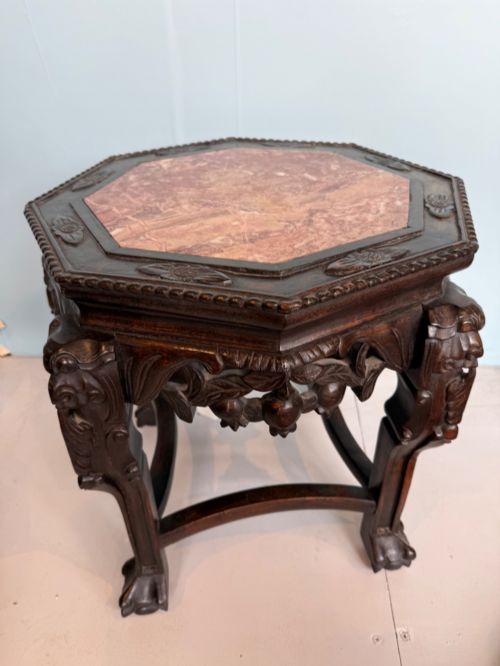
The version you meet most frequently on this page is the nineteenth century hardwood plant stand featuring an inset marble top and heavily carved apron. Makers constructed these forms to support heavy porcelain bowls and bronze vases without tipping.
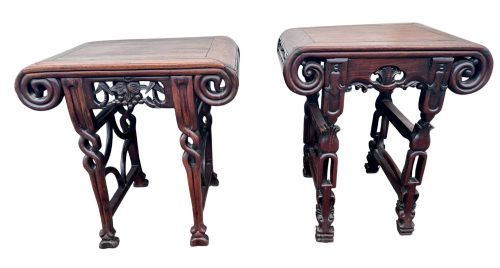
Most examples originate from the Qing Dynasty and the subsequent Victorian era, reflecting both traditional Chinese design and the nineteenth century European appetite for Asian interiors. Their silhouettes range from simple round dish-top stools to towering carved torchères.
How they were made
Craftsmen utilised dense Asian timbers such as hongmu, padouk, huali, and rosewood, which possess the structural strength required to support inset marble slabs without warping. These heavy hardwoods permitted deep relief carving along the aprons and legs without compromising the integrity of the frame.
Makers integrated circular and multi-lobed rouge marble panels directly into the wooden tops, providing a cool, stable surface for damp plant pots and heavy ceramic urns. Artisans occasionally applied polychrome pigments, gilding, and lacquer to the wooden structures to add contrasting colour.
Some nineteenth century plant stands are sturdier than the heavy pots they were built to hold.
What varies in quality
The depth and crispness of the carved ornamentation separate standard production from superior pieces, as master carvers achieved notable dimension and undercut detail in the hardwood frames. Superior stands exhibit tight joinery that resists movement across the timber grain despite changes in atmospheric humidity.
The choice of inset stone also distinguishes the tier of the object, with figured rouge marble providing a more desirable surface than plain or unfigured varieties. The weight and density of the underlying rosewood or hongmu dictate the stability of the entire pedestal.
The Chinese Wooden Pedestal Stand Glossary
- Hongmu
- A dense, heavy tropical hardwood utilised in traditional Chinese furniture making, often translated simply as red wood. It takes a dark, rich polish that resists heavy wear.
- Torchère
- A tall, slender standing pedestal or candlestick designed to elevate a light source, plant, or decorative urn. These vertical stands often feature elaborate pillar carvings and tripod bases.
- Jardiniere stand
- A low or medium table specifically constructed to hold a large ceramic flower pot or jardiniere. They frequently incorporate marble inserts to protect the wood from moisture.
- Padouk
- A durable tropical timber with a reddish hue used for fine nineteenth century Asian furnishings. It provides exceptional strength for intricate structural carvings.
- Dish-top
- A tabletop carved with a raised, concave rim resembling a shallow dish, designed to prevent rolling objects from sliding off the edge. This form appears frequently on nineteenth century stools and small tables.
Chinese Wooden Pedestal Stand: Frequently Asked Questions
What is a chinese wooden pedestal stand used for?
These stands serve primarily to elevate heavy porcelain vessels, bronze urns, and large potted plants above floor level. Their robust construction allows them to double as occasional side tables or lamp tables in domestic interiors.
Historically, they framed important decorative accents within a reception room, creating vertical hierarchy among furnishings. Today, buyers utilise them to display sculpture and ceramics while introducing dense carved timber into a space.
How do I identify a Qing Dynasty stand?
Qing Dynasty stands display dense tropical hardwoods like hongmu and rosewood, paired with deep, naturalistic carvings of dragons, foliage, or floral motifs. They frequently incorporate inset marble panels designed to hold heavy planters.
Examining the construction reveals traditional joinery methods that avoid modern metal fastenings. The presence of nineteenth century wear patterns on the timber surface helps confirm the age of the piece.
Why do these stands have marble tops?
Marble inserts provide a stable, heat-resistant, and waterproof surface that protects the surrounding hardwood from damp soil and leaking water. This practical feature allowed owners to place heavy potted plants directly on the furniture without rotting the timber.
In addition to utility, the cool stone surface created a visual contrast against the dark carved rosewood or hongmu frame. Rouge and grey marble varieties were chosen to complement the grain of the wood.
Where should I place a torchère stand?
A tall torchère stand suits empty corners, narrow hallways, or flanking spaces beside larger seating arrangements. Placing a tall vase or sculptural figure on top completes the vertical composition.
Because these stands are tall and narrow, positioning them out of heavy foot traffic prevents accidental tipping. Selecting a stable location ensures the heavy hardwood base supports the weight of the item displayed above.