




Chinese Hardwood Display Stands
Chinese hardwood display stands are functional platforms crafted to elevate porcelain, bronze and plants, bringing classical form and rich timber grain to interior spaces.
Chinese Hardwood Display Stands
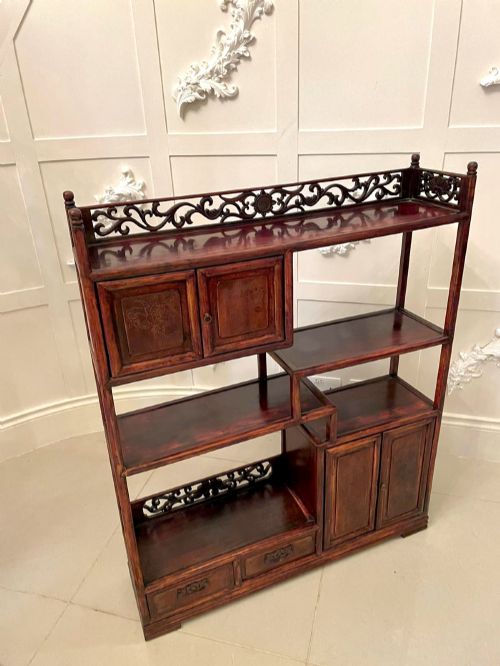
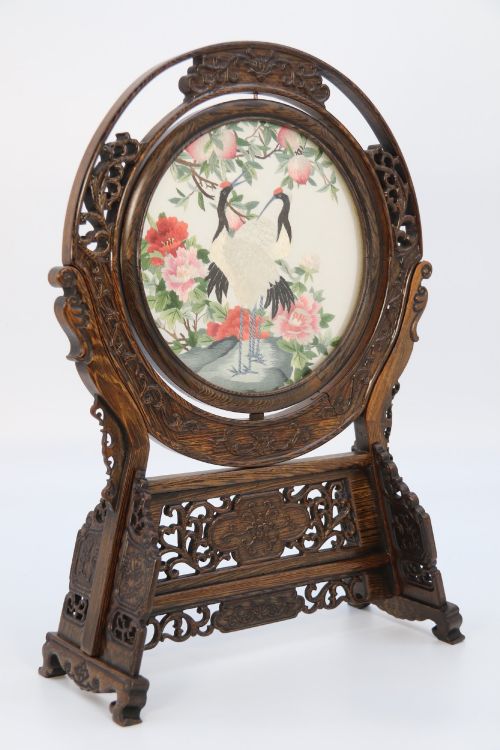
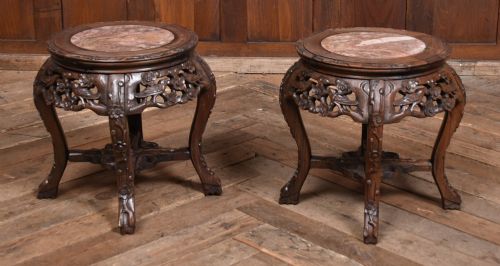
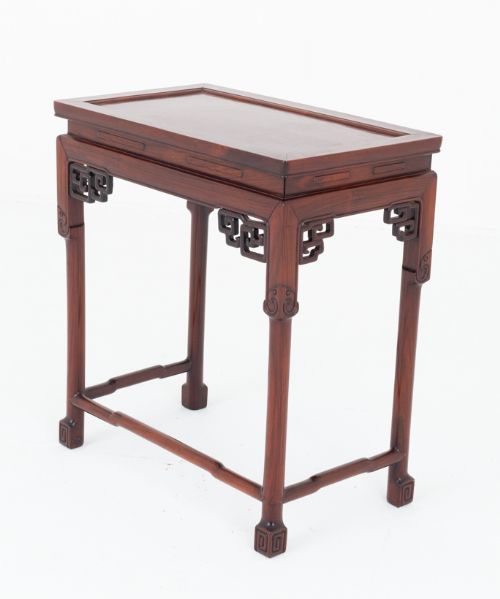
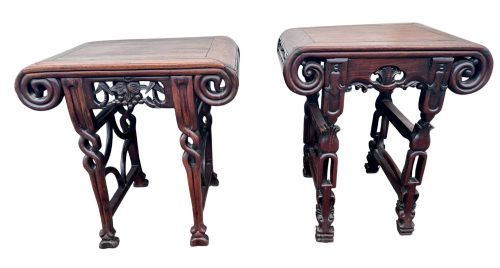
Chinese hardwood display stands encompass plant stands, jardiniere stands, occasional tables and low display cabinets dating from the nineteenth and early twentieth centuries. These pieces emerge predominantly from the Qing dynasty and the Chinese export trade, reflecting traditional craftsmanship adapted for domestic interiors.
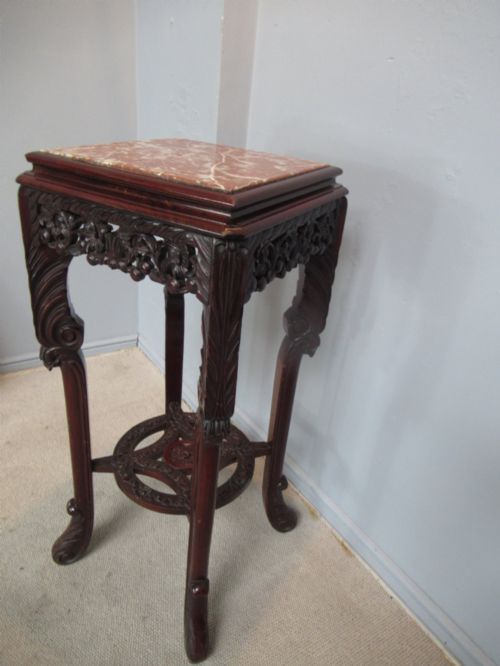
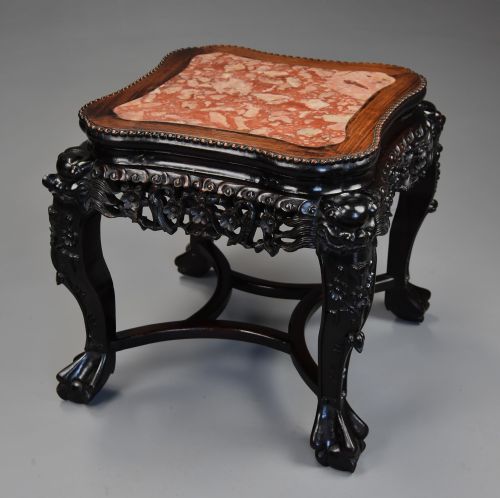
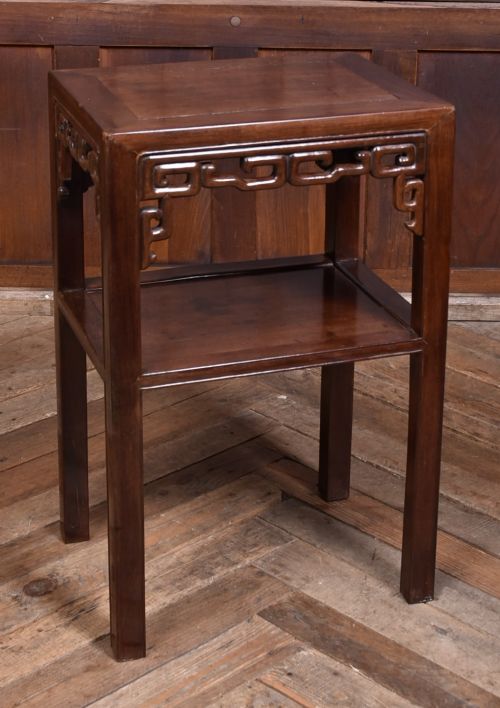
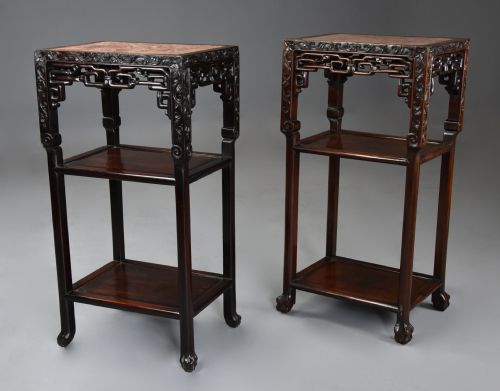
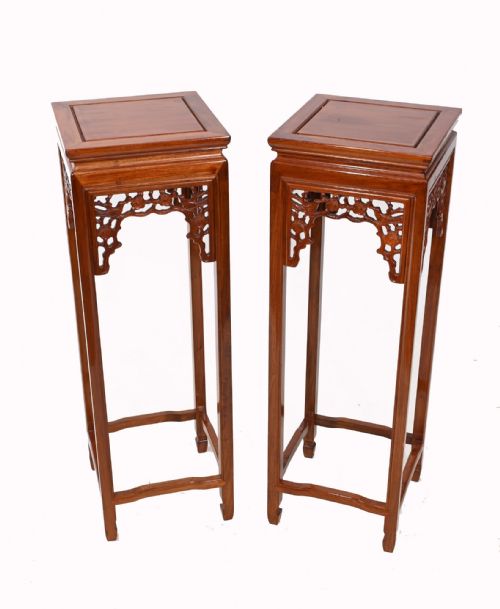
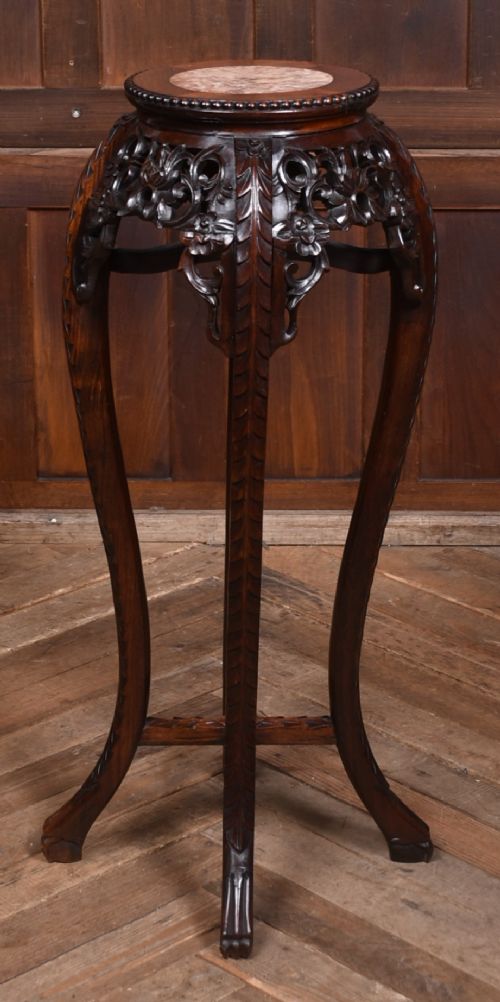
Buyers most frequently encounter pot stands and vase stands fitted with inset marble or porcelain panels. Forms range from compact single-tier tables to tall pedestals and multi-tiered Hongmu stands designed to support heavy decorative items.
Materials and Technique
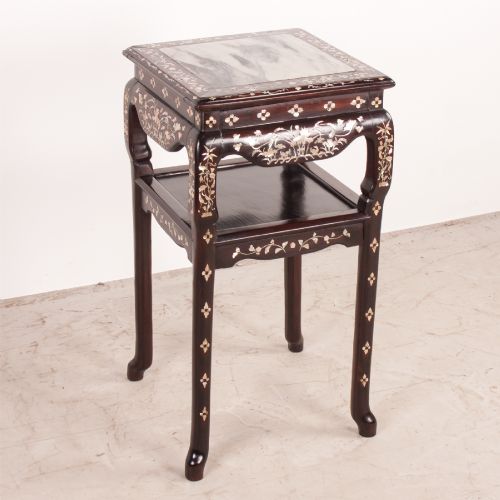
Construction relies on dense tropical timbers including rosewood, padouk and hongmu, often shaped with traditional joinery that accommodates wood movement. Carved decoration appears frequently alongside detailed inlay work utilising mother-of-pearl, brass or bone.
Surfaces frequently incorporate inset panels of rouge or white marble, ceramic tiles or glass. Skilled carvers utilise deep relief techniques to create intricate floral, foliage or dragon motifs across apron rails and cabriole legs.
Many nineteenth-century pot stands incorporate inset rouge marble tops designed to withstand moisture from heavy ceramic planters.
Craftsmanship and Material Depth
Quality rests upon the density of the timber, the crispness of the hand-carved detail and the stability of the joinery. Superior examples display deeply undercut carving and tightly fitted marble or porcelain inserts without filler.
The choice of wood dictates the weight and resonance of the piece, with dense rosewood and hongmu sitting at the upper end of the scale. Refinement in the proportions of the apron and the fluidity of the leg curves distinguish finer workshop output from simpler utility pieces.
The Chinese Hardwood Display Stands Glossary
- Hongmu
- A traditional Chinese term for dense, red-brown hardwoods used in fine furniture construction. It translates literally as red wood and encompasses several heavy tropical species.
- Jardiniere stand
- A tall or low table specifically designed to support a heavy ceramic plant pot or flower bowl. These stands usually feature reinforced tops to bear significant weight.
- Padouk
- A heavy, durable timber exhibiting a reddish hue that darkens with age and exposure to light. It provides a stable base for intricate woodcarving.
- Marble inset
- A polished slab of stone fitted flush into the wooden top of a table or stand. This surface protects the wood from moisture and heat associated with plants and vessels.
Chinese Hardwood Display Stands: Frequently Asked Questions
How were these stands originally used?
These platforms served to elevate prized decorative objects, incense burners and heavy porcelain planters within traditional rooms. Raising the vessel protected delicate scholar's items and allowed air to circulate beneath large plant pots.
In Western interior design contexts, they transitioned into occasional tables for lamps, urns and decorative vases. Their sturdy construction made them suitable for heavy items that required a secure display surface.
How do I identify the wood type?
Identifying the timber involves assessing the weight, grain pattern and natural colour of the bare wood surfaces. Rosewood and hongmu exhibit deep reddish-brown tones with heavy, tight grain structures that feel exceptionally dense.
Closer inspection under good light reveals whether the surface relies on natural timber finishing or applied lacquer. Padouk tends to display a bright red cast when freshly cut, which matures into a rich dark brown over decades.
How do I clean a hardwood stand?
Maintenance requires dry dusting with a soft lint-free cloth to prevent the accumulation of dirt within deep carvings. Avoid using silicone polishes or commercial sprays that can penetrate the open grain and attract dust.
Occasional application of pure beeswax helps nourish dry timber and maintains a soft protective sheen. Keep the stands away from direct heat sources and strong sunlight to prevent timber shrinkage and splitting.