


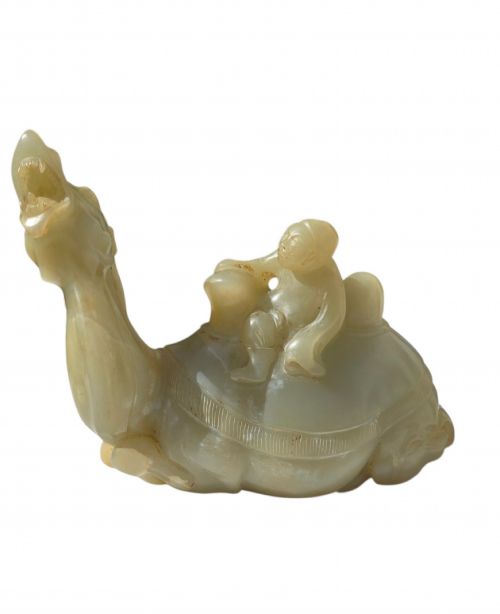


Chinese Hardstone Sculpture
Chinese hardstone sculpture encompasses carved figures, vessels and botanical studies shaped from jade, agate, quartz and bowenite.
Chinese Hardstone Sculpture
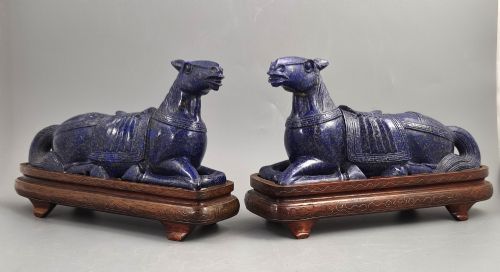
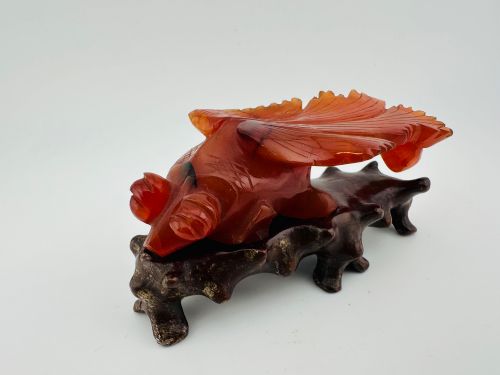
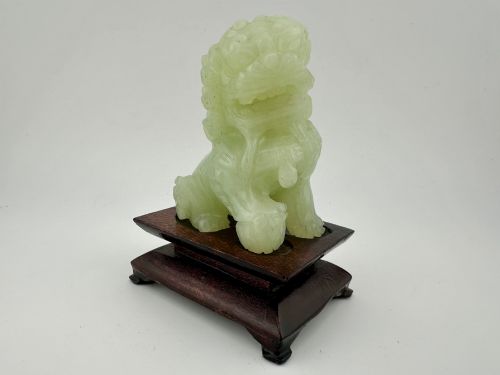
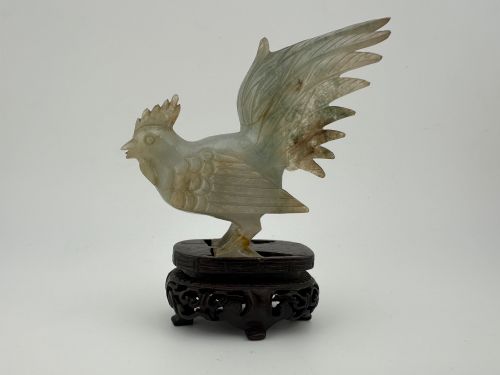
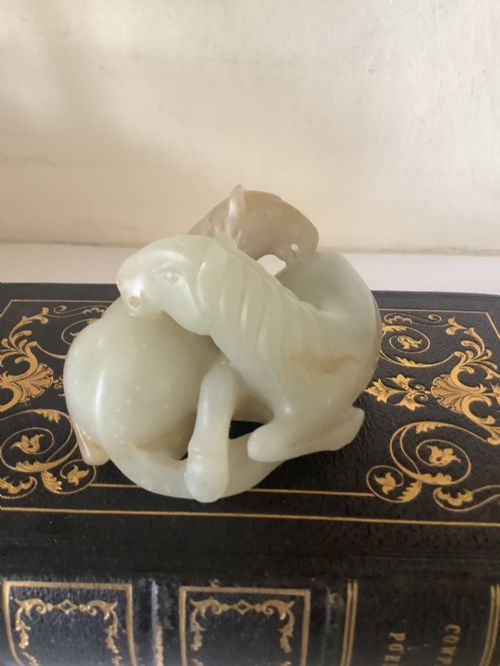
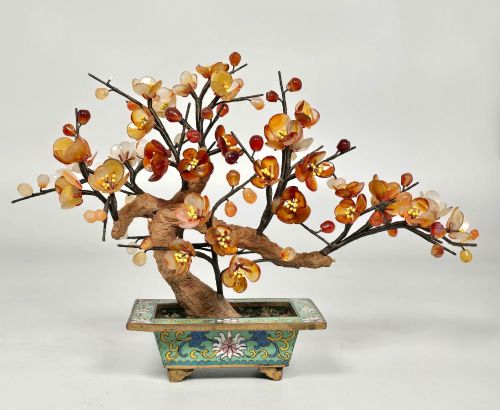
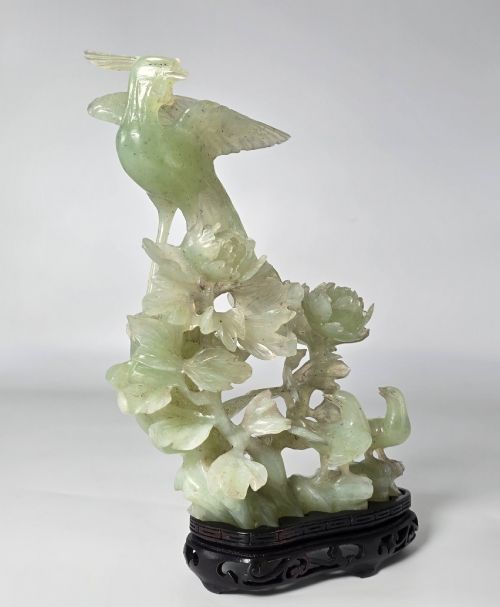
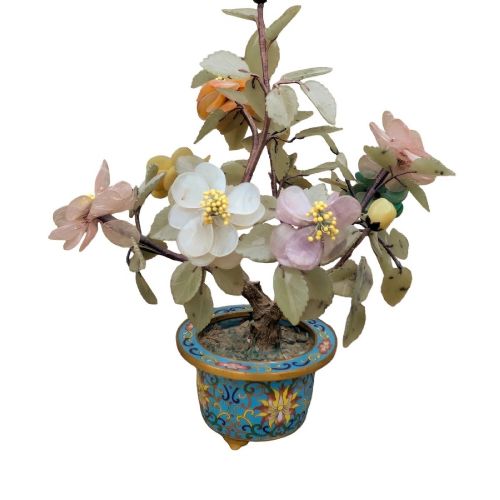
Chinese hardstone sculpture comprises carved stone figures, ceremonial vessels and table ornaments fashioned from materials within the jade family alongside agate, quartz and bowenite. When you examine a Chinese hardstone sculpture, you encounter forms ranging from miniature fish and birds to monumental animal groups and flowering bonsai trees set in cloisonne jardiniere pots.
The pieces available span the eighteenth century, the nineteenth century, the Victorian era, the nineteen-hundreds, the nineteen-twenties and the nineteen-thirties, reflecting styles from the Qing Dynasty, the Republic Period and Chinoiserie. Sculptures of sages, horses, camels with riders and roosters appear alongside complex botanical arrangements featuring hardstone flowers.
Materials and construction
Carvers shaped these works from dense, stubborn minerals including jade, jadeite, bowenite serpentine, agate and quartz using abrasive sand and rotary tools. The natural colour variations and inclusions within the raw stone dictated the composition of each carved figure or floral element.
Many botanical compositions incorporate mixed hardstones wired or fixed together to form flowering prunus bonsai trees, mounted securely inside cloisonne enamel or brass jardiniere pots often raised on carved hardwood bases.
Chinese Hardstone Sculpture Retail Price Guide 2026
Typical asking prices for chinese hardstone sculpture among the pieces listed under this phrase on Sellingantiques today, from the lower quarter to the upper quarter. They describe what is for sale here now, not the wider market.
Listings feature periods spanning the eighteenth century, the nineteenth century, the Victorian era, the nineteen-hundreds, the nineteen-twenties and the nineteen-thirties.
Quality and execution
The degree of natural translucency and purity in the chosen mineral dictates visual merit, with pale green jade and fine bowenite commanding attention for their luminosity. Superior pieces display anatomical precision in animal and human subjects, such as the musculature of horses or camels, combined with disciplined undercutting that creates genuine depth.
The integration of mixed media defines the standard of complex decorative works, where the joinery between hardstone petals, stems and cloisonne pots requires structural stability alongside aesthetic harmony.
The Chinese Hardstone Sculpture Glossary
- Bowenite
- A compact, hard serpentine mineral often resembling jade, frequently utilised for substantial animal carvings.
- Cloisonne
- An enamel technique where metal wire creates cells on a vessel surface, frequently seen on the jardiniere pots housing hardstone bonsai.
- Qing Dynasty
- The final imperial dynasty of China, spanning from sixteen-forty-four to nineteen-twelve, whose stylistic traditions heavily influence these sculptures.
- Republic Period
- The era in Chinese history following the imperial dynastic system, lasting from nineteen-twelve to nineteen-forty-nine, noted for distinctive decorative arts.
Chinese Hardstone Sculpture: Frequently Asked Questions
What is a hardstone sculpture?
A hardstone sculpture is a three-dimensional carved object fashioned from semi-precious minerals other than soft stones like alabaster or soapstone. These materials include jade, agate, quartz and serpentine.
Carvers exploit the natural hardness and mineral grain of these stones to create durable figurines, vessels and botanical ornaments.
How do I care for my sculpture?
Keep hardstone sculptures away from direct sunlight and sudden temperature shifts to protect both the mineral and any secondary mounting materials. Dust the carved surfaces gently with a soft, dry cloth.
Avoid chemical cleaners, particularly on pieces incorporating mixed media like cloisonne enamel or delicate hardwood bases.
How are bonsai trees made from stone?
Stone bonsai trees utilise carved hardstone petals, leaves and fruit wired together into naturalistic branches. These botanical sculptures are then anchored securely inside decorative cloisonne or brass jardiniere pots.
Surfaces are often finished with stone chips or resin to simulate soil around the base of the trunk.
How do I identify the period?
Dating relies on stylistic markers associated with dynasties, republics and Victorian export tastes, combined with material characteristics and mounting techniques. Pieces linked to the Qing Dynasty or Republic Period exhibit specific carving depths and decorative motifs.
Examining the wear on the base, the composition of the stone and any accompanying hardwood stands provides further chronological context.