
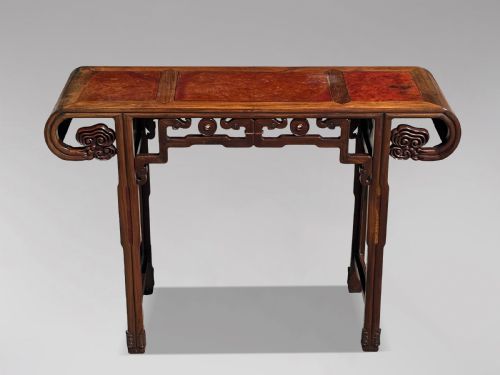


Chinese Hallway Console
These Chinese hallway console tables bring structural timber and centuries of carving tradition straight into a narrow passage.
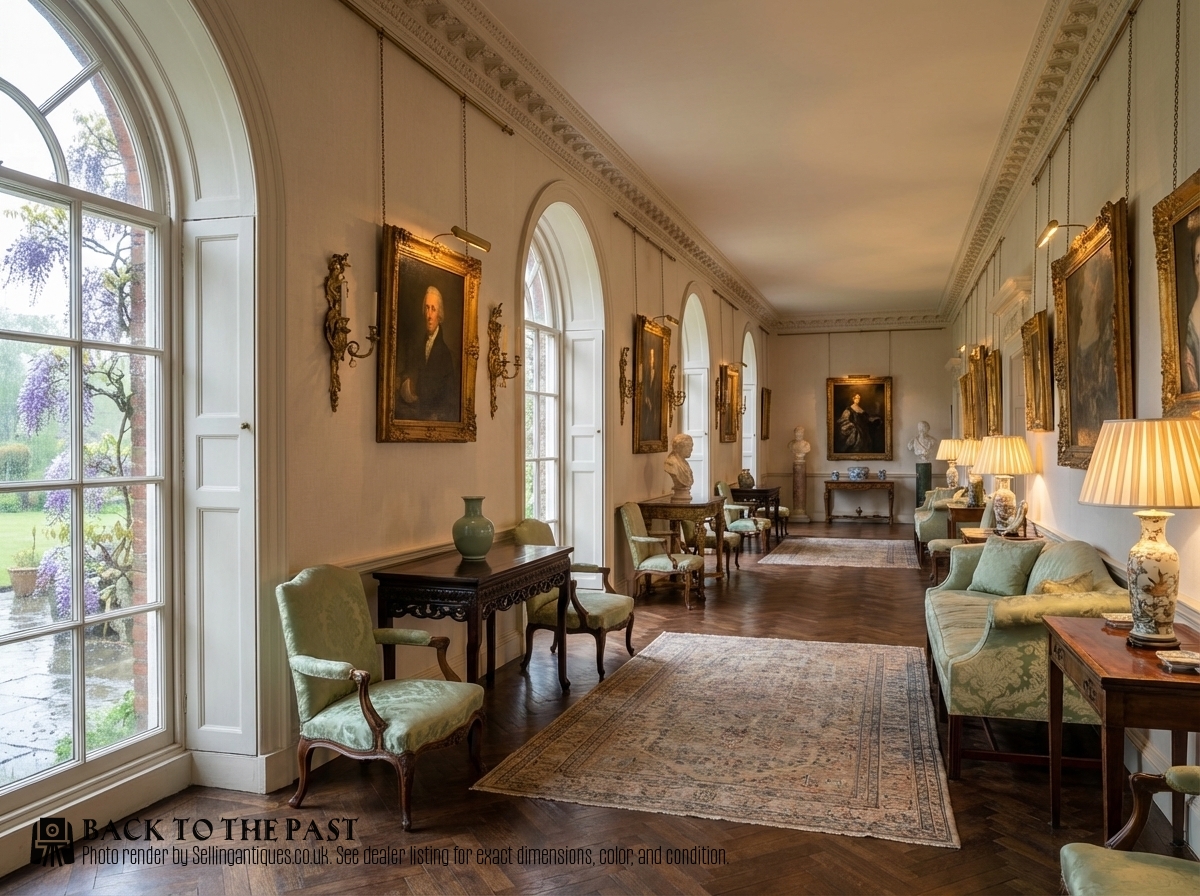
Chinese Hallway Console
A Chinese hallway console takes many forms across the selection here, spanning altar tables, narrow console tables, and sideboards designed to fit against a wall.
The pieces appearing on this page mostly belong to the nineteenth century and the Qing dynasty, encompassing both export pieces and provincial items.
Makers shaped these tables from dense timbers like elm, hongmu, and lacquered wood, sometimes pairing them with glass or brass details.
Materials and construction methods
Carpenters relied on substantial native hardwoods, elm, and hongmu to build durable frames that could support heavy objects without warping.
Surface finishes include traditional red lacquer and lacquered wood, often applied over carved panels to give a rich, protective coating.
Listings feature nineteenth-century pieces constructed from elm, hongmu, and lacquered wood.
Judging the quality of a console
Depth of carving and the crispness of traditional motifs distinguish finer examples from simpler provincial pieces.
The choice of primary timber heavily dictates grade, with dense hongmu and figured amboyna marking out superior cabinetwork compared to basic elm.
The Chinese Hallway Console Glossary
- Altar table
- A long, narrow table originally used for ritual purposes in Chinese homes, featuring upturned ends or flange details.
- Hongmu
- A dense, heavy Chinese hardwood often translated as red wood, prized for its deep natural colour and fine grain.
- Qing Dynasty
- The final imperial dynasty of China, lasting from sixteen forty-four until nineteen twelve, which produced much of the carved furniture seen today.
- Chinoiserie
- European decorative style reflecting Chinese artistic influences, frequently found in nineteenth-century interpretations.
- Lacquer
- A durable natural resin applied in multiple layers to wood surfaces, often finished in vibrant red or black.
Chinese Hallway Console: Frequently Asked Questions
Where should I place a console table?
These narrow tables suit entrance halls, narrow corridors, and reception spaces where floor space is limited. Their shallow depth allows them to sit flush against a wall without blocking movement.
Positioning one beneath a mirror or artwork creates a balanced focal point upon entering a room.
How do I care for lacquered wood?
Dust surfaces regularly with a soft, dry cloth to prevent abrasive particles from scratching the delicate finish. Avoid placing lacquer in direct sunlight or near heat sources to prevent cracking.
Keep humidity levels stable in the room to protect both the timber substrate and the traditional coating.
What is an altar table?
Altar tables feature elongated proportions and are traditionally characterised by narrow tops and distinctive end flanges. They served ceremonial functions in domestic ancestral halls before finding a place in modern interiors.
Their sturdy construction makes them ideal for holding lamps, vases, and decorative objects.
How can I tell the period of a piece?
Examine the timber shrinkage, tool marks, and joinery methods visible on the underside and interior of the table. Nineteenth-century examples often display hand-cut joinery and heavy native hardwoods.
Stylistic cues like Qing dynasty carving patterns or Kangxi period design influences help narrow down the date of manufacture.