


Chinese Figure Artwork
These pieces of chinese figure artwork span centuries of skilled portraiture and narrative depiction, offering authentic glimpses into traditional dress and domestic scenes.
Chinese Figure Artwork
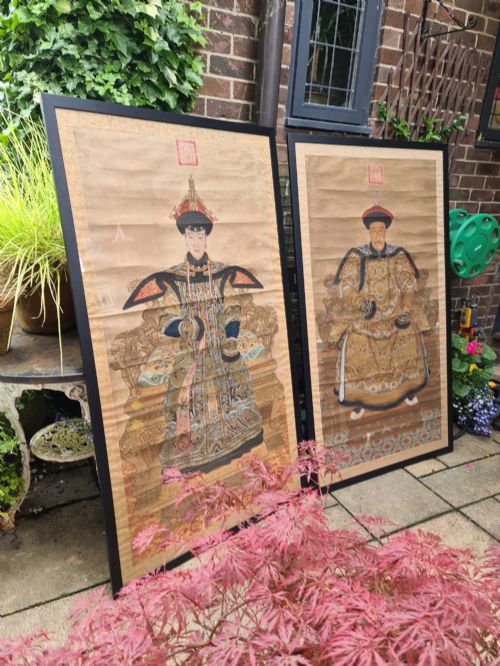
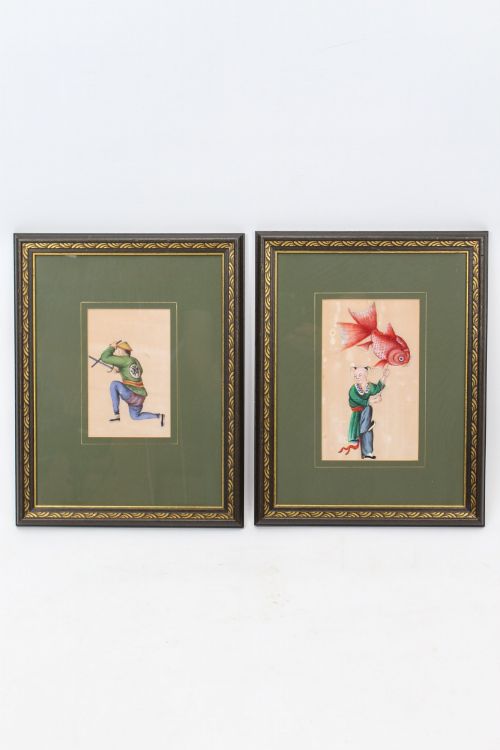
You are most likely to meet pith paper paintings and framed ancestral scrolls from the nineteenth century on this page. These portable works created for export capture daily life, court figures and mythological subjects with meticulous brushwork.
The materials range from delicate pith paper and silk to substantial reverse painted mirror-glass and carved wood. Alongside flat wall art, the category encompasses dimensional items such as gilt and polychrome temple guardians and carved snuff bottles.
Materials and Technique
Makers utilised traditional mediums including watercolours, gouache and ink applied to specialised supports like pith paper, silk and canvas. Pith paper, often misnamed rice paper, requires careful handling due to its cellular structure that absorbs pigment with notable brilliance.
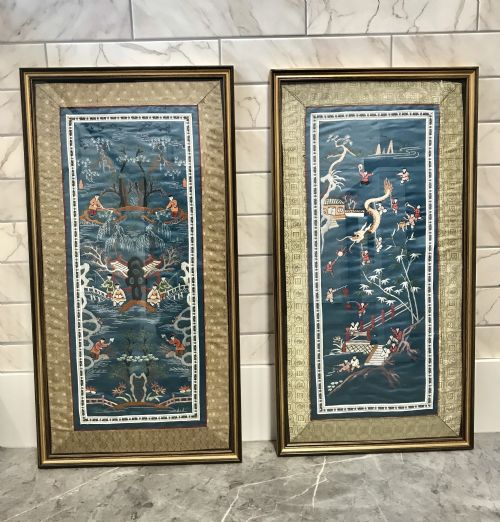
Textile pieces demonstrate intricate hand-sewn silk embroidery, bringing figures and botanical elements to life through varied thread techniques under glass. Reverse painted mirror-glass works required artists to paint in meticulous detail directly onto the rear of the glass plate in reverse order.
Sculptural pieces involve carved wood finished with gilt and polychrome paint layers, as seen in temple guardian figures. Lacquer panels employ layered resin finishes to create durable, lustrous backgrounds for figurative compositions.
Listings feature nineteenth-century pith paper paintings, silk embroidery panels under glass, and carved wooden temple guardians.
Assessing Quality
Condition and preservation heavily influence the standing of paper and textile items, given the delicate nature of pith and silk over generations. Intact framing, original mounting and minimal pigment flaking separate well-preserved historical survivals from heavily compromised pieces.
Ya Ming
The Chinese Figure Artwork Glossary
- Pith paper
- A delicate natural material formed from the spongy interior of Tetrapanax papyrifer stems, commonly used in nineteenth-century Chinese export paintings. It has a velvet-like texture that holds water-based pigments with exceptional vibrancy.
- Gouache
- An opaque water-based paint consisting of pigment, water, and a binding agent such as gum arabic. It provides solid, flat areas of intense colour in many nineteenth-century paintings.
- Reverse painted mirror-glass
- An intricate technique where the artist paints directly onto the back of a glass panel to be viewed from the front. This method creates a luminous, reflective finish characteristic of specific export items.
- Ancestor scroll
- A formal portrait painting commissioned to honour deceased family members for ancestral halls. These large hanging scrolls depict seated figures in ceremonial attire with strict attention to lineage details.
- Snuff bottle
- A small, intricately carved container used for holding powdered tobacco during the Qing dynasty and later periods. They demonstrate miniature craftsmanship in materials such as coral and carved stone.
Chinese Figure Artwork: Frequently Asked Questions
What is pith paper?
Pith paper is a delicate, cellular material sliced from the pith of a specific plant native to southern China. Nineteenth-century artists used it extensively for export paintings because it absorbs water-based pigments with a distinct velvety luminescence.
Paintings executed on pith require careful preservation behind glass to prevent the fragile surface from cracking or flaking over time. Despite its fragility, surviving examples retain remarkably vivid colours.
How were ancestral scrolls displayed?
Ancestral scrolls were hung in family shrines or reception rooms during important memorial rituals and festivals. Families used these formal portraits to pay respects to lineage predecessors and maintain familial continuity.
Because they were rolled up between ceremonies and stored away, many surviving scrolls retain their structural integrity. They depict subjects in formal court dress with specific insignia denoting rank and status.
What is reverse painted glass?
Reverse painted mirror-glass involves applying pigment to the rear side of a glass plate so the finished image is viewed through the front. The artist must paint fine details and background elements first, reversing standard compositional steps.
This technique produces a mirror-like sheen that gives the artwork depth and brightness. Such pieces were popular commodities for export to Western markets during the nineteenth century.
How do I care for silk embroidery panels?
Silk embroidery panels need protection from direct sunlight and high humidity to prevent the silk threads from fading and degrading. Keeping them framed securely behind glass prevents dust accumulation on the textured surface.
Stable indoor temperatures help preserve the organic fibres of both the backing silk and the hand-sewn threads. Avoid hanging them in damp areas such as kitchens or unheated rooms.