


Oriental Brush Painting
These pieces of oriental brush painting and related scholar objects bring ink, paper and porcelain together for the desk.
Oriental Brush Painting
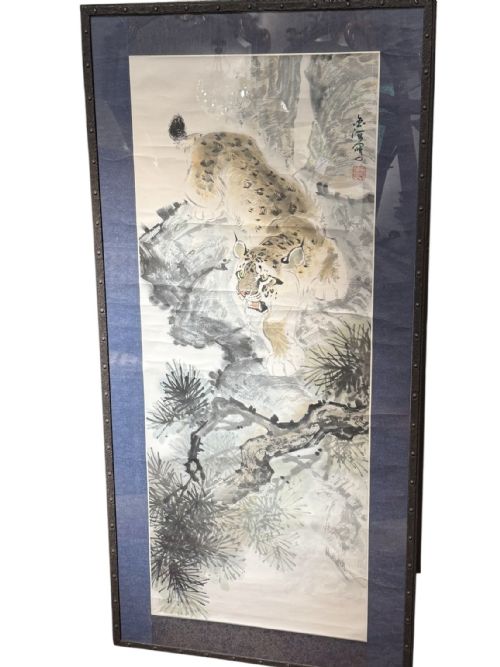
Oriental brush painting covers works on paper and album leaves executed in ink and watercolour, alongside the desk accessories that supported scholars. These items range from mid-century albums of sketches bearing artist seals to framed scrolls depicting subjects like snow leopards.
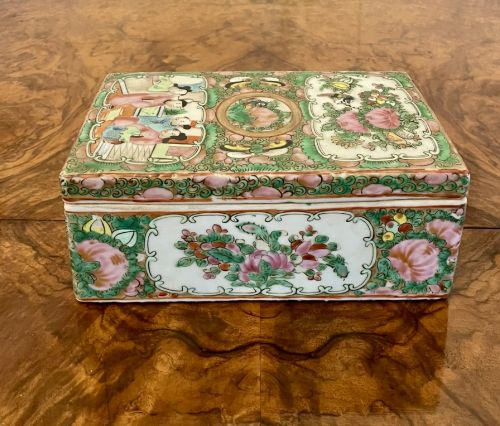
Ceramic forms closely connected to the scholarly desk also appear under this heading, notably porcelain brush pots and lidded pen boxes. Pieces span the eighteenth, nineteenth and mid-twentieth centuries, drawing on traditional Chinese techniques and Qing dynasty styles.
Materials and construction
Works on paper rely on traditional ink and watercolour applied directly to paper leaves or scrolls, frequently finished with artist seals. Framed pieces preserve these delicate painted surfaces behind glass.
Ceramic pieces such as brush pots and pen boxes utilise porcelain shaped from clay, then decorated with underglaze blue, overglaze enamels, or famille rose, verte and noire palettes.
A snow leopard gazes out from an early twentieth century scroll, bringing unexpected wildlife to the scholar's desk.
Judging quality in these objects
Quality rests upon the precision of the brushwork and the confidence of the ink line, whether on a scholar's painted album leaf or across the surfaces of a porcelain vessel. Finer examples display masterly control in figurative or floral scenes.
The sophistication of the palette and the clarity of the enamel work distinguish superior ceramics. Pieces carrying discernible signatures, seals or historical imperial styles command closer attention.
YA MING
The Oriental Brush Painting Glossary
- Bitong
- A traditional Chinese cylindrical brush pot designed to hold scholar's writing brushes. These vessels appear frequently in porcelain with painted scholarly or floral scenes.
- Famille rose
- A major palette of opaque enamel colours introduced in Chinese ceramics during the Qing dynasty. It is defined by its characteristic pink enamel derived from colloidal gold.
- Brush washer
- A small ceramic vessel used for cleaning ink brushes during calligraphy and painting. They often feature robust blue and white or monochrome glazes.
- Scroll
- A length of paper or silk mounted for display or rolling, carrying ink paintings or calligraphy. They are traditionally framed or stored rolled until presentation.
- Overglaze enamel
- Coloured glass decoration applied over a previously fired and glazed ceramic body, then fixed with a second, lower temperature firing.
Oriental Brush Painting: Frequently Asked Questions
How do I care for works on paper?
Works on paper and ink paintings require protection from direct sunlight to prevent fading of the pigments. Keeping them behind glass in stable humidity preserves the paper.
Avoid hanging scrolls or framed watercolours in damp rooms or areas prone to temperature fluctuations.
What is a brush washer?
A brush washer is a water container designed to rinse ink from brushes during painting or calligraphy sessions. They were shaped to hold water safely near the workspace.
These ceramic vessels often feature wide mouths and stable bases to prevent accidental tipping while in use.
How are Qing dynasty ceramics identified?
Qing dynasty ceramics are identified through their specific glazing techniques, enamel palettes such as famille rose or verte, and characteristic forms. Stylistic motifs like peonies and phoenixes offer further clues.
Examining the foot rim and the body paste helps determine the period of manufacture.