





Chinese Export Watercolor
Chinese export watercolor works are delicate paintings produced for foreign markets, offering a fascinating window into historical maritime scenes and botanical studies.
Chinese Export Watercolor
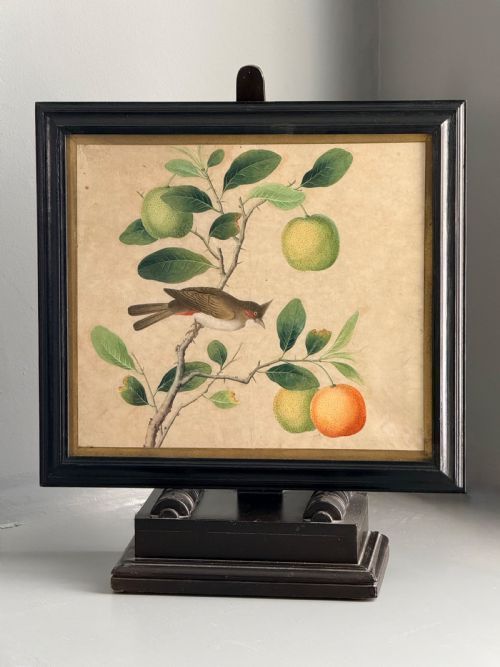
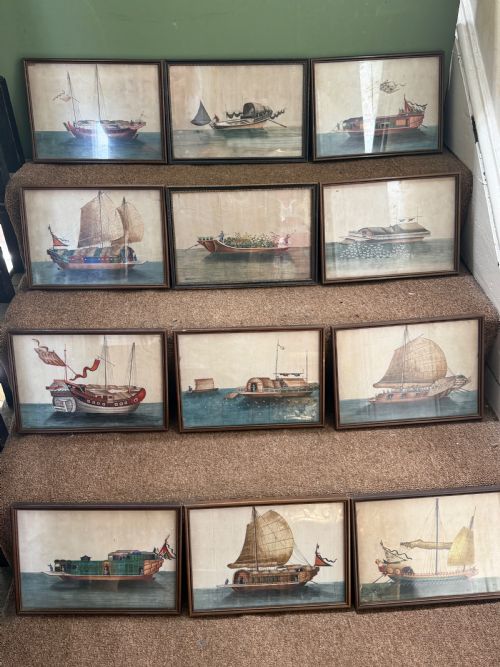
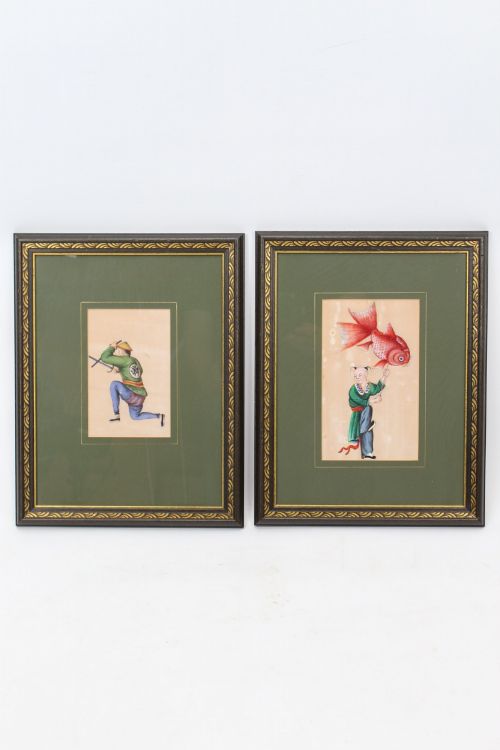
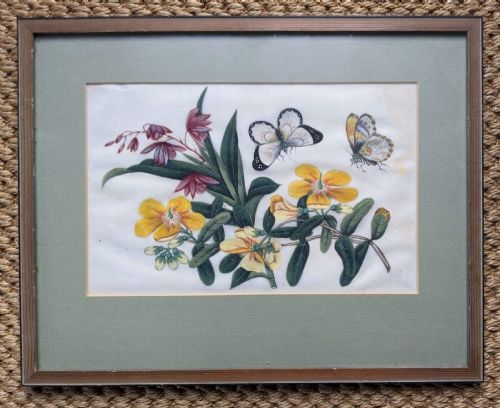
When buyers search for chinese export watercolor, they encounter a range of delicate works on paper and pith paper from the 18th century, Regency period, and 19th century. These pieces capture traditional subjects including maritime scenes with junks, intricate butterflies, and figural compositions tailored for Western patrons.
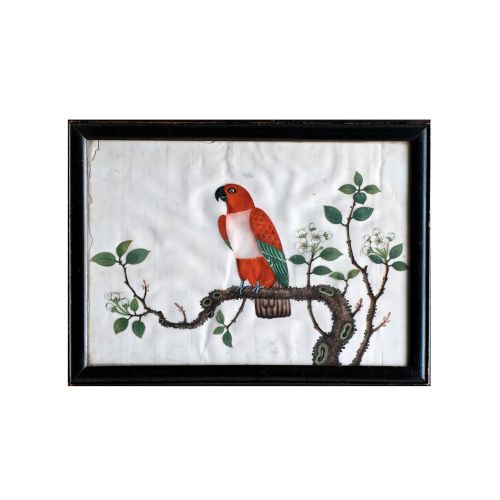
The most common format on this page consists of 19th century pith paper paintings, often framed and occasionally appearing in sets of twelve. These works showcase the vibrant pigments and meticulous brushwork characteristic of Canton studios during the Qing Dynasty.
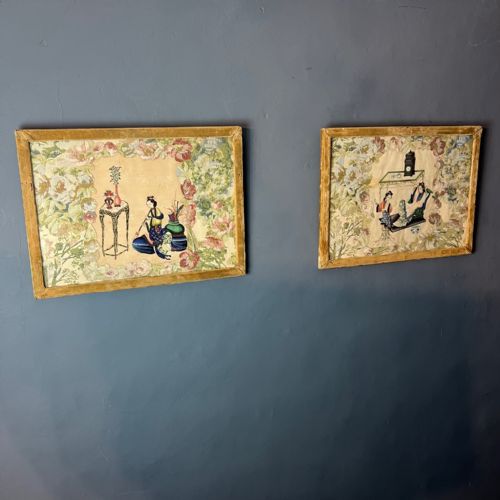
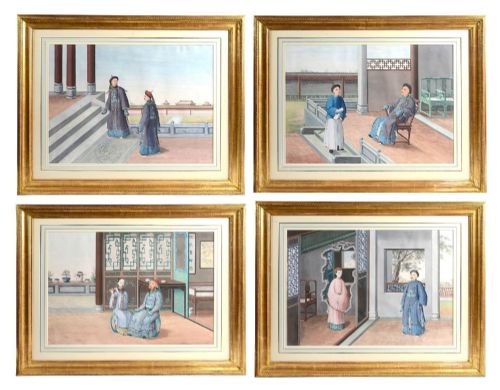
Examples span from small antique pairs to larger decorative groupings and sets from around 1900. Each piece reflects the cross-cultural exchange of the era, produced specifically for export to European and American collectors.
How they were made
Artists utilised water-based media such as watercolour and gouache applied directly onto prepared supports. The most distinctive substrate is pith paper, historically misnamed as rice paper, which possesses a unique spongy texture that absorbs brilliant pigments with striking luminosity.
Framed works commonly feature protective glass set within wood frames, frequently finished in ebonised wood to highlight the vivid colours of the painting. The application of gouache provided an opaque finish that preserved the intensity of the subjects over centuries.
Chinese Export Watercolor Retail Price Guide 2026
Typical asking prices for chinese export watercolor among the pieces listed under this phrase on Sellingantiques today, from the lower quarter to the upper quarter. They describe what is for sale here now, not the wider market.
Listings feature works spanning the 18th century, Regency period, Edwardian era, and late 1900, executed primarily in gouache and watercolor on pith paper and standard paper.
What varies in quality
The distinction between standard works and superior pieces lies in the precision of the brushwork and the complexity of the subject matter. Finer examples display meticulous detail in figurative elements and natural history subjects like insects, while lesser works show simpler execution.
Preservation of the fragile pith paper and the vibrancy of the original gouache pigments heavily influence the overall standard. Intact sets with uniform preservation command greater interest than isolated, degraded leaves.
The Chinese Export Watercolor Glossary
- Pith paper
- A delicate material cut from the spongy pith of the Tetrapanax papyrifer plant, commonly used as a painting surface in 19th-century export studios. It has a velvet-like texture that catches watercolour pigments uniquely.
- Gouache
- An opaque water-based paint composed of pigment, water, and a binding agent such as gum arabic. It dries to a smooth, matte finish that allows for vibrant colour saturation.
- Junk
- A traditional Chinese sailing ship with battened sails, frequently depicted in maritime export paintings of the period. These vessels were a primary subject for artists documenting trade and coastal life.
- Ebonised wood
- Timber treated to resemble ebony, typically through a staining and finishing process. It provides a dark, neutral border that frames brightly coloured export paintings.
- Regency
- A British historical period spanning the early 19th century, associated with specific stylistic preferences in framing and interior decoration. Export watercolours from this era often reflect early trade aesthetics.
Chinese Export Watercolor: Frequently Asked Questions
What is pith paper?
Pith paper is a delicate, absorbent material sliced from the pith of a native plant rather than manufactured from pressed rice fibres. It provides a unique velvet texture that absorbs watercolor and gouache pigments with remarkable depth.
Artists in Canton utilised this fragile medium extensively during the 19th century for export painting. Its unique surface requires careful framing behind glass to prevent physical degradation over time.
Are these works hand painted?
Every piece recorded in the listings is an original hand-painted artwork rather than a printed reproduction. Studio artists in China produced these works by hand using traditional brushes and mineral pigments.
Variations in brushstrokes and pigment application confirm the individual creation of each leaf. Sets often share stylistic consistency while maintaining distinct hand-painted details.
What subjects are most common?
Common subjects include detailed studies of butterflies and insects, figural groupings depicting local customs, and maritime scenes featuring traditional junks. These themes were specifically chosen to appeal to Western buyers interested in exotic cultures.
Maritime and natural history subjects dominate the surviving output from 19th-century export workshops. They provide a direct visual record of trade era observations.