


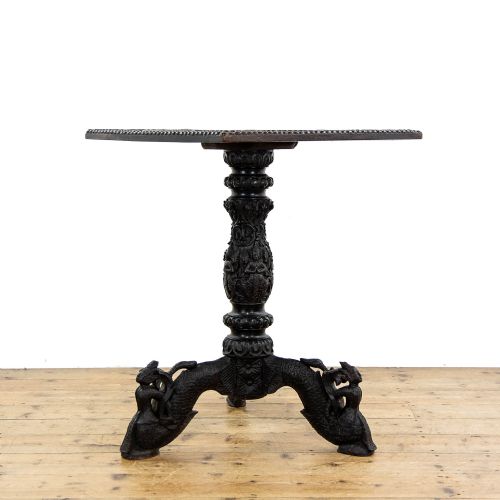


Chinese Export Pedestal Table
A Chinese export pedestal table brings dense, carved hardwood and inset marble to a room through centuries of distant trade.
Chinese Export Pedestal Table
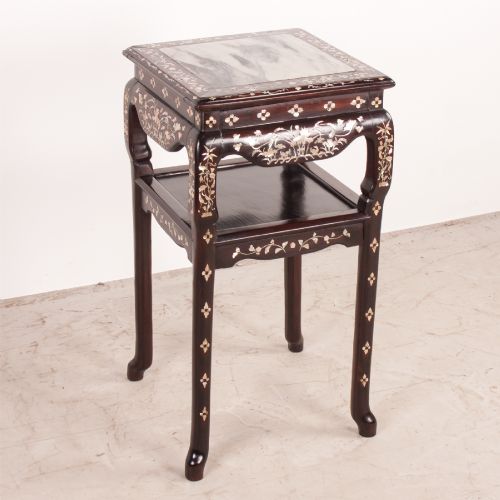
A Chinese export pedestal table serves practical and decorative roles as a plant stand, jardiniere stand, side table, or centre table. These pieces emerge from the nineteenth century, including specific dates around eighteen eighty, eighteen ninety, and nineteen hundred alongside Victorian periods.
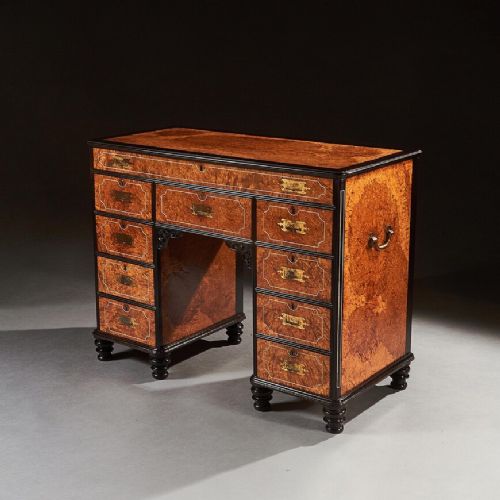
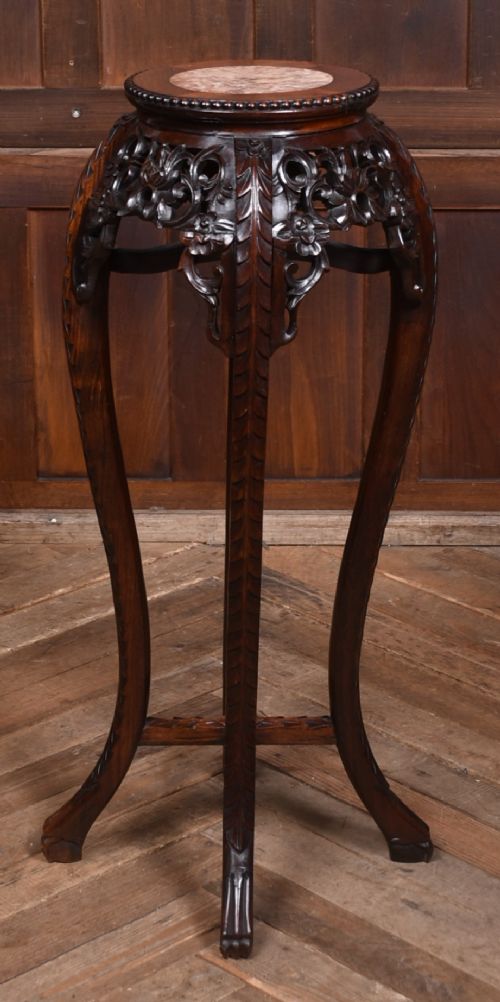
The most common form on this page is the plant or vase stand featuring a raised top and carved supports. Side tables and occasional tables also appear alongside campaign kneehole desks and tripod tables.
Materials and construction
Construction relies heavily on dense hardwoods such as rosewood, teak, padouk, and amboyna, often shaped through deep hand carving. These timbers provide the structural strength needed for heavy pillar and tripod bases.
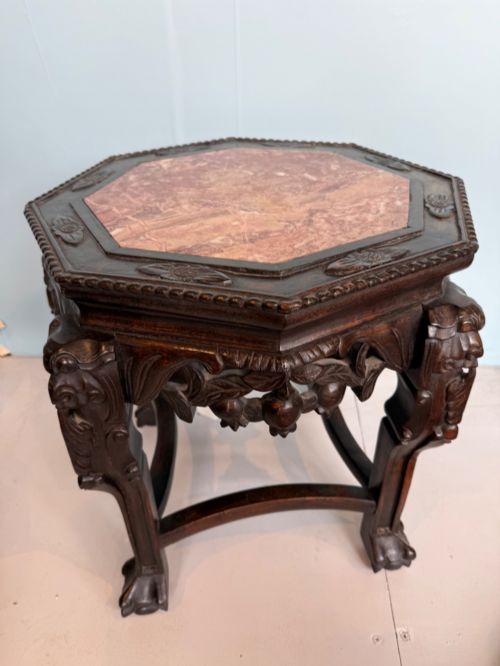
Inlets of white or rouge marble form smooth upper surfaces that contrast with the dark carved wood beneath. Mother of pearl inlay occasionally adds decorative detail to the hardwood surfaces.
Dragon motifs lurk within the carved grain of nineteenth century Far Eastern rosewood side tables.
Evaluating craftsmanship
Depth and crispness of the carving distinguish standard pieces from superior examples. Finely articulated floral, dragon, or geometric motifs demonstrate the skill of the carver.
The choice of timber and the integration of marble inserts or mother of pearl inlay also mark differences in grade. Heavier hardwoods and well-fitted stone tops indicate higher ambition in the original workshop.
The Chinese Export Pedestal Table Glossary
- Padouk
- A dense tropical hardwood known for its reddish-brown colour and durability. It takes intricate carving very well.
- Jardiniere stand
- A tall table designed specifically to hold a large ceramic plant pot or flower bowl. These stands usually feature a circular top.
- Amboyna
- A highly prized burl wood showing intricate swirling patterns. It is used in fine cabinet work and desk construction.
- Rouge marble
- A red-toned variety of marble quarried in regions of Europe and imported for decorative tabletops. It provides a striking contrast against dark Asian hardwoods.
- Campaign desk
- A modular desk built for transport during military travel. These pieces feature inset handles and sturdy joints.
Chinese Export Pedestal Table: Frequently Asked Questions
What is a Chinese export pedestal table?
A Chinese export pedestal table is a sturdy stand or small table made in China for Western markets during the nineteenth century. These items use dense hardwoods and often incorporate marble tops.
They function as plant stands, vase holders, or occasional tables in domestic settings. The carving reflects traditional motifs adapted for foreign buyers.
How old are these tables?
The pieces listed here date from the nineteenth century and the early twentieth century. Specific production years mentioned in the evidence span from eighteen fifty through to nineteen ten.
Victorian era influences also appear alongside late Qing Dynasty production dates. Stylistic cues help narrow down the decade of manufacture.
What woods were used?
Maker workshops utilised heavy tropical hardwoods including rosewood, teak, padouk, and amboyna. Ebonised finishes also appear on certain Victorian examples.
These timbers support deep relief carving without losing structural integrity. Their dense grain resists warping under normal indoor conditions.
How do I use one at home?
These stands suit corners or hallways where they can support ceramic planters, lamps, or decorative objects. Their compact footprints allow them to fit into smaller spaces.
The marble tops provide a durable surface for holding water-resistant items like plants. Matching the dark wood tones to existing furniture helps integrate the piece.