


Chinese Export Box
A Chinese export box brings the dense workshops of the China Trade straight into your home, offering ingenious storage crafted for western markets.
Chinese Export Box
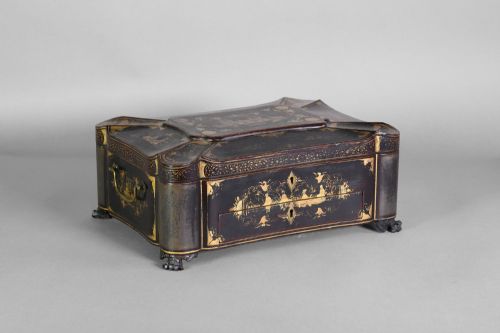
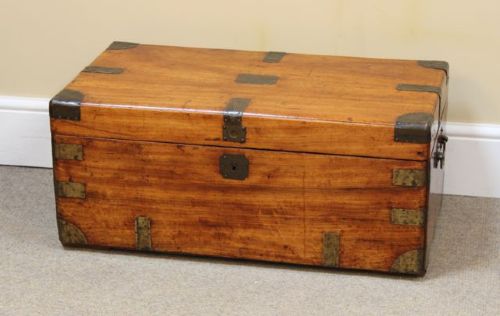
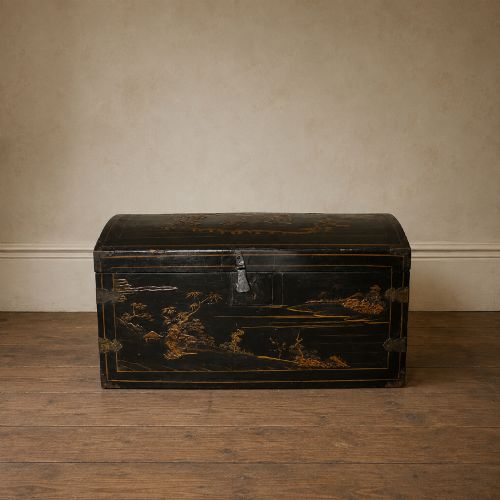
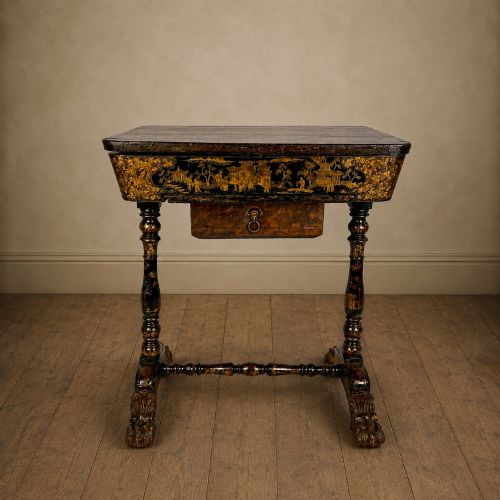
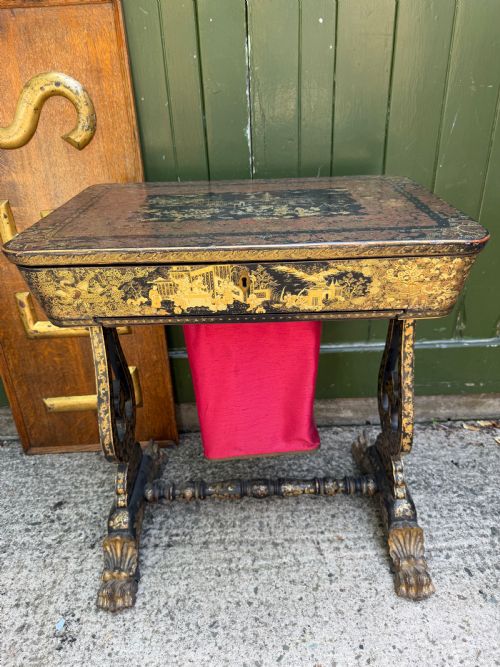
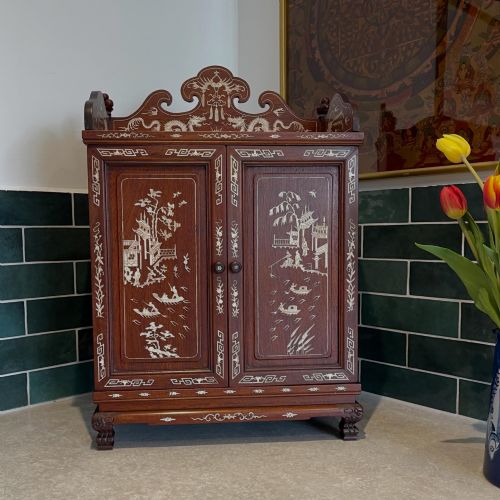
A chinese export box encompasses everything from small personal compartments to large travelling trunks produced for western buyers from the eighteenth century onwards. Buyers frequently encounter tea caddies, sewing tables, card cases, and camphor wood chests designed to withstand long ocean voyages.
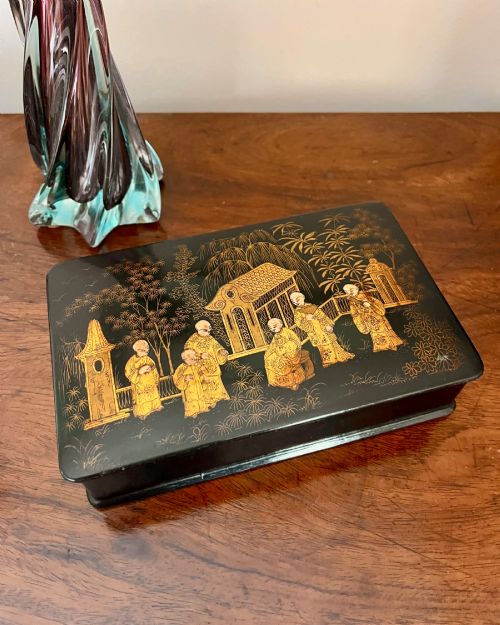
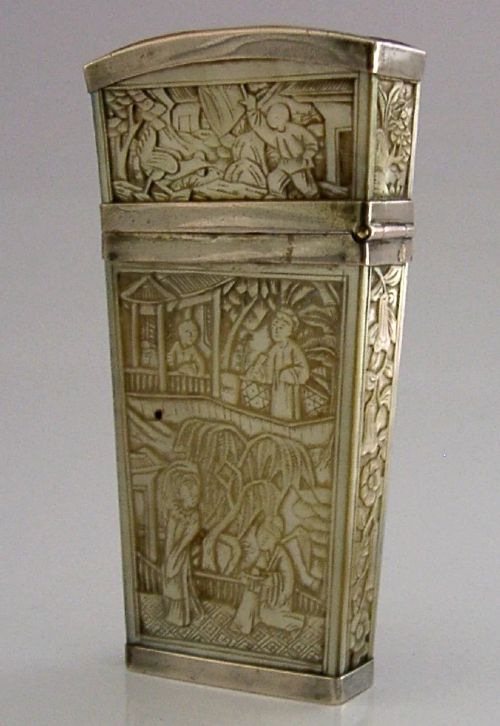
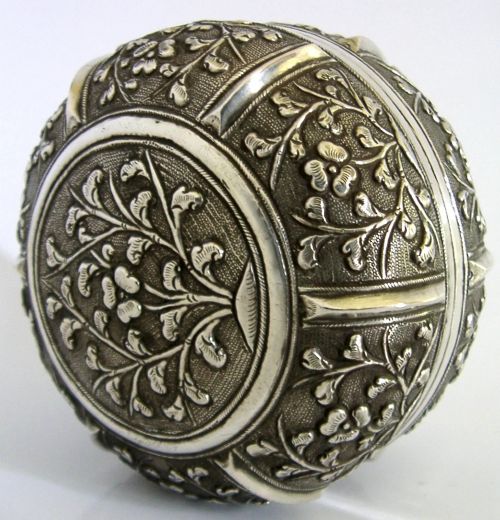
These items span diverse functional forms, including stationery boxes, writing cases, table cabinets, and intricately carved card cases. Lacquered wood and solid silver pieces dominate the selection, often carrying decorative motifs tailored specifically for export.
Origins trace back to treaty ports and coastal workshops where local artisans combined traditional Chinese techniques with European functional requirements. This fusion created distinct categories of goods that served travellers, merchants, and fashionable households alike.
Evaluating Quality
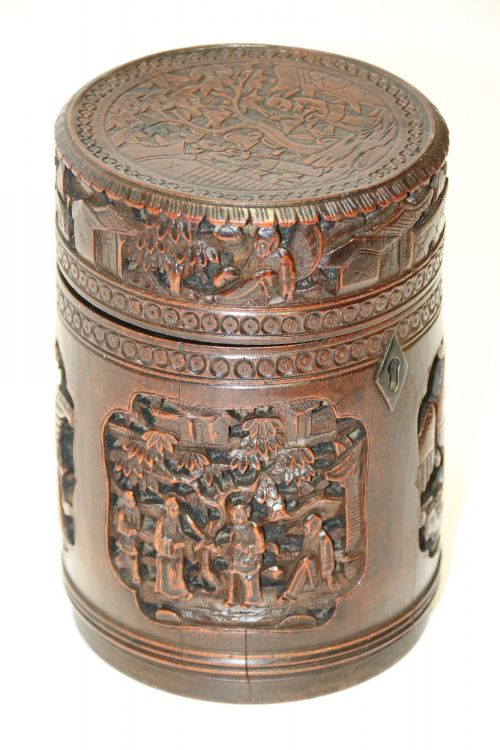
Quality rests upon the depth and clarity of the carved decoration or the precision of the gold leaf application on lacquered surfaces. Superior examples display crisp detail in human figures and foliage, whereas lesser pieces show rushed painting and shallow incisions.
Construction standards differ significantly between utilitarian packing cases and luxury cabinetwork intended for domestic parlours. Well-made items feature tightly dovetailed joints, unwarped timber panels, and original working locks with matching keys.
The listings span from the eighteenth-century Qing Dynasty through the Victorian era and into the early twentieth century.
Wang Hing & Co·Yut Wo
The Chinese Export Box Glossary
- China Trade
- Commerce conducted between European nations, America, and Qing dynasty China from the seventeenth to the mid-nineteenth century. This trade generated vast quantities of custom-made luxury items.
- Camphor Wood
- An aromatic timber harvested in Asia and prized for its resistance to pests. It served as the primary material for heavy sea chests and travel trunks.
- Lacquer
- A durable resin applied in multiple layers to wood and polished to a hard finish. Artisans often decorated these surfaces with gilded scenes.
- Repoussé
- A metalworking technique where silver is hammered from the reverse side to form raised relief designs. It frequently appears on cigarette and snuff boxes.
- Caddy
- A small container originally designed for storing loose tea leaves. These often featured internal compartments and fitted lids.
Chinese Export Box: Frequently Asked Questions
How were camphor wood chests used?
Camphor wood chests served merchants and military officers as durable luggage capable of protecting clothing and papers from damp conditions and insects during long sea voyages.
At home, their natural fragrance and solid construction made them ideal for storing linens and blankets in domestic bedrooms.
What is Chinese export silver?
This category includes items fashioned by local silversmiths working in treaty ports for foreign clientele, typically marked with artisan chops or pseudo-hallmarks.
Objects ranged from small card cases to large table boxes, frequently decorated with dragons, bamboo, or traditional coastal scenes.
How do you date a lacquer box?
Dating relies on stylistic shifts in the painted or gilded decoration, wood selection, and the construction methods visible inside internal compartments.
Eighteenth-century examples often display simpler coffer shapes, while nineteenth-century pieces lean towards intricate chinoiserie landscapes and fitted sewing interiors.
Were tea caddies lined with metal?
Tea caddies frequently featured internal foil or soldered metal linings to keep expensive tea leaves dry and fresh during transit.
These compartments often included small fitted lids to separate different tea varieties within a single box.