
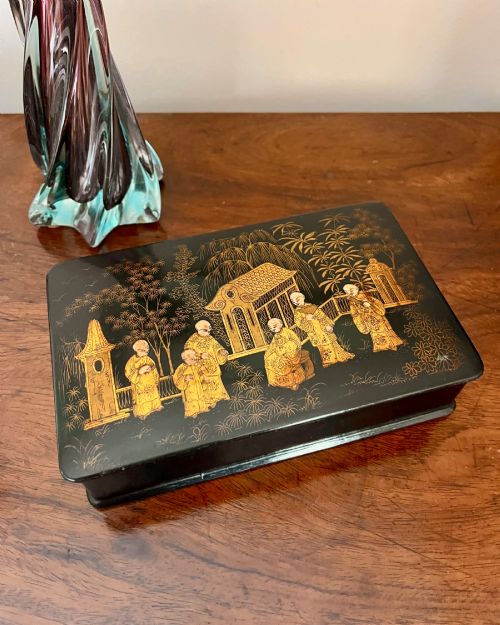


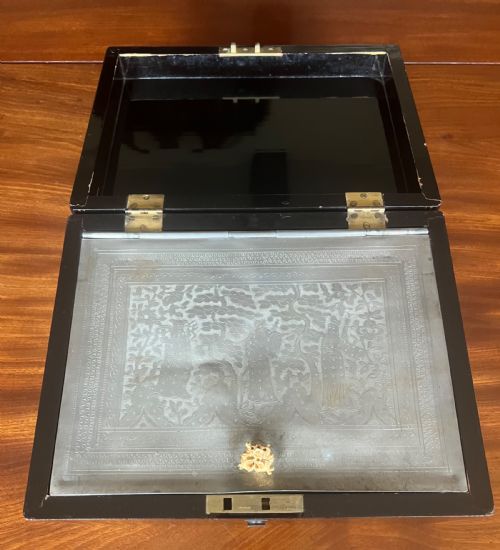


Oriental Keepsake Box
These oriental keepsake box pieces bring intricate artistry and global craftsmanship straight to your tabletop, holding small treasures with distinct historical character.
Oriental Keepsake Box
An oriental keepsake box encompasses a varied group of decorative containers originating from Asian and Middle Eastern traditions, designed to safeguard small valuables. When searching for an oriental keepsake box, buyers encounter forms ranging from tea caddies and snuff boxes to larger decorative caskets and turban boxes.
The pieces listed on this page span several centuries, with the nineteenth century heavily represented alongside examples from the seventeenth century and the early twentieth century. Materials and aesthetic influences stretch across Anglo-Indian, Chinese export, Japanese Meiji, and Middle Eastern workshops, offering distinct cultural designs.
Object titles indicate multiple functional forms, including trinket boxes, sharing boxes, and keepsake cases fashioned from timber and metal. Each item reflects the export and regional tastes of its period, providing a tangible link to historical global trade and domestic storage habits.
Materials and construction methods
Construction relies heavily on various woods and hardwoods, often enhanced through surface treatments such as lacquer and gold leaf application. Artisans built these containers to house precious items securely while displaying sophisticated surface ornamentation.
Decoration frequently incorporates intricate inlay work using mother of pearl alongside detailed metal elements in silver, silver plate, pewter, and wrought iron. These contrasting textures highlight the technical skill of period craftspeople across diverse regional traditions.
One listed container is specifically designated for a crown or turban, proving that historical headwear occasionally required its own dedicated resting place.
Judging the quality of craftsmanship
Quality reveals itself in the precision of the surface decoration, whether through the smoothness of applied lacquer, the crispness of chinoiserie motifs, or the tightness of mother of pearl inlay. Finer examples display meticulous attention to detail across every visible surface.
The choice of materials also dictates the distinction between standard and superior pieces, with dense hardwoods and precious metals elevating the overall execution. Integrity of construction and the harmony of regional decorative styles further distinguish the better specimens.
The Oriental Keepsake Box Glossary
- Chinoiserie
- European theatrical interpretation of Chinese and East Asian artistic traditions, frequently expressed through lacquered finishes and painted motifs.
- Meiji
- A period in Japanese history spanning from 1868 to 1912, known for opening trade and producing highly detailed decorative arts.
- Caddy
- A small container or box historically used for storing tea leaves or other valuable dry goods.
- Inlay
- A decorative technique where small pieces of contrasting materials like mother of pearl are embedded into the wood surface to form patterns.
- Trinket box
- A small receptacle intended for holding rings, brooches, or other minor personal ornaments.
Oriental Keepsake Box: Frequently Asked Questions
What were these boxes used for originally?
These boxes served various domestic purposes, from holding precious tea leaves and tobacco to safeguarding jewellery, turbans, and small personal keepsakes. Their compact dimensions kept valuable items secure and private within the home.
Over time, many of these containers transitioned from utilitarian storage to purely decorative objects, displayed on tables and cabinets for their artistic merit.
How do I care for a lacquered box?
Lacquered surfaces require gentle handling to preserve the finish, keeping them away from direct sunlight and extreme temperature fluctuations that might cause cracking. Dusting with a soft, dry cloth is usually sufficient for routine maintenance.
Avoid using liquid cleaners, polishes, or harsh chemicals, as these can permanently damage the delicate layers of lacquer and gold leaf.
How can I tell the period of a box?
Dating relies on examining the combination of materials, construction techniques, and stylistic markers such as specific regional motifs or dynasty indicators. Hardware, hinges, and interior linings also provide physical clues to the era of manufacture.
Comparing the specific decorative style against documented export wares helps narrow down whether a piece originates from the nineteenth century, earlier periods, or the twentieth century.
Where did these decorative boxes originate?
The pieces originate from diverse geographic regions including China, Japan, India, and the Middle East, often reflecting the tastes of export markets during the colonial and trade eras. Anglo-Indian, Chinese export, and Middle Eastern workshops each contributed distinct stylistic elements.
Many items were created specifically for export to Western buyers, combining local materials with forms that appealed to European and British collectors.