
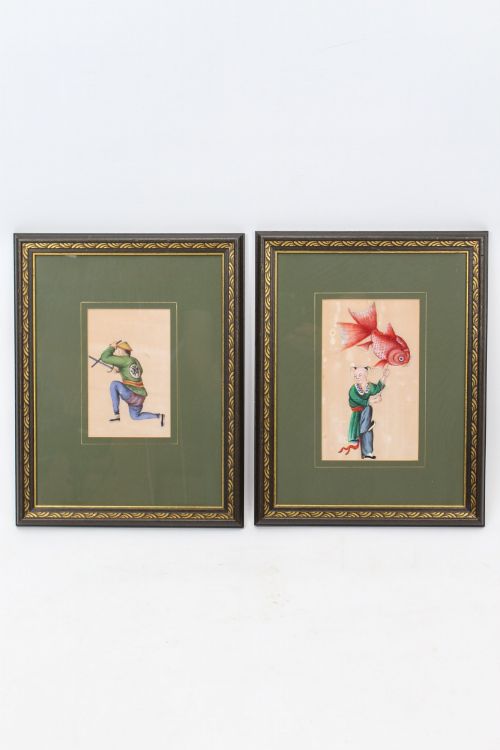


Chinese Export Artwork
Chinese export artwork brings together the delicate hand of trade painters and the materials of the Far East, offering a tangible link to historical global commerce.
Chinese Export Artwork
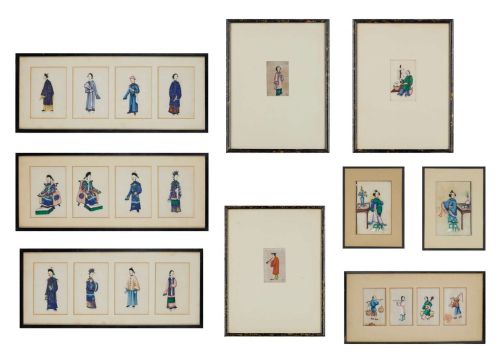
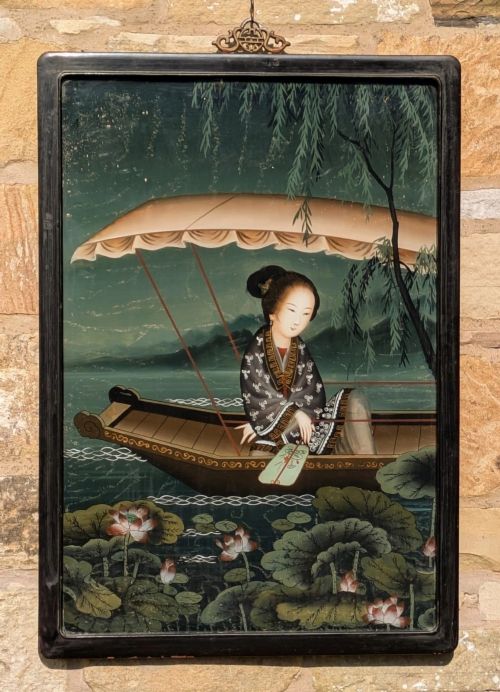
Chinese export artwork encompasses a range of framed paintings, wall art, and panels created specifically for Western markets during the eighteenth, nineteenth, and early twentieth centuries. Buyers seeking these pieces will frequently encounter works executed on pith paper, also known as rice paper, as well as reverse paintings on glass.
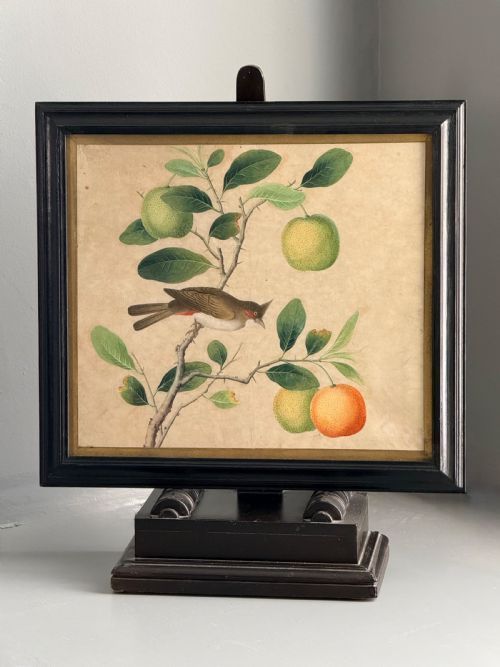
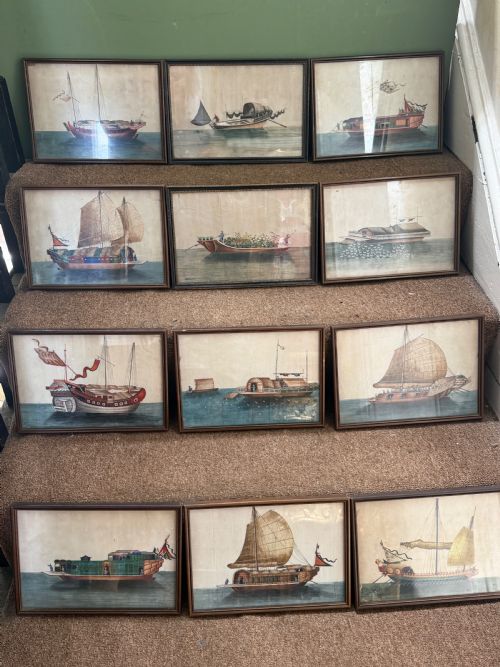
The objects span from the Qing dynasty through the Edwardian era up to the mid-twentieth century, capturing subjects such as maritime junks, butterflies, floral arrangements, and ship portraits. Many of these items appear in sets, particularly groups of pith paper paintings or framed gouache watercolours.
Makers and artists working within the Chinese Export and Anglo-Chinese styles produced these pieces utilising traditional pigments, gouache, silk, and wood frames. The selection on this page reflects the enduring appeal of trade paintings intended for European and British interiors.
How it was made
Pith paper paintings utilise the spongy cellular interior of the Tetrapanax papyrifer plant, sliced into thin sheets that accept vibrant pigments and gouache with a velvet-like depth. Artisans applied bright mineral and vegetable colours by hand, frequently mounting the fragile sheets onto paper supports.
Reverse paintings on glass and mirror-glass panels require artists to paint the composition backwards on the rear surface of the glass, so that the finished image reads correctly from the front. These works often incorporate brass or wood framing to protect the delicate reflective layers.
Lacquer panels employ layers of resin applied to wood bases, carved or decorated in styles reminiscent of Coromandel and Bantam work. Marine and trade oil paintings rely on canvas or board, capturing Western vessels and steam ships through the lens of Chinese school studios.
Listings feature works spanning the eighteenth century through the Edwardian period, utilising pith paper, glass, silk, and gouache.
What varies in quality
The refinement of the brushwork and the precision of the detailing distinguish the finest examples from standard trade production. Hand-painted works featuring intricate botanical specimens, precise rigging on ships, or complex figural groupings demonstrate superior artistic capability.
Material preservation heavily influences the standing of a piece, particularly given the fragile nature of pith paper and reverse glass. Intact pigments without excessive flaking, along with original wood or brass framing, elevate the overall integrity of the artwork.
The Chinese Export Artwork Glossary
- Pith paper
- A delicate material derived from the pith of the Tetrapanax plant, commonly used in nineteenth-century trade paintings for its unique ability to absorb gouache and watercolours. It is frequently misidentified as rice paper.
- Reverse painting on glass
- An artistic technique where the image is painted directly onto the back of a glass pane, viewed from the front to create a luminous, glossy finish. Mirror-glass variants incorporate reflective surfaces into the composition.
- Gouache
- An opaque water-based medium composed of ground pigments and a binding agent, utilised extensively in export watercolours for its dense, vibrant colour saturation. It allows for matte finishes that contrast with shimmering silks.
- Chinoiserie
- The European interpretation and imitation of Chinese artistic traditions and motifs, which influenced local design alongside authentic export goods produced in China for Western buyers.
- Anglo-Chinese
- A stylistic classification describing artwork created at the intersection of British maritime or commercial presence and Chinese studio execution, often depicting named schooners and steam ships.
Chinese Export Artwork: Frequently Asked Questions
What is pith paper?
Pith paper is a porous, spongy material cut from the pith of a specific Asian shrub, rather than pressed rice. It possesses a velvety texture that absorbs gouache pigments with remarkable luminosity.
Artists in the nineteenth century favoured this medium for botanical, insect, and figural studies destined for European collections. The material remains highly sensitive to moisture and physical pressure.
How do you display reverse glass paintings?
Reverse glass paintings require stable interior environments away from direct sunlight, which can degrade the underlying pigments and foils. Hanging them on sturdy interior walls prevents accidental knocks to the glass.
Due to their reflective qualities and painted rear surfaces, these panels benefit from careful positioning relative to natural light sources. Original wood frames should be supported securely from the back rather than by the glass alone.
What subjects appear in export art?
Export artwork frequently depicts local flora and fauna, such as butterflies and floral arrangements, alongside human figures engaged in daily activities. Maritime subjects, including junks and Western steam ships, reflect the bustling trade ports where these pieces were purchased.
Commissioned ship portraits served as souvenirs for captains and merchants operating in the East. These visual records capture the meeting point of Eastern studio craft and Western maritime interests.
How are Qing dynasty pieces dated?
Dating relies on stylistic markers, materials, and framing methods associated with the late Qing period and the nineteenth century. Pith paintings and reverse glass works often display specific framing styles and paper supports typical of trade output.
Comparative analysis with documented trade paintings helps establish approximate decades of production. Evidence from inscriptions and subject matter further refines the historical context of each piece.