


Chinese Display Tables Pair
A chinese display tables pair brings classical proportion and dense timbers to an interior, offering symmetrical perches for urns or plants.
Chinese Display Tables Pair
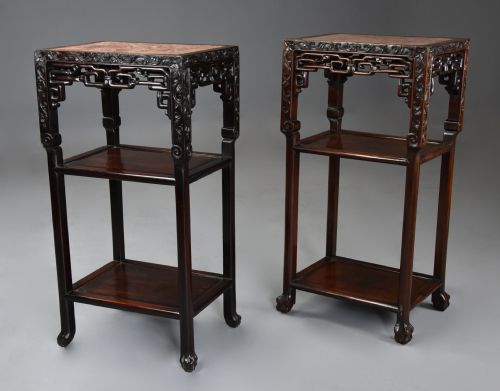
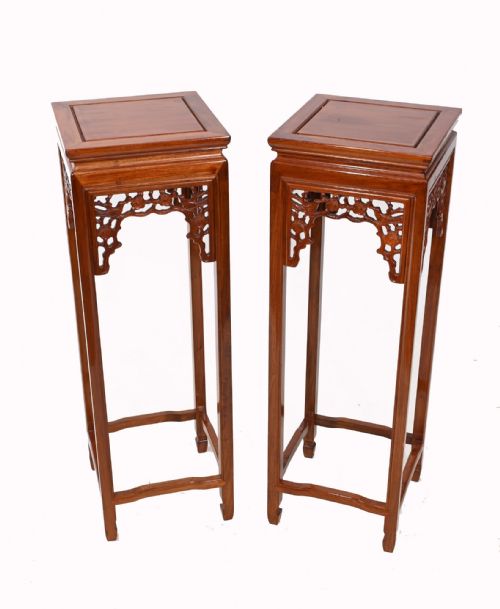
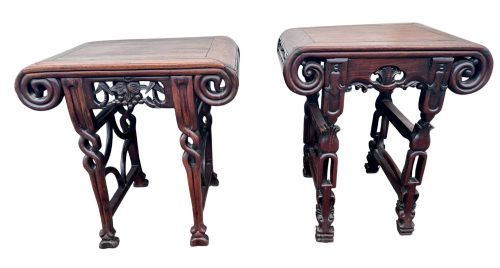
A chinese display tables pair comprises matching stands designed to elevate decorative objects, featuring heavily in nineteenth and early twentieth century interiors. These pieces take the form of plant stands, pedestal tables, and occasional side tables rather than dining furniture. Most examples date from the nineteenth century through the Republic period, reflecting traditional forms shaped by Qing Dynasty aesthetics.
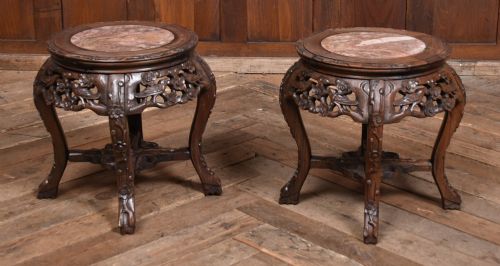
The buyer meets these objects as matched pairs of freestanding furniture, often utilised as urn stands, jardiniere supports, or lamp tables. The construction ranges from low stools to tall multi-tiered pedestals, with many incorporating circular or multi-lobed tops. These furnishings serve practical roles in supporting heavy ceramics while introducing architectural geometry to a room.
Materials and Construction
Craftsmen built these tables using dense Asian hardwoods such as rosewood, hongmu, and padouk, selected for their structural stability and deep natural grain. These heavy timbers permitted intricate carved details around the aprons and legs without compromising the load-bearing capacity required for stone or ceramic tops. Timber frames were frequently joined with traditional interlocking methods, avoiding metal fixings.
Many surfaces feature inset panels of white, grey, or rouge marble, while others integrate painted porcelain panels or lacquer finishes. Gold leaf accents occasionally highlight the carved relief work on the wooden structures. The combination of dense hardwood and inset stone created heavy, durable furniture capable of supporting vases and temple jars.
Listings feature nineteenth-century dates predominantly, alongside pieces from the nineteen-twenties and thirties.
Assessing Quality and Execution
Quality rests primarily in the crispness of the wood carving and the selection of the primary timber. Superior examples display deeply undercut foliage or geometric motifs without splintering or modern repairs to the dense grain. The weight and figuring of the rosewood or hongmu indicate the grade of materials selected by the workshop.
The integration of inset marble or porcelain panels marks the distinction between standard and finer production. A well-fitted stone top sits flush with the wooden rebate, showing no movement or excessive filler. The symmetry between the two pieces in a pair dictates the overall coherence and decorative success.
The Chinese Display Tables Pair Glossary
- Hongmu
- A traditional Chinese term denoting dense, dark hardwoods used in fine furniture production. This heavy timber exhibits a rich natural finish and takes intricate carving well.
- Padouk
- A durable tropical hardwood prized for its reddish-brown colour and strength. It forms the structure of many nineteenth-century stands.
- Jardiniere
- A large ornamental pot or container for plants or flowers. These tables were specifically proportioned to elevate such vessels.
- Demilune
- A half-moon shape utilised in the design of side tables and console supports. This profile allows furniture to sit flush against a wall.
- Republic Period
- The era in Chinese history following the Qing Dynasty, spanning from nineteen-twelve to nineteen-forty-nine. Furniture from this time continues traditional motifs while adapting to changing domestic interiors.
Chinese Display Tables Pair: Frequently Asked Questions
How were these stands used historically?
These pieces functioned primarily as elevated platforms for heavy decorative items, including porcelain vases, bronze vessels, and potted plants. Placing them around a room created varied heights and focal points within traditional and export interiors.
In western interiors of the nineteenth century, they were often adopted as torchieres or lamp tables, matching the Victorian taste for displaying collections of Asian ceramics.
Are marble tops original to the tables?
In many nineteenth-century examples, the inset marble or porcelain panels are original to the construction and were selected to provide a cool, stable surface for heavy urns. The stone sits within a rebated wooden frame designed to accommodate natural timber movement.
Checking the underside reveals whether the supporting battens and joinery match the age and wear of the upper frame.
How do I care for antique hardwood furniture?
Maintaining these pieces requires stable room humidity and protection from direct sunlight to prevent the dense timber from drying or splitting. Dusting with a dry cloth preserves the polished surface of rosewood and padouk without chemical buildup.
Avoid placing damp pots directly on unsealed wood surfaces, utilising the original marble or porcelain inserts for their intended protective purpose.
How do I distinguish Qing Dynasty from Republic period pieces?
Qing Dynasty stands typically exhibit heavier timber, deeper hand-carved relief work, and more conservative, classical proportions. The joinery reflects older imperial traditions of woodworking.
Republic period examples often introduce slightly lighter forms or alternative decorative elements while maintaining traditional Asian structural concepts.