




Chinese Ceramic Display Charger
A chinese ceramic display charger makes a commanding centrepiece on any wall or table, bringing centuries of skilled kiln work directly into your home.

Chinese Ceramic Display Charger
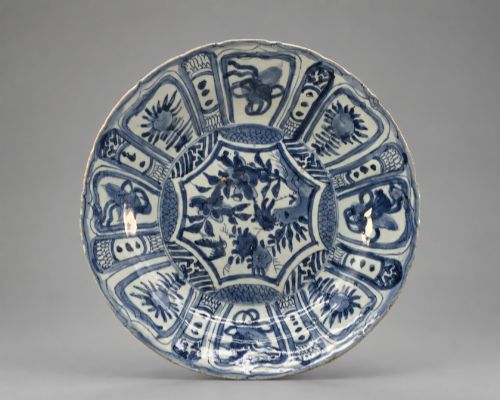
When you search for a chinese ceramic display charger, you are looking at large plates and platters made for show rather than dining. The examples you are most likely to meet on this page span the Qing Dynasty and the eighteenth century, alongside Victorian interpretations and Japanese export pieces.
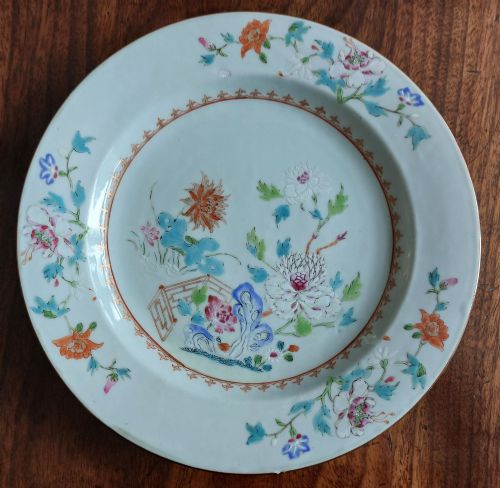
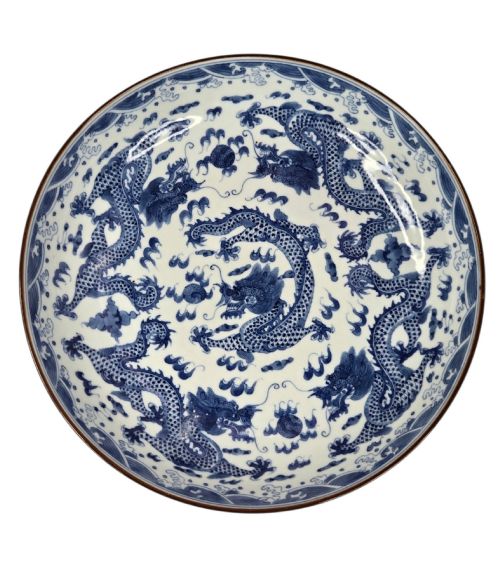
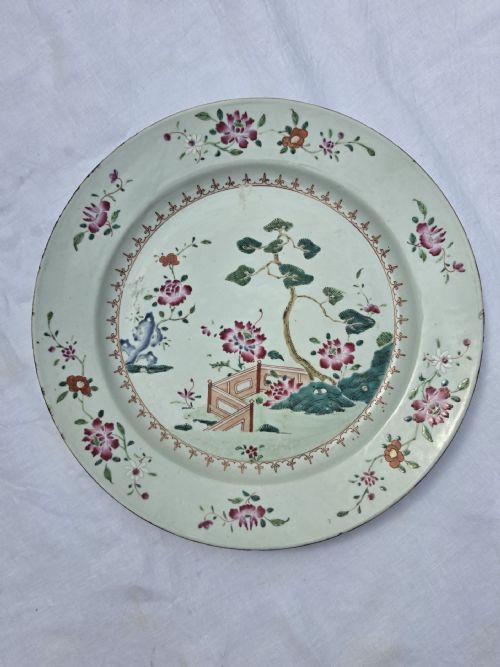
Forms range from deep bowls and dishes with barbed rims to wide platters decorated with cobalt underglaze, famille rose enamels, and celadon glazes. These items cross multiple stylistic traditions, including Chinese Export, Kangxi period wares, and European Chinoiserie.
Makers and origins vary from imperial kilns to European potteries inspired by Eastern designs. You will find items intended for display in grand interiors, combining decorative presence with historical craft.
How they were made
Potters shaped hard-paste porcelain, earthenware, and ceramic bodies by hand or mould before applying intricate painted designs. Cobalt underglaze was painted directly onto the clay body prior to the application of a clear glaze and high-temperature firing.
Overglaze techniques involved applying coloured enamels such as famille rose and famille verte onto a previously fired glaze, then fixing the pigments in a second, lower-temperature kiln. Celadon pieces achieved their characteristic green hue through iron oxides reacting within a reduction atmosphere.
Chinese Ceramic Display Charger Retail Price Guide 2026
Typical asking prices for chinese ceramic display charger among the pieces listed under this phrase on Sellingantiques today, from the lower quarter to the upper quarter. They describe what is for sale here now, not the wider market.
Listings feature hard-paste porcelain, earthenware, and cobalt underglaze across periods from the fourteenth-century Yuan dynasty to the Victorian era.
What varies in quality
Quality rests in the crispness of the hand-painted brushwork and the depth of the glaze. Master painters achieved fine linework on dragon motifs and court scenes, while lesser examples show rushed application and muddy colours.
The choice of materials and the control of kiln temperatures dictate the clarity of the white porcelain ground and the vibrancy of the cobalt blue or enamel palette. Superior pieces display careful finishing to the foot ring and a smooth, unblemished surface.
Bluett & Sons London·Minton
The Chinese Ceramic Display Charger Glossary
- Cobalt Underglaze
- A blue pigment applied to pottery before glazing and firing. This mineral withstands high kiln temperatures without fading.
- Famille Rose
- A palette of opaque enamel colours introduced in the eighteenth century, dominated by pink and rose shades. It allowed for subtle tonal shading in floral and figural scenes.
- Celadon
- A transparent green glaze over a pale grey or white body. The subtle colour mimics jade and results from iron in the glaze firing.
- Barbed Rim
- An indented or scalloped edge on a plate or charger. This decorative rim shape requires precise centring during throwing or moulding.
- Kangxi Mark
- A six-character reign mark associated with the Kangxi Emperor. Such marks can appear on pieces from that era or as later tributes.
Chinese Ceramic Display Charger: Frequently Asked Questions
How were chinese ceramic display chargers used?
These large platters were primarily designed for display on sideboards, tables, or walls rather than for serving food at the table. Their generous proportions allowed workshops to showcase complex narrative scenes, imperial symbols, and intricate floral patterns.
In grand houses and export markets, owning such pieces demonstrated taste and global connectivity. They functioned as works of art that commanded visual attention within a room.
How do I hang a heavy ceramic charger safely?
Hanging a large charger requires a specialist spring-loaded wire hanger that distributes the weight evenly across the rim and base. Ensure the fixing goes directly into a wall stud or uses an appropriate wall anchor.
Avoid adhesive discs or simple clips that rely on friction alone. Checking the stability of the mount periodically protects the piece from accidental knocks.
How can I tell the difference between periods?
Differentiating periods involves examining the characteristics of the paste, the composition of the blue pigment, and the style of the brushwork. Eighteenth-century pieces often feature specific potting traits and hand-mixed enamels that differ from later nineteenth-century interpretations.
Examining the foot rim provides clues about the era, as potting techniques and clay refinement evolved over dynasties. Comparing known benchmarks helps clarify the age of unsigned items.
What is Chinese Export porcelain?
Chinese Export porcelain refers to wares made in China specifically for shipment to Western markets from the sixteenth century onwards. These pieces often combined traditional Eastern manufacturing techniques with shapes and motifs tailored to European tastes.
Items ranged from blue and white plates to famille rose chargers ordered by trading companies and private families. They bridged two distinct artistic traditions.