
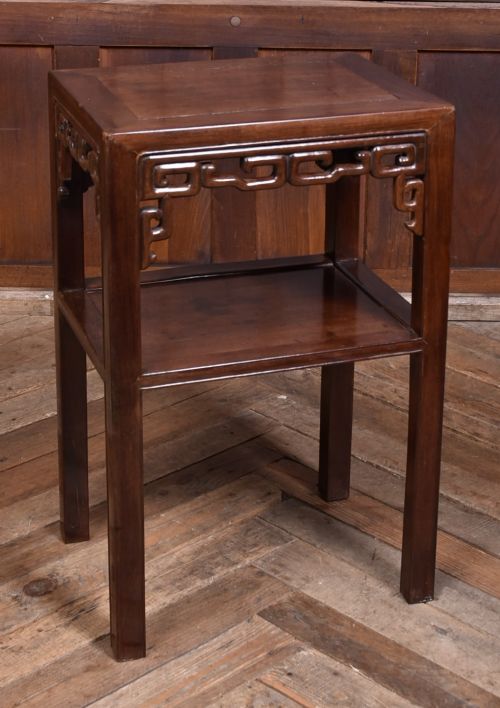
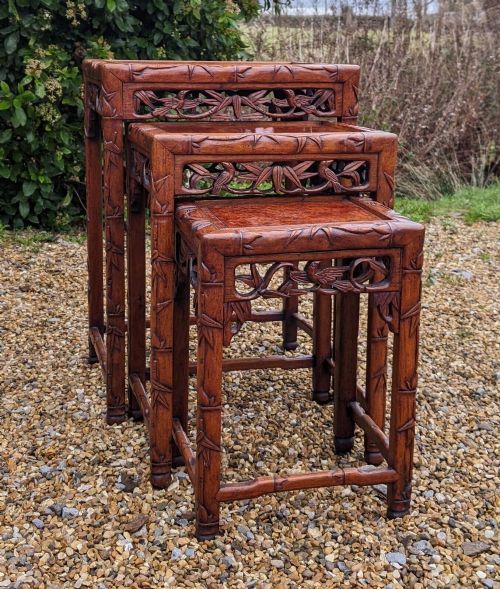
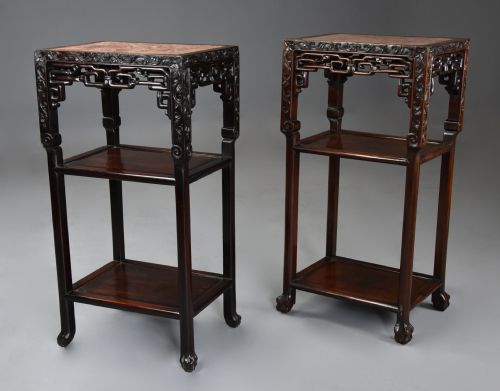
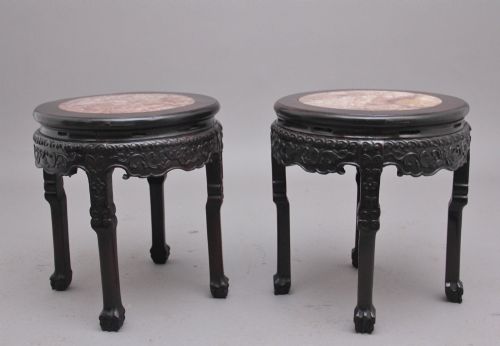
Chinese Carved Plant Table
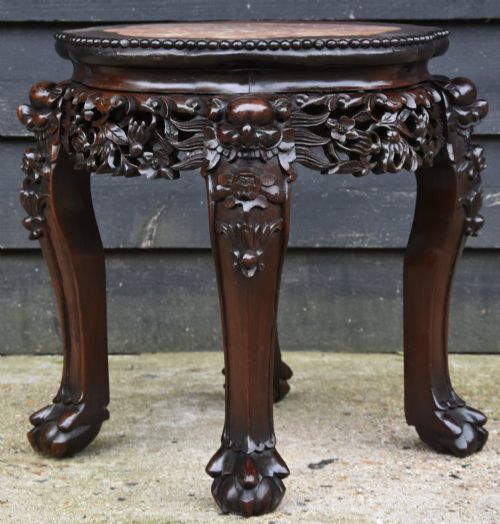
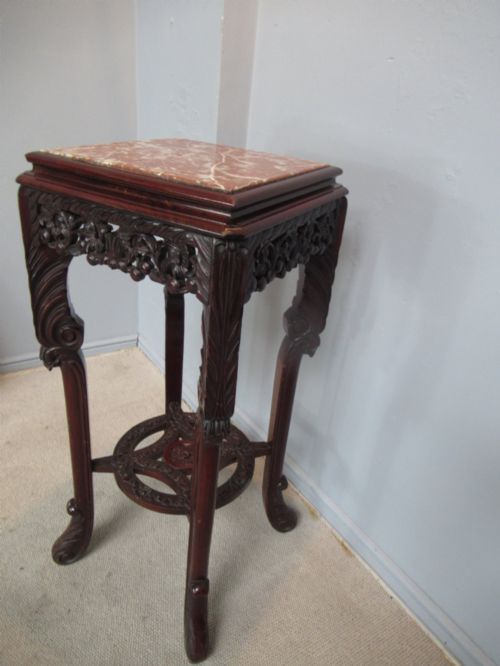
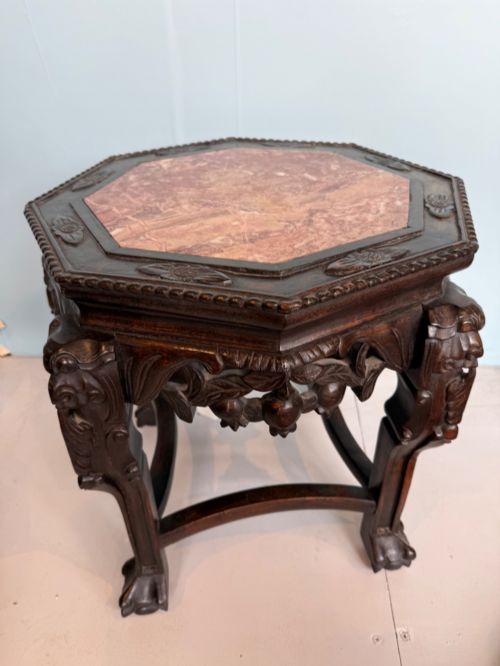
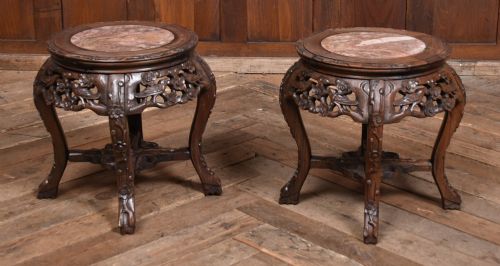
These Chinese carved plant table examples combine dense tropical timbers with heavy marble inserts to elevate heavy ceramics.
Chinese Carved Plant Table
A Chinese carved plant table serves to elevate ceramic planters, jardinières and display pieces within a room. The items found on this page span the nineteenth and early twentieth centuries, encompassing periods from the late Qing Dynasty through to the Edwardian era.
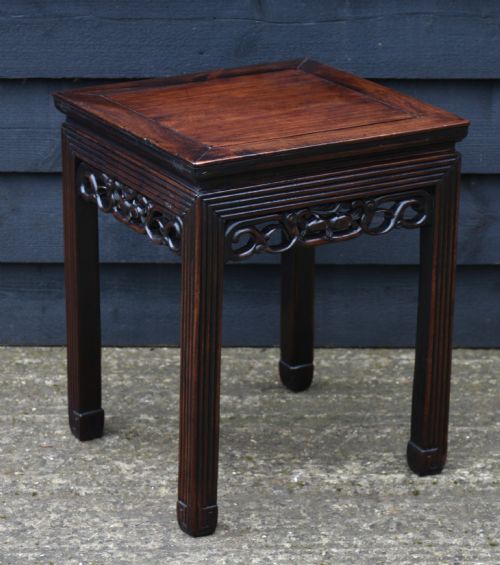
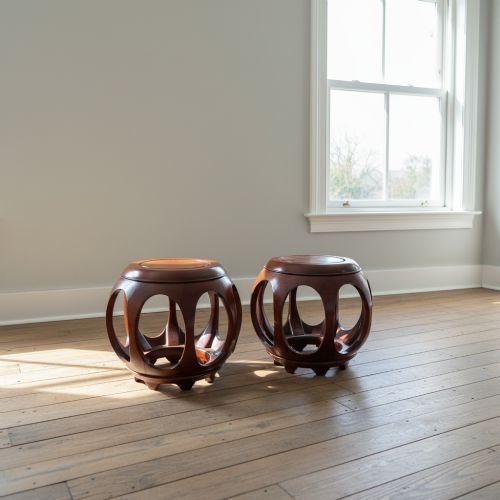
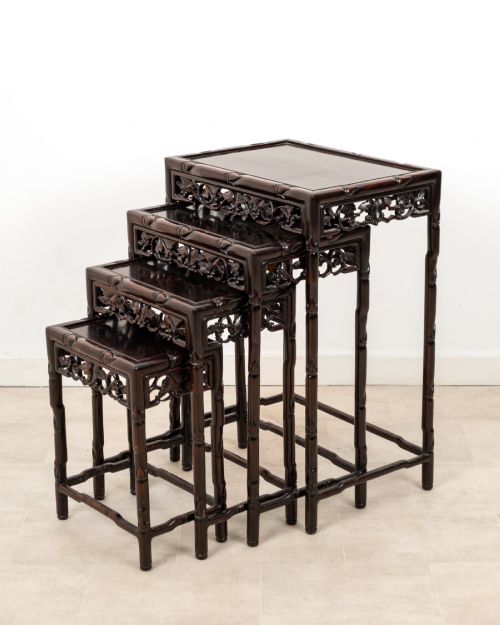
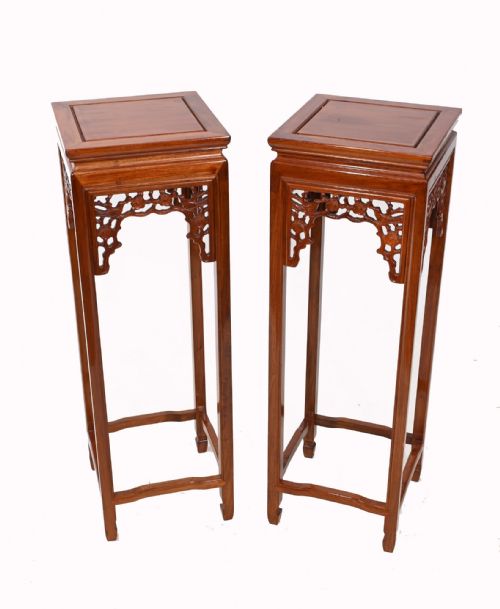
The primary forms on this page include tall pedestal stands, low pot tables and occasional side tables. Stools, wine tables and nests of tables also appear frequently alongside standard plant stands.
Most pieces originate from traditional Chinese workshops and export production centres, though occasional examples reflect later European interpretations of Chinese style. Buyers encounter round, square and shaped rectangular tops designed specifically to hold heavy decorative objects.
How they were made
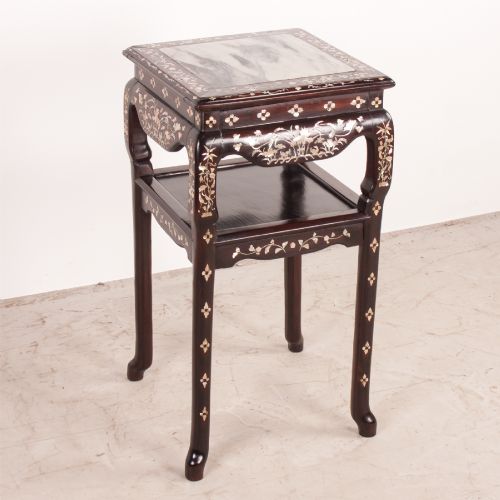
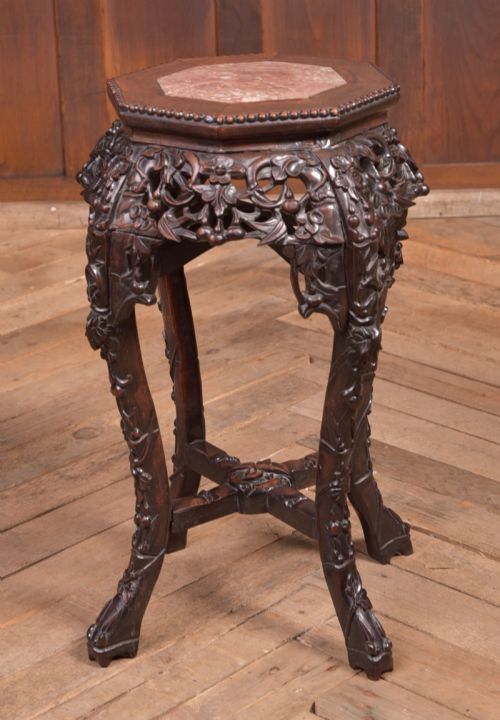
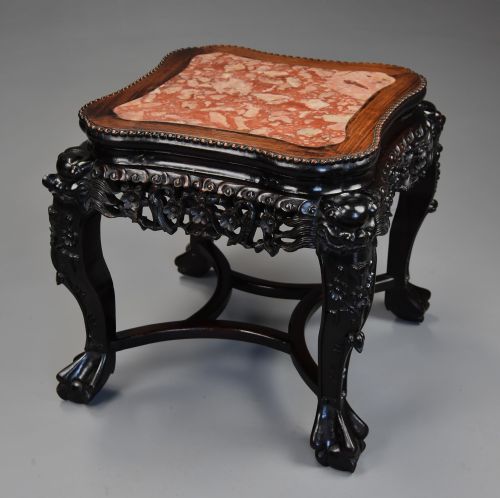
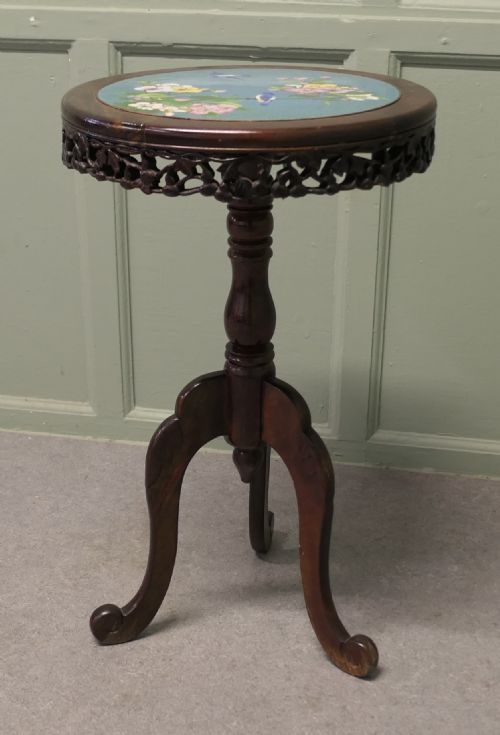
These pieces rely on dense Asian hardwoods, principally rosewood, padouk and huanghuali, chosen for their weight and structural stability. Craftsmen frequently integrated inset panels of variegated marble, quartz or lacquer into the wooden frames to provide a cool, flat surface for ceramic vessels.
Carving techniques involve deep relief work depicting floral motifs, dragons and traditional scrollwork. Joinery relies on traditional interlocking joints rather than modern metal fixings, allowing the heavy timbers to accommodate seasonal changes in temperature without splitting.
Listings feature woods such as rosewood, padouk, amboyna, burr wood and huanghuali paired with marble and quartz.
What varies in quality
Quality rests primarily on the depth and crispness of the carving, where master workshops achieved sharp undercut details while lesser pieces remain shallow and blunt. The choice of timber dictates substance, with dense rosewood and heavy padouk outlasting softer secondary woods.
The integration of the inset marble top marks another division, as superior examples feature carefully fitted stone with natural veining that sits flush with the rebated wooden frame. Rigidity in the frame and minimal shrinkage in the joints separate standard utilitarian items from finer decorative pieces.
The Chinese Carved Plant Table Glossary
- Hongmu
- A traditional Chinese term denoting dense, dark hardwoods such as rosewood and padouk. Craftsmen utilised these heavy timbers for formal furniture and plant stands due to their fine grain.
- Jardinière
- A large decorative pot or planter designed to hold growing plants. These heavy ceramic vessels required sturdy stands with reinforced tops.
- Padouk
- A heavy, durable tropical timber with a reddish-brown hue that darkens with age. It provides the structural strength needed for heavily carved pedestal stands.
- Marble insert
- A polished slab of stone fitted directly into the centre of a table top. This cool, waterproof surface protects the wood from water damage caused by potted plants.
Chinese Carved Plant Table: Frequently Asked Questions
What is a Chinese carved plant table used for?
These tables provide a stable elevated surface designed to display heavy ceramic jardinières, vases and bronze vessels. They allow decorative plants to sit at a deliberate height within a room.
In period interiors, they also functioned as occasional tables for lamps, tea wares or small decorative objects. Their compact footprints made them versatile additions to reception spaces.
How do I date a Chinese plant stand?
Dating relies on examining the density of the timber, the depth of the hand carving and the construction methods used in the frame. Nineteenth-century examples often feature heavy rosewood or padouk with deep, organic relief work.
Later pieces from the early twentieth century may show machine assistance in repetitive detailing or lighter secondary woods. The condition and type of the inset marble also offer clues to the manufacturing period.
Are these tables sturdy enough for heavy pots?
Traditional construction employs dense tropical hardwoods and complex interlocking joinery designed to bear substantial weight. The heavy marble or stone inserts add considerable downward mass to the frame.
While robust, buyers should inspect the joints where the legs meet the apron to ensure the structure remains rigid. Original stands handled heavy ceramic planters daily without difficulty.
What is the difference between a plant stand and a jardiniere stand?
The terms often overlap in historical descriptions, but a jardinière stand specifically refers to a lower, wider platform built to support a large planted bowl. Plant and vase stands tend to be taller and narrower to elevate single decorative items.
Both types share similar construction methods featuring inset stone tops and carved wooden aprons. The choice depends entirely on the scale of the object you wish to display.