
Chinese Carved Hardwood Table
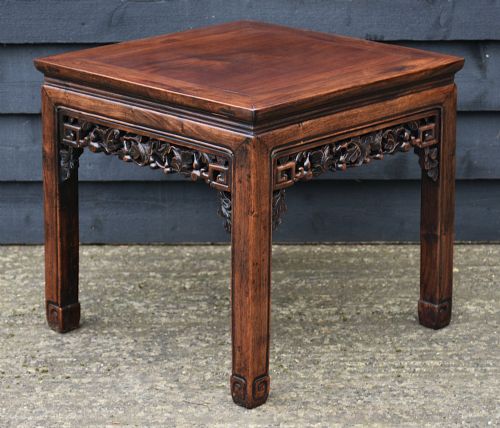
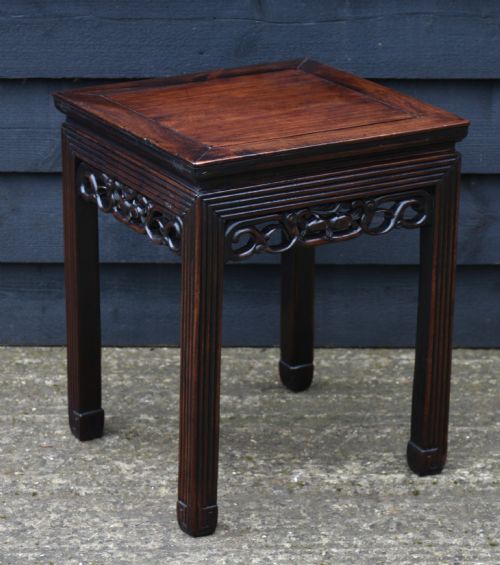
A Chinese carved hardwood table brings dense, richly figured grain and deeply undercut relief carving into a room, serving as a striking focal point for display or gathering.
Materials and Construction
Craftsmen utilised dense, heavy timbers such as rosewood, padouk, and huanghuali, selecting them for their natural strength and deep, saturated colour. These tropical hardwoods allowed artisans to execute extremely crisp, intricate relief carving that retained sharp edges without splintering.
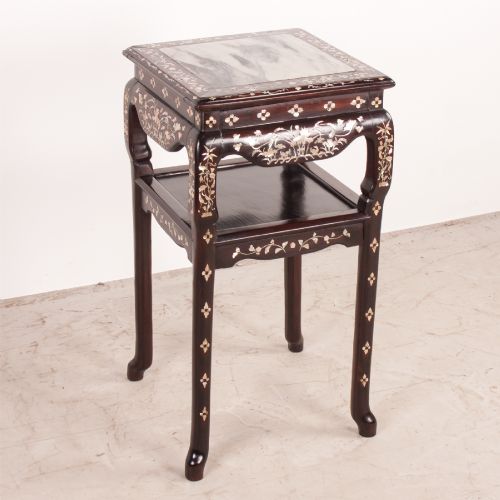
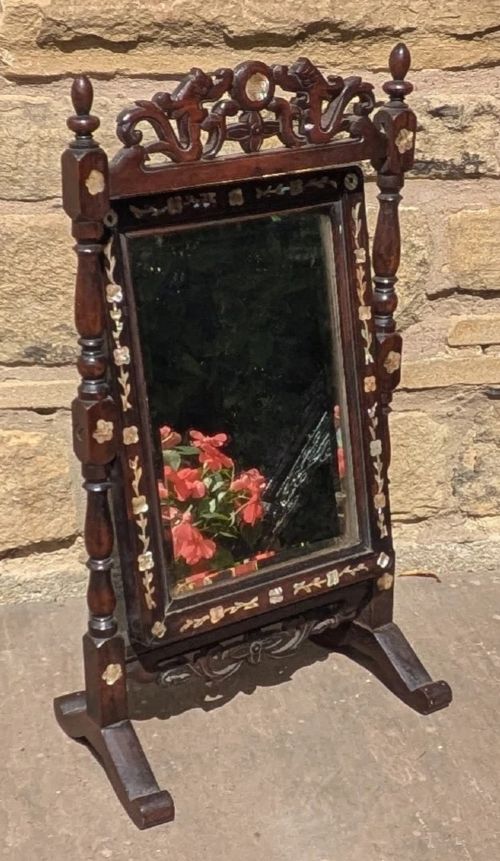
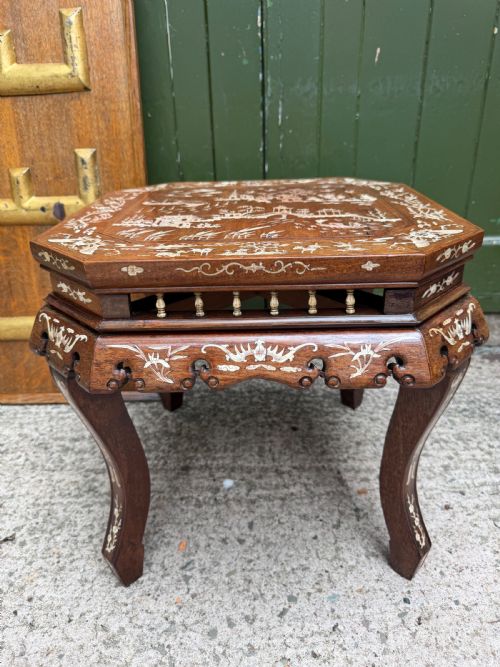
Joinery relied heavily on traditional interlocking wooden frames and mortise and tenon joints, enabling the dense timbers to expand and contract with environmental changes. Artisans frequently integrated contrasting materials like pale marble, mother of pearl inlay, and brass fittings to punctuate the dark polished surfaces.
Assessing Quality
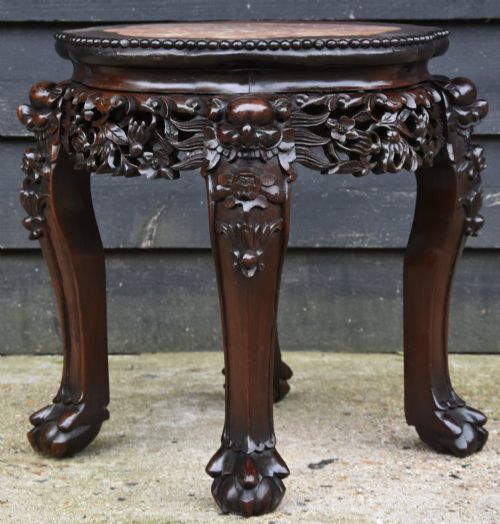
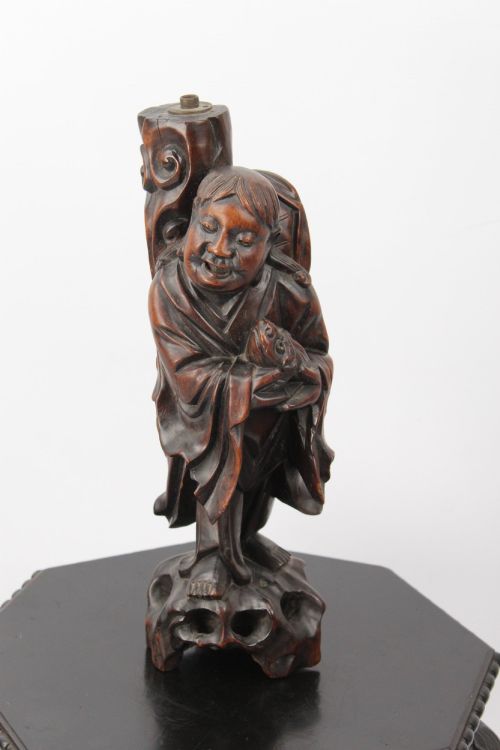
The distinction between standard commercial output and superior craftsmanship lies primarily in the depth, crispness, and undercut precision of the carving. Master carvers worked directly into the solid timber to create fully three-dimensional motifs, whereas lesser pieces rely on shallow surface incisions and applied ornamentation.
Material selection and grain alignment significantly influence the standing of an individual piece. Finer examples display symmetrical, highly figured timber across prominent surfaces and maintain strict structural stability without relying on modern metal fasteners.
The listings on this site demonstrate a strong prevalence of rosewood, padouk, and elm, frequently paired with inset marble panels.
The Chinese Carved Hardwood Table Glossary
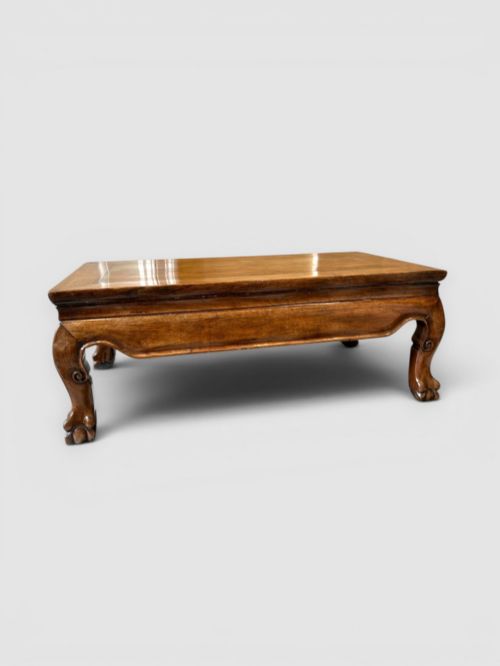
- Kang table
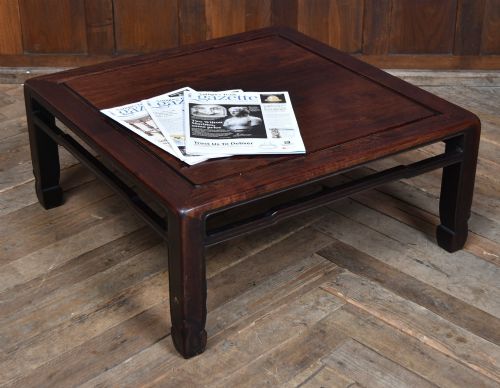
- A low platform table traditionally used on a heated brick bed or floor for dining, writing, or resting. These pieces feature short, often curved legs and carved aprons.
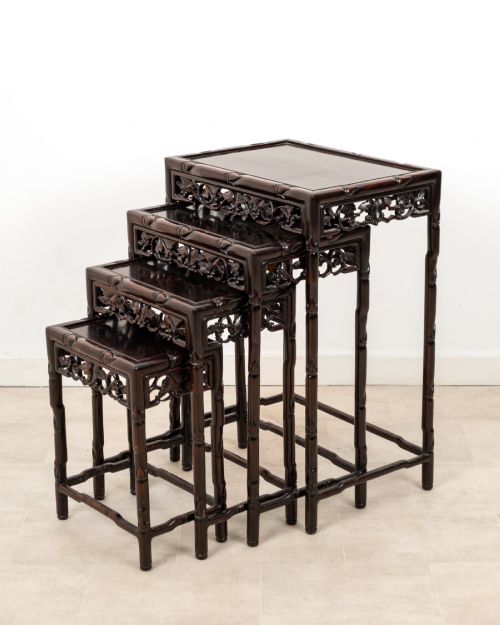
- Quartetto tables
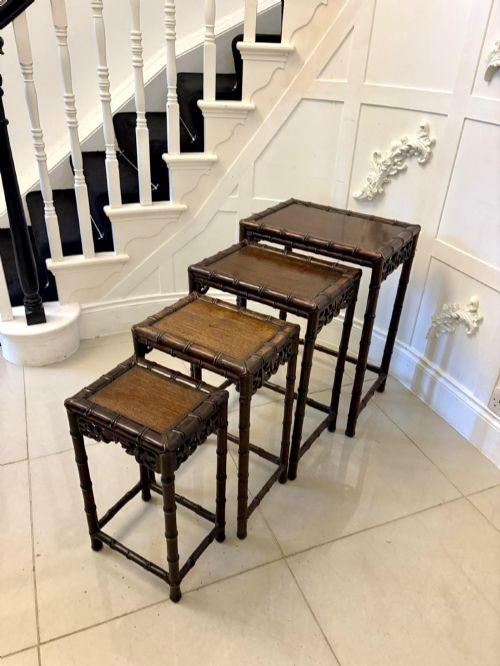
- A nested set of four graduated tables designed to slide neatly beneath one another when not in use. They appeared frequently in late nineteenth-century export production.
- Hongmu
- A traditional Chinese classification meaning red wood, applied to dense, heavy tropical hardwoods including various species of rosewood and padouk. It develops a rich patina with age and handling.
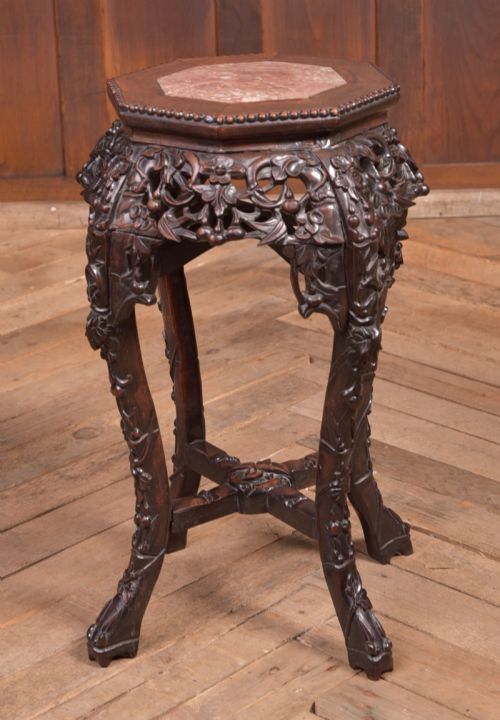
- Jardiniere stand
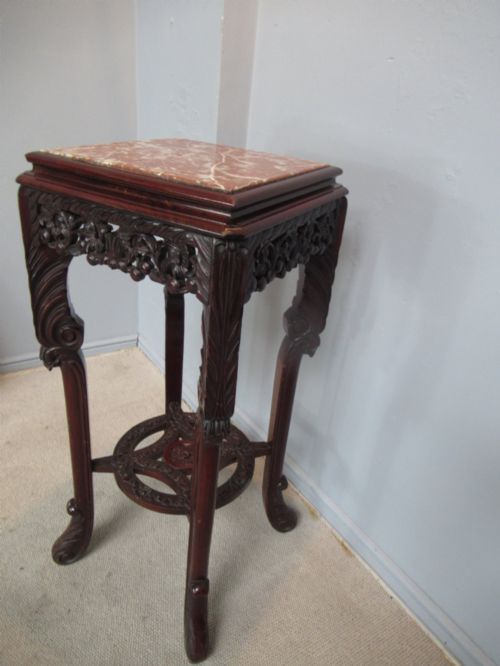
- A tall, slender pedestal table built specifically to elevate heavy ceramic plant pots or decorative vases. They often feature circular marble inserts to protect the wood from moisture.
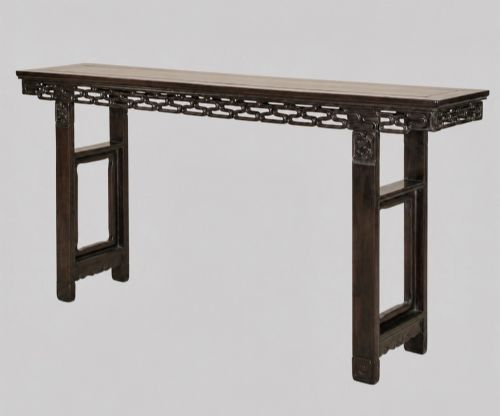
- Altar table
- A formal rectangular piece originally placed against a wall for ceremonial use, characterised by elongated proportions and scroll-ended flanges. Domestic iterations served as console or serving tables.
Chinese Carved Hardwood Table: Frequently Asked Questions
What is a kang table used for?
A kang table served as a low domestic surface for eating, drinking tea, or writing while seated on a raised sleeping platform or directly on the floor. Their low profile made them versatile for intimate domestic settings.
Today, these compact tables function effectively as low coffee tables or decorative display platforms in modern living spaces. Their proportion allows them to sit comfortably in front of low seating without dominating the room.
Why do some tables have marble inserts?
Marble inserts provided a cool, heat-resistant, and moisture-proof surface ideal for resting hot teapots, burning incense, or holding heavy ceramic plant pots. The stone also added a striking visual contrast to the dark surrounding timber.
Craftsmen carefully recessed the smooth marble panels directly into the wooden frame to ensure a flush, stable surface. The natural veining in the stone meant that no two tables looked identical.
How do I date a Chinese hardwood table?
Dating relies heavily on evaluating the timber density, construction methods, and the style of the relief carving relative to known historical periods. Pieces from the late nineteenth century typically exhibit deeper, more organic carving styles associated with the late Qing Dynasty.
Examining the underside and interior joinery reveals tool marks and wear patterns consistent with age. Export pieces made around nineteen hundred often show a blend of traditional Chinese construction with Western furniture forms.
Are nested tables a traditional Chinese form?
Sets of graduated nesting tables, known historically as quartetto tables, were produced in large numbers during the late nineteenth century specifically for the Western export market. They adapted traditional Chinese joinery techniques to satisfy European preferences for modular furniture.
Despite their appeal to Victorian and Edwardian buyers, these sets maintained authentic Chinese wood-carving motifs and timber selections. Their practical space-saving design ensured enduring popularity across changing interior styles.