




Chinese Brass Bound Chest
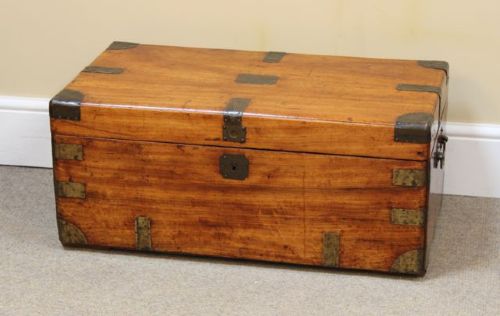
A Chinese brass bound chest brings durable camphor wood and robust metalwork together for practical storage with an export history.
Chinese Brass Bound Chest
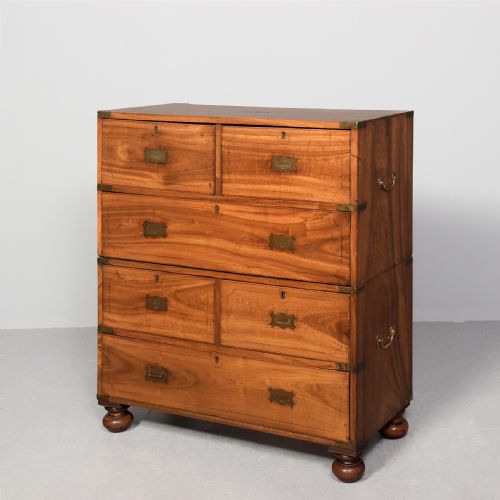
The form spans straightforward travelling trunks and coffrets alongside more complex military campaign secretaire chests fitted with drawers. Regional variations connect these pieces to the nineteenth century, eighteenth century, and specific export hubs such as Canton.
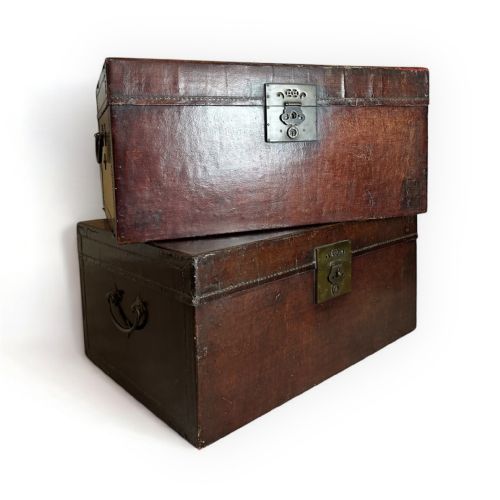
Makers utilised resilient timbers capable of withstanding long sea voyages, pairing camphor wood, hardwood, or elm with leather, copper, and pigment. Styles range from traditional Chinese and Qing dynasty forms to Anglo-Chinese colonial and military campaign designs.
How they were made
Construction relies upon solid timbers, predominantly camphor wood and other dense hardwoods, selected for their stability and resistance to insects. Joinery was built to endure travel, frequently taking a two-part form in larger military chests.
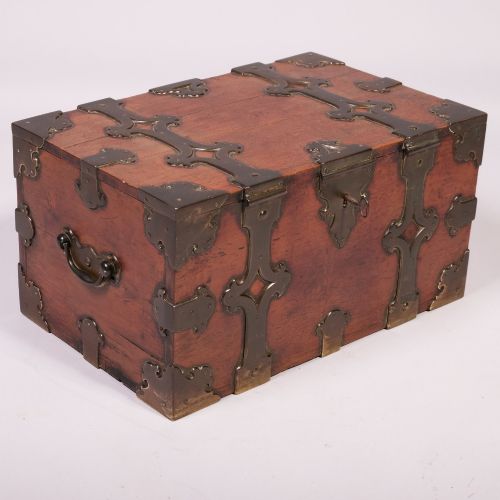
Metalwork forms an integral structural element rather than mere decoration, with brass corners, straps, and mounts fastened securely to the wood. Leather, copper, and polychrome paint also appear on specific export trunks and trade chests.
Camphor wood naturally smells like a medicine chest, keeping moths away long before cedar blocks existed.
What varies in quality
Quality separates through the weight and thickness of the timber and brass components, alongside the precision of the joinery. Early examples from the eighteenth century or pieces incorporating secretaire drawers demonstrate finer execution than standard utility trunks.
The integrity of the original brass mounts, hinges, and locks distinguishes superior survivors. Surface treatments, whether plain camphor wood, leather covering, or polychrome painted pigment, reflect the original commission and purpose.
The Chinese Brass Bound Chest Glossary
- Camphor wood
- An aromatic timber traditionally utilised for campaign chests and trunks to protect contents from insects. Its distinct scent remains a key identifier for these pieces.
- Campaign chest
- A piece of furniture designed in sections for ease of transport by military officers on active service. These often feature brass corners and recessed carrying handles.
- Chinese export
- Goods manufactured in China specifically for Western markets and overseas trade during the eighteenth and nineteenth centuries. These items blend local craftsmanship with European forms.
- Secretaire chest
- A cabinet or chest featuring a pull-down writing drawer fitted with small pigeonholes and compartments. This multifunctional form served travellers needing a portable desk.
- Coffre fort
- A heavy strongbox or chest reinforced for secure storage of valuables and documents. These export examples utilise robust brass mounts and locks.
Chinese Brass Bound Chest: Frequently Asked Questions
What are these chests made of?
The pieces listed show a strong reliance on camphor wood, alongside hardwood, elm, and burl wood. Metal elements utilise brass and copper, while some trade trunks incorporate leather and pigment.
Timber choice prioritized durability and insect resistance for long maritime journeys. The combination of dense wood and metal hardware created robust storage suitable for travel.
Were these chests used for travel?
Many examples were built as travelling trunks, storage boxes, or campaign chests for use on ships and during military service. The metal binding protected corners and edges from heavy handling.
Two-part campaign chests allowed officers to transport their belongings more easily. Sturdy locks and carrying handles supported frequent movement.
What is a secretaire chest?
A secretaire chest incorporates a specialised drawer that folds down to reveal a writing surface and small internal compartments. This combined storage and desk space for travelling users.
Such pieces maintain the exterior appearance of a standard chest while offering fitted interior utility. They represent a more complex form within nineteenth-century campaign furniture.
How do I care for camphor wood?
Camphor wood requires stable indoor humidity and protection from direct sunlight to preserve the timber and finish. Regular dusting maintains the surface without needing heavy polishes.
The natural aromatic properties of the wood persist over time. Proper placement away from extreme temperature changes ensures the structure remains stable.