



Chinese Blue White Charger
A chinese blue white charger commands attention on any table or wall, carrying centuries of kiln tradition and cobalt depth.
Chinese Blue White Charger
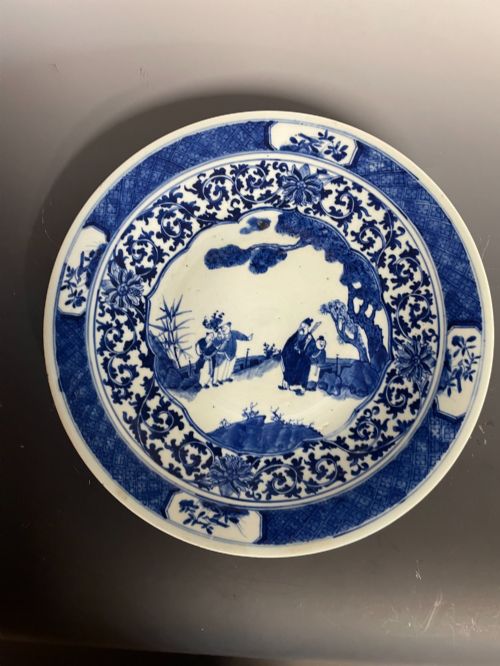
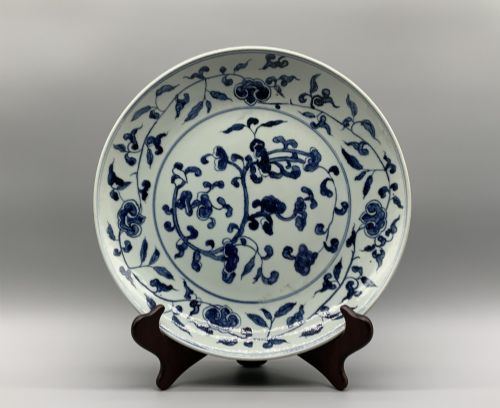
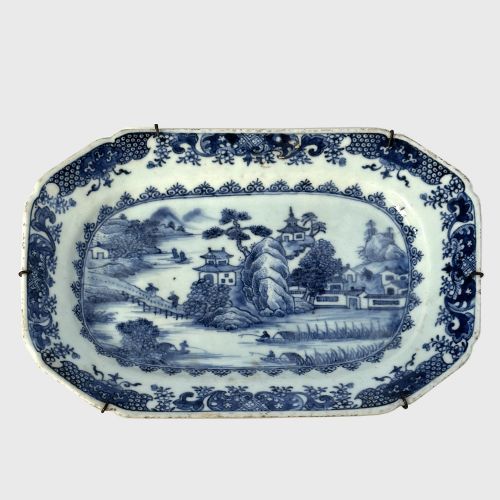
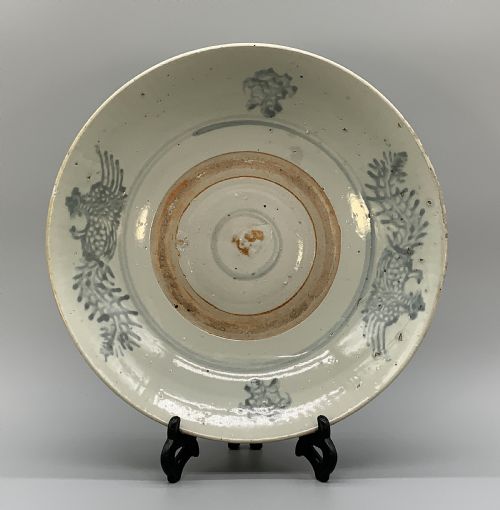
A chinese blue white charger sits at the larger end of table and display pottery, taking the form of wide plates, platters, and deep dishes designed for service or presentation. You meet these pieces across several distinct eras, spanning Ming and Qing dynasties alongside later export wares and European interpretations.
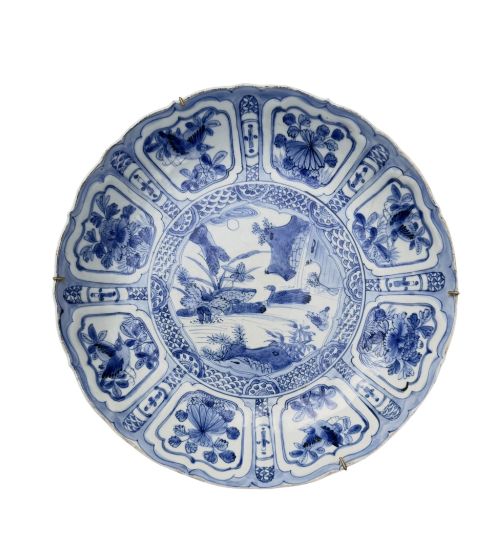
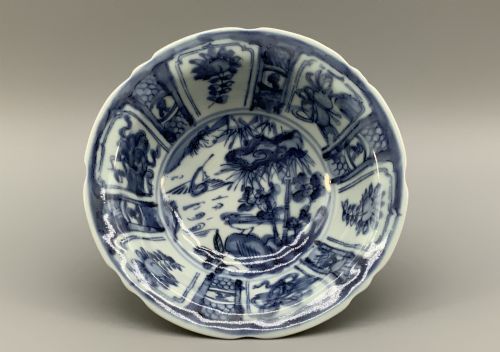
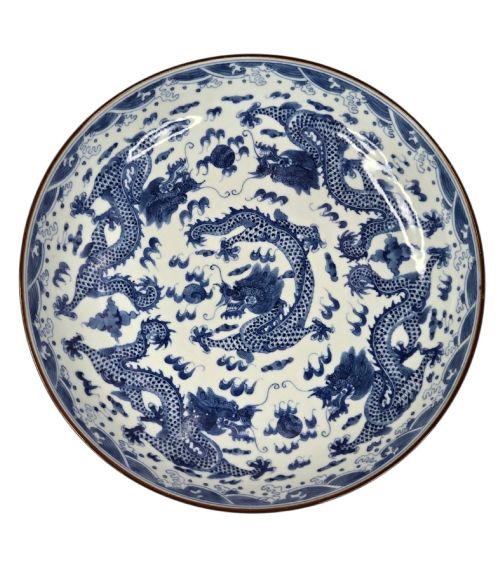
The selection here encompasses sixteenth-century Kraak porcelain, seventeenth-century Kangxi period examples, and nineteenth-century imperial dragon chargers. Forms vary from barbed rims and lobed bowls to expansive flat-centred platters measuring over a foot across.
How they were made
Potters built these vessels from hard-paste porcelain and ceramic bodies, applying cobalt pigment beneath a clear glaze before high-temperature firing. This technique allowed the cobalt underglaze to fuse permanently with the clay, yielding rich blue tones against a white ground.
Moulding and hand-painting shaped the surfaces, incorporating floral motifs, dragons, and marine patterns into the ceramic body before the final glaze application.
Five-clawed dragons twist across these chargers, reminding everyone that imperial beasts required precisely five digits to maintain their supreme status.
What varies in quality
Quality rests in the precision of the cobalt underglaze painting and the crispness of the porcelain form, from sharp barbed rims to fluid brushwork. Earlier pieces display energetic pigment application, while imperial examples show rigorous control in five-clawed dragon motifs.
The stability of the hard-paste porcelain and the purity of the white ground separate standard utility wares from exceptional decorative chargers.
The Chinese Blue White Charger Glossary
- Kraak porcelain
- Chinese export porcelain produced mainly in the late Ming dynasty, characterised by panelled border designs and central aquatic or floral motifs. It frequently appears in sixteenth and seventeenth-century collections.
- Cobalt underglaze
- A blue pigment applied directly to the unglazed ceramic body before a transparent glaze coat is added and fired. This method protects the blue decoration from wear.
- Kangxi period
- A significant era of Qing dynasty ceramic production spanning the late seventeenth and early eighteenth centuries. Wares from this time often display brilliant cobalt blue and refined moulded forms.
- Swatow ware
- A broad category of sixteenth and seventeenth-century Chinese southern coastal export porcelain. These chargers typically feature bold, spontaneous brushwork under a thick, crackled glaze.
- Hard-paste porcelain
- A dense, vitrified ceramic composed of kaolin and petuntse fired at high temperatures. It forms the impermeable white body typical of traditional Chinese chargers.
Chinese Blue White Charger: Frequently Asked Questions
How do I hang a large charger safely?
Heavy chargers require spring-loaded brass wall hangers that distribute weight evenly across the rim without pinching the ceramic body.
Ensure the wall fixing secures firmly into masonry or studwork to support the considerable weight of hard-paste porcelain.
What distinguishes Kraak porcelain from other blue and white?
Kraak pieces feature segmented panel borders radiating from a central medallion, often depicting birds, flowers, or landscapes.
The edges frequently incorporate barbed or notched rims that set them apart from standard round plates.
Can I use these chargers for serving food?
Historic hard-paste porcelain is structurally durable, but antique chargers risk surface abrasion and chemical changes from modern detergents.
Most collectors prefer display or decorative service rather than daily dining use to preserve the glaze.
How do I identify a Kangxi period mark?
Period marks on Kangxi pieces typically feature six blue underglaze characters arranged in vertical columns within a double ring on the reverse.
Exact matches require careful comparison of the calligraphy style and the cobalt tone against known examples.