

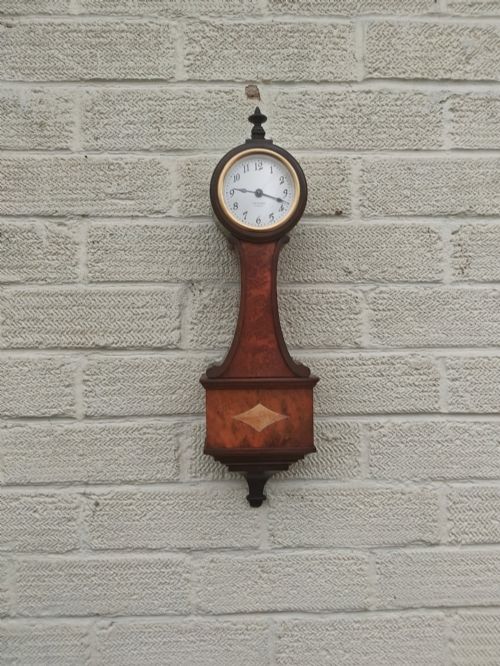


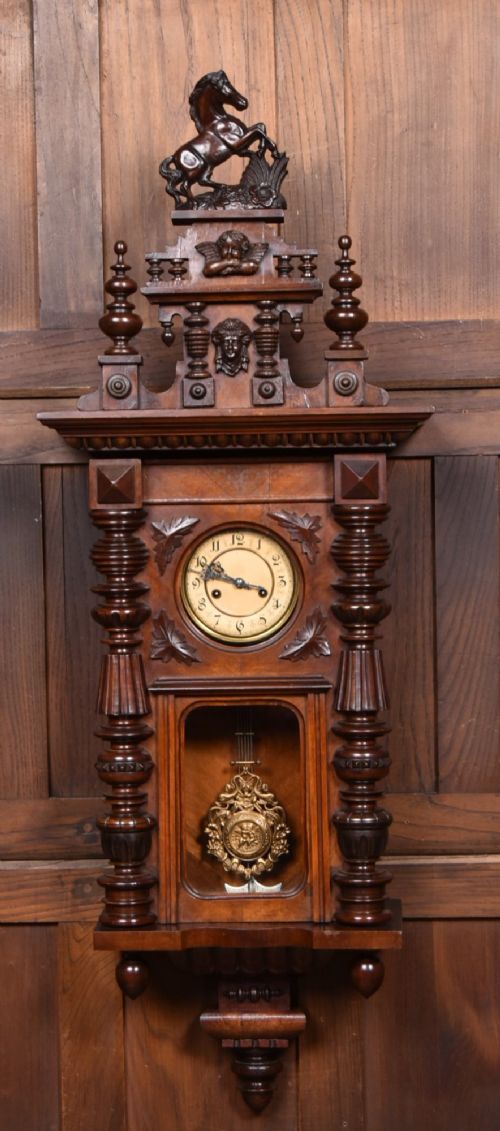
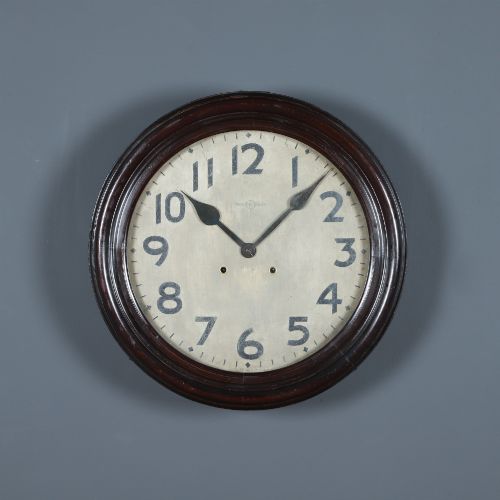


Chime Pendulum Wall Clock
A chime pendulum wall clock brings steady rhythm and resonance to a room through traditional weight-driven or spring-driven movements housed in timber cases.
Chime Pendulum Wall Clock
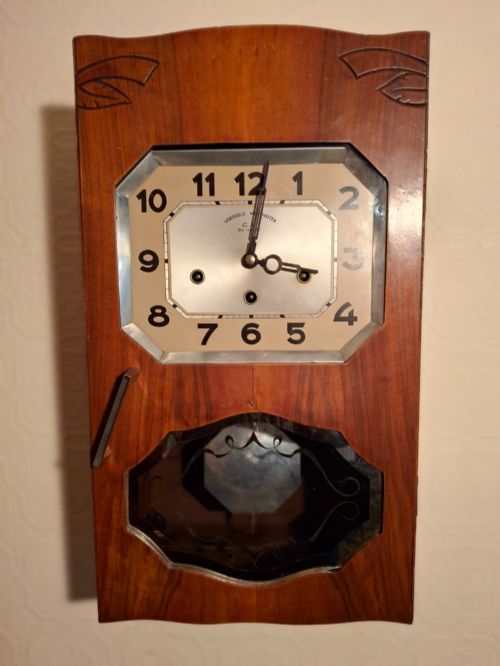
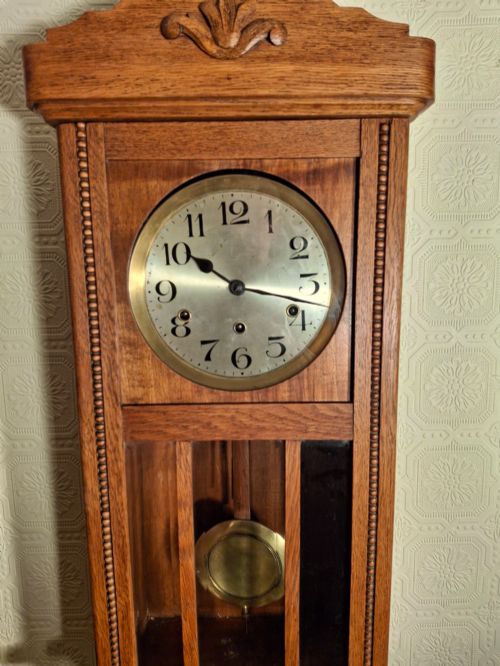
A chime pendulum wall clock combines timekeeping with striking mechanisms, housed in timber wall-hanging cases that range from simple school designs to elaborate regulator layouts. When searching for a chime pendulum wall clock, collectors encounter examples originating from the nineteenth century up through the mid twentieth century.
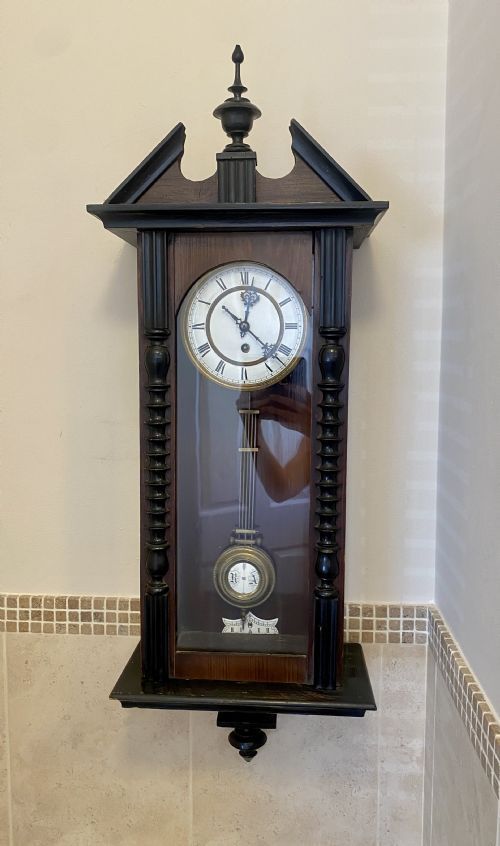
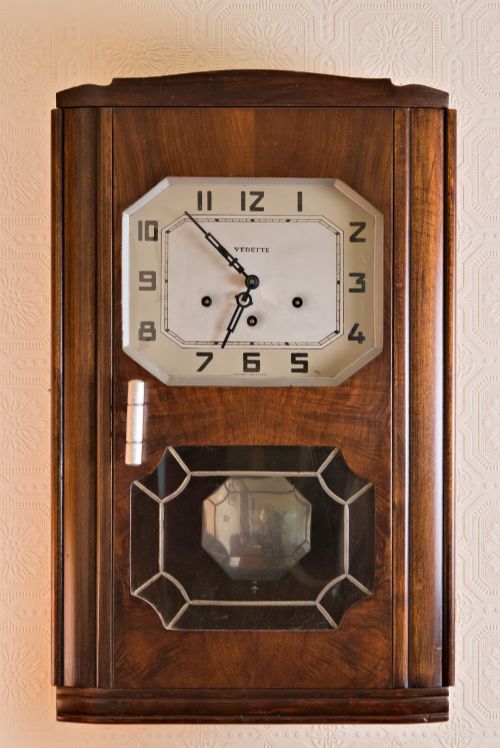
The selections span distinct historical styles, including Victorian models, Art Deco designs, and Arts and Crafts golden oak pieces. Walnut and mahogany feature frequently in the timber cases, complemented by glass panels and brass fittings.
Vienna regulators and striking wall clocks represent prominent forms within these listings. Buyers regularly find European and American production, incorporating Westminster chimes and simple striking movements.
Materials and construction methods
Timbers such as walnut, mahogany, and oak provide the structural foundation for the cases, often applied as solid wood or walnut veneer over secondary bases. Glass panels protect the dial and pendulum view, while brass forms the internal gear trains and movement components.
Dial faces integrate enamel or metal, paired with metal hands and weighted or spring-driven mechanisms. Casework construction relies on traditional joinery methods suited to supporting heavy mechanical movements on vertical surfaces.
Chime Pendulum Wall Clock Retail Price Guide 2026
Typical asking prices for chime pendulum wall clock among the pieces listed under this phrase on Sellingantiques today, from the lower quarter to the upper quarter. They describe what is for sale here now, not the wider market.
Listings feature timber cases constructed from walnut, mahogany, and oak.
Distinctions in quality and execution
Quality reveals itself in the complexity of the movement, such as triple-weight grande sonnerie systems compared to standard single-chime configurations. The precision of the case joinery, the selection of figured walnut or oak veneer, and the crispness of brass casting distinguish superior examples.
Finer pieces maintain original components and integrated mechanical harmony between the striking trains and the pendulum suspension. Regional variations in case carving and the legibility of enamel dials further separate standard production from high-grade workshop output.
Seth Thomas·Vedette·Gustav Becker·Odo
The Chime Pendulum Wall Clock Glossary
- Vienna Regulator
- A high-precision weight-driven clock originating from nineteenth-century Austria, known for long pendulums and visible movement components.
- Grande Sonnerie
- A complex striking mechanism that chimes the hours and quarters automatically on every quarter hour.
- Westminster Chime
- A melodic four-note sequence played on bells or rods by the clock movement prior to the hour strike.
- Walnut Veneer
- A thin layer of decorative walnut timber applied over a foundational wood substrate to create figured case surfaces.
- Pendulum
- A suspended weight that swings back and forth to regulate the speed of the clock mechanism.
Chime Pendulum Wall Clock: Frequently Asked Questions
How do I wind a wall clock?
Winding requires inserting a key into the winding arbors on the dial face and turning gently until resistance is met. Overwinding can damage the internal springs.
Weight-driven clocks use a pull chain or crank to draw the weights back to the top of the case. Care must be taken not to pull the chains off their internal sprockets.
Why does my clock not chime?
The chime train may have a separate weight or spring that requires winding independently from the timekeeping train. Check that the chime lever is not set to silent.
Internal synchronization issues can also halt the striking sequence. Adjusting the hands backward or forcing the mechanism can disrupt the gear alignment.
How do I hang a wall clock safely?
Secure the clock directly into a wall stud or use heavy-duty wall anchors rated for the combined weight of the timber case and movement. Hanging from plaster alone risks structural failure.
The case must hang plumb against the wall to ensure the pendulum swings evenly without catching on the case sides.
How do I regulate the timekeeping?
Adjustment involves moving the rating nut on the pendulum bob up to make the clock run faster or down to slow it down. Small adjustments made over several days achieve accuracy.
Ensure the clock is stationary and level before altering the pendulum length. Temperature changes in the room can also influence the rate of swing.