

Chime Grandfather Clock
When choosing a chime grandfather clock, you select a floor-standing timepiece that marks the hours and quarters with bells, gongs, or tubes.
Chime Grandfather Clock
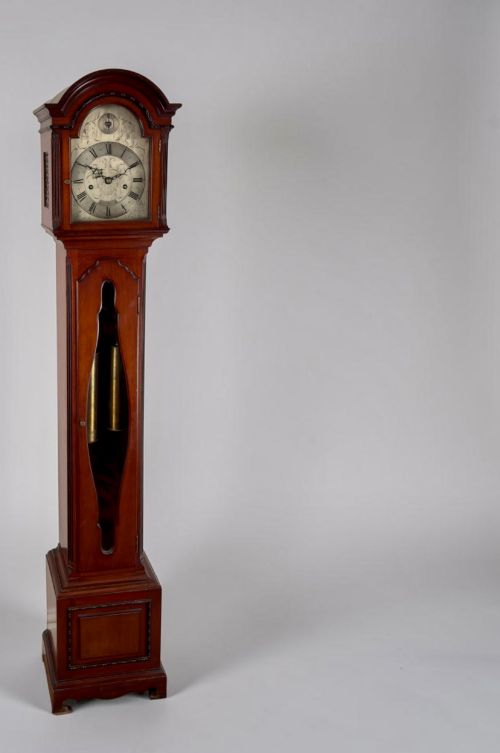
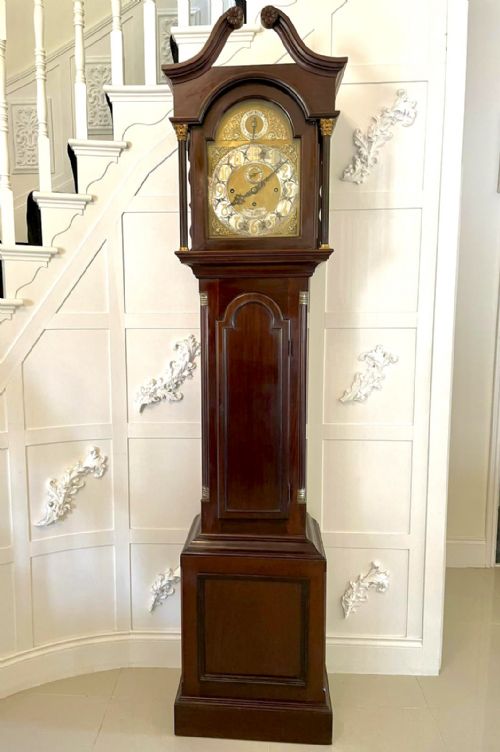
A chime grandfather clock combines traditional longcase clockmaking with mechanical music systems, spanning full-height floor clocks and smaller grandmother clock variants. These pieces appear frequently from the Edwardian period, the 1920s, and the 1930s, alongside Victorian and late 19th-century examples.
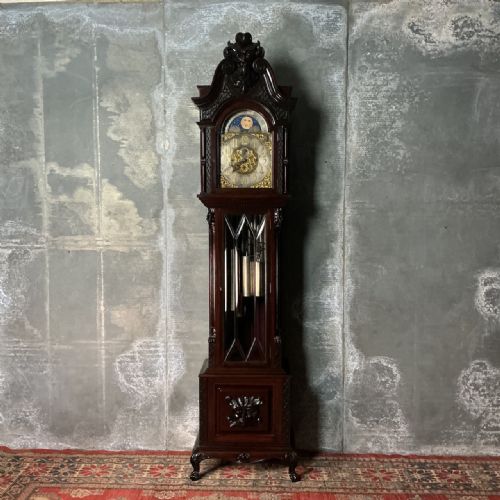
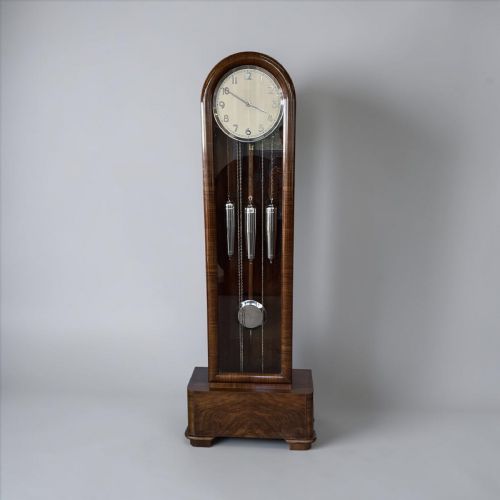
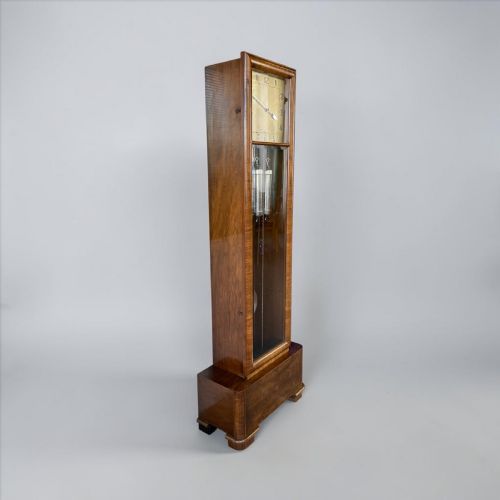
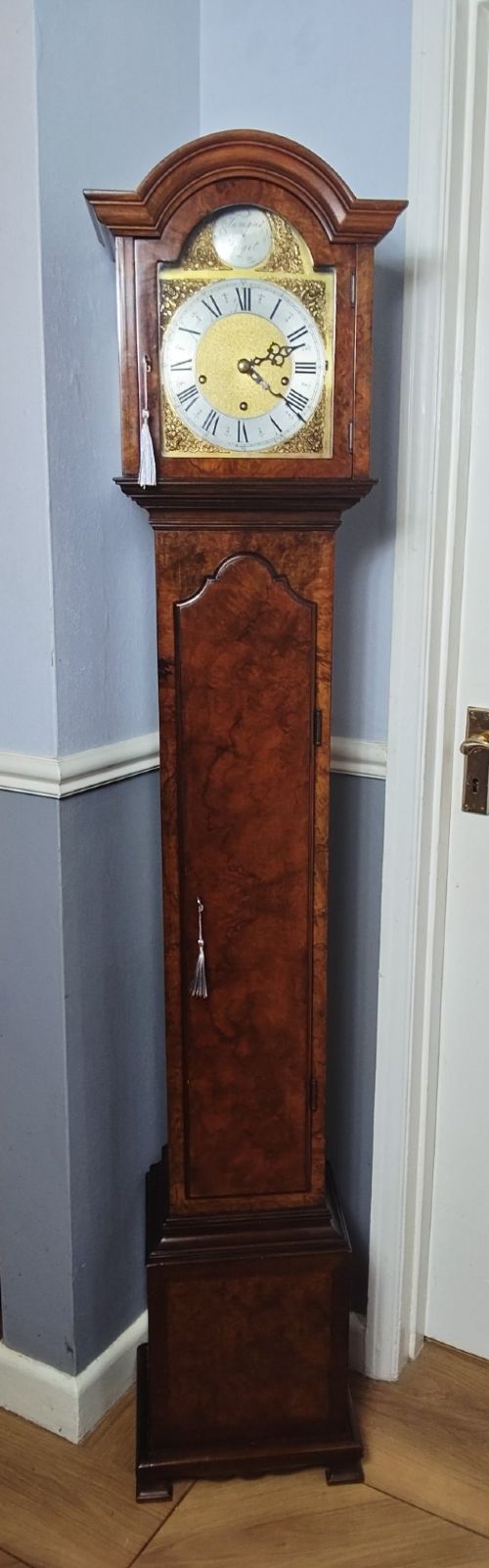
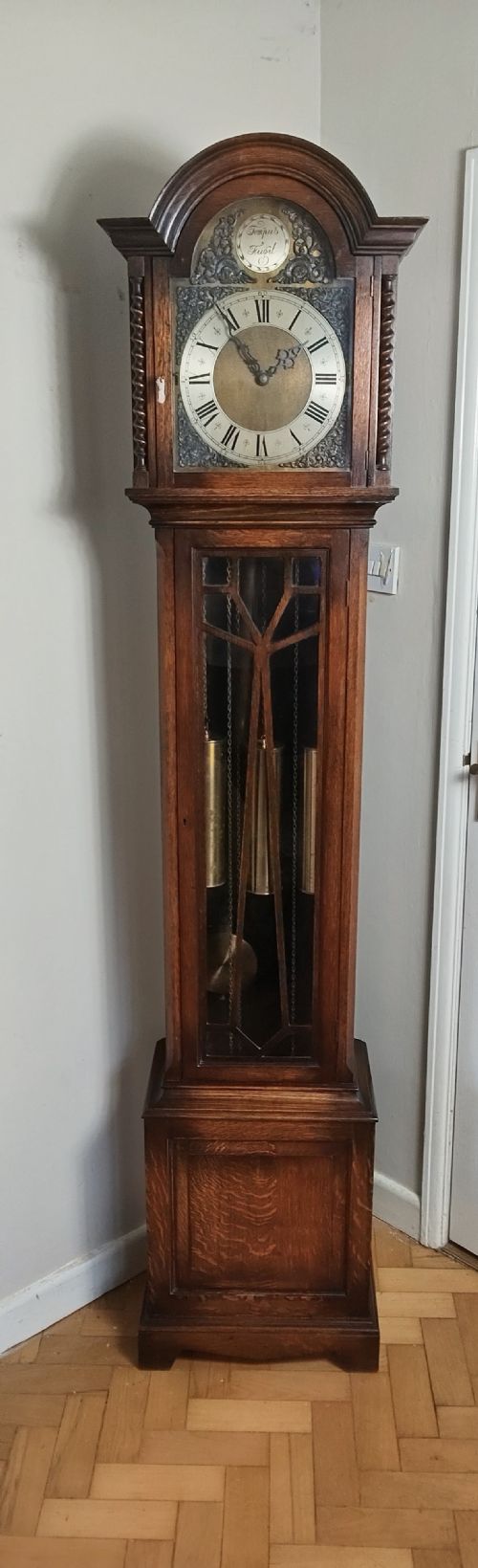
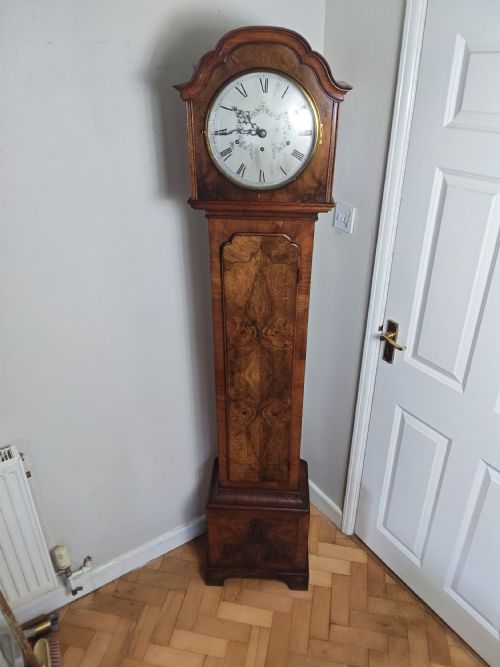
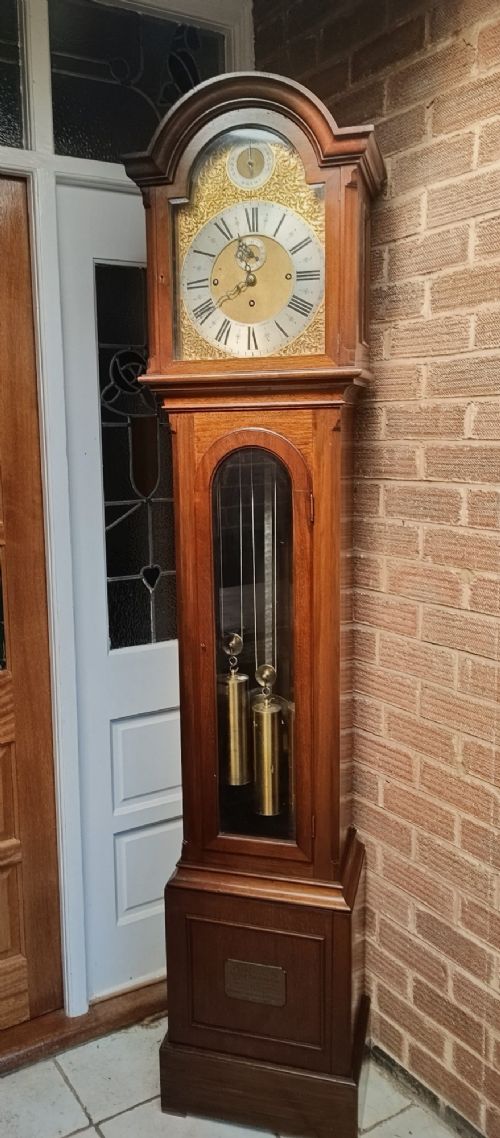
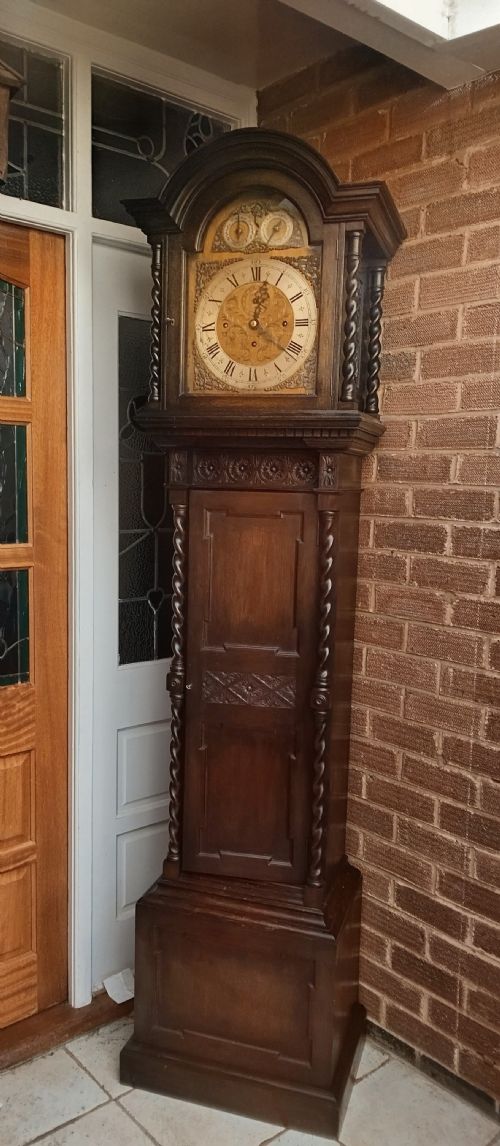
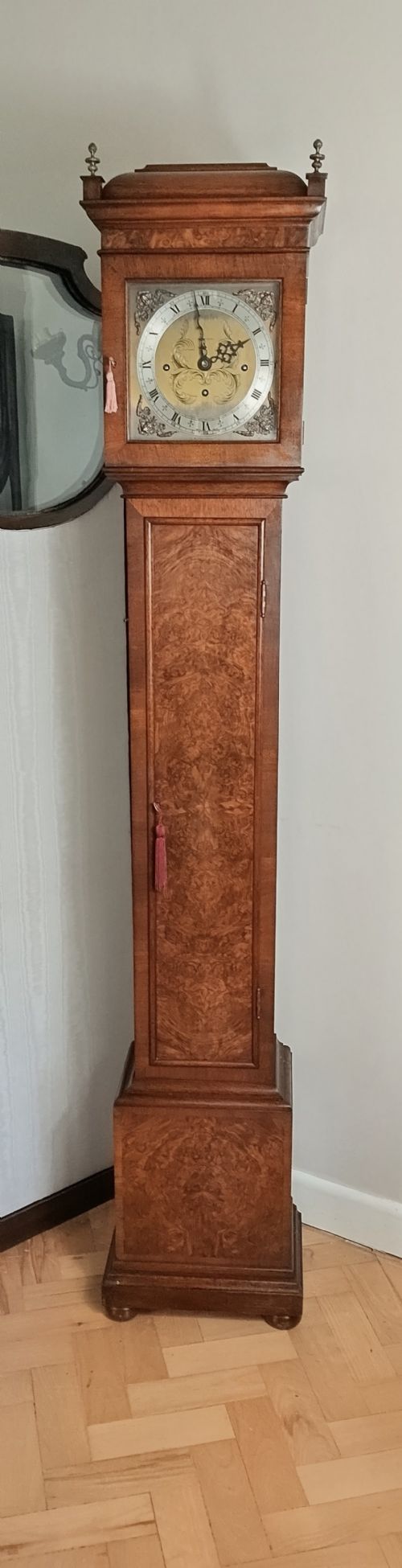
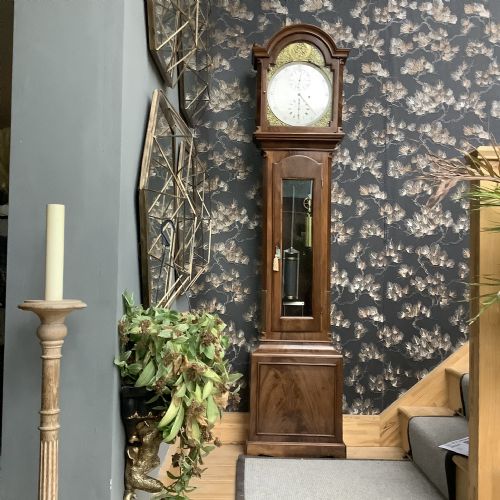
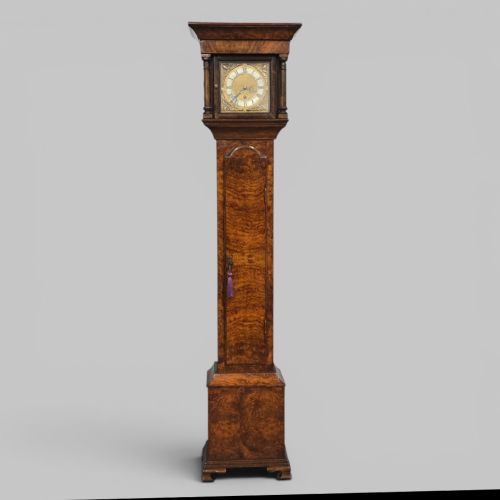
Cases range from substantial architectural oak and carved mahogany to figured walnut and burr walnut with glass trunk doors. Makers housed intricate three-train movements inside these tall wooden housings to drive both the timekeeping gear and the chime mechanism.
Materials and Movements
Cabinetmakers utilised solid and veneered timbers including oak, mahogany, walnut, and burr walnut, often complemented by brass dials, glazed glass doors, and satinwood inlay. These woods were carved, polished, and fitted with brass or steel mechanical components.
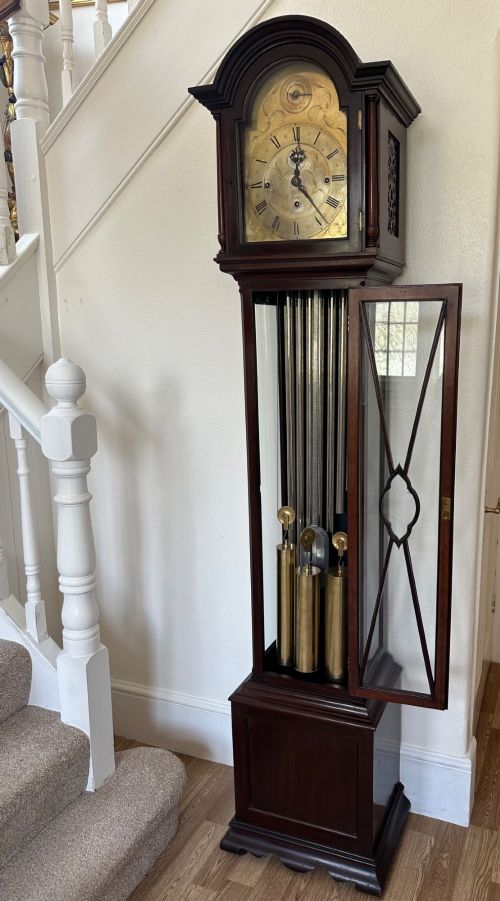
The internal mechanics rely on heavy brass movements, steel arbors, and weight-driven trains, utilising multiple weights or springs to power the time strike and multi-tune musical cylinders or tubular bells.
Craftsmanship and Acoustics
Superior examples distinguish themselves through the complexity of their musical movements, featuring multiple chime selections, nine tubular bells, or multiple operating tunes rather than a simple single-melody strike. The resonance of the acoustic output and the precision of the gear trains set finer specialist pieces apart from standard production models.
Cabinet construction reveals another tier of distinction, where finely figured burr walnut veneers, astragal glazed doors, and intricate hand-carving elevate the visual presence of the wooden case far beyond basic utilitarian joinery.
Gillett And Johnston·Winsor Bishop·Elliott·Bravingtons·Enfield·Lister And Sons·Camerer Cuss And Co·Norland·Winterhalder·Maple And Co
The Chime Grandfather Clock Glossary
- Longcase clock
- A tall, weight-driven pendulum clock housed in a protective wooden case standing directly on the floor. These tall structures are commonly known as grandfather or grandmother clocks depending on their overall height.
- Three train movement
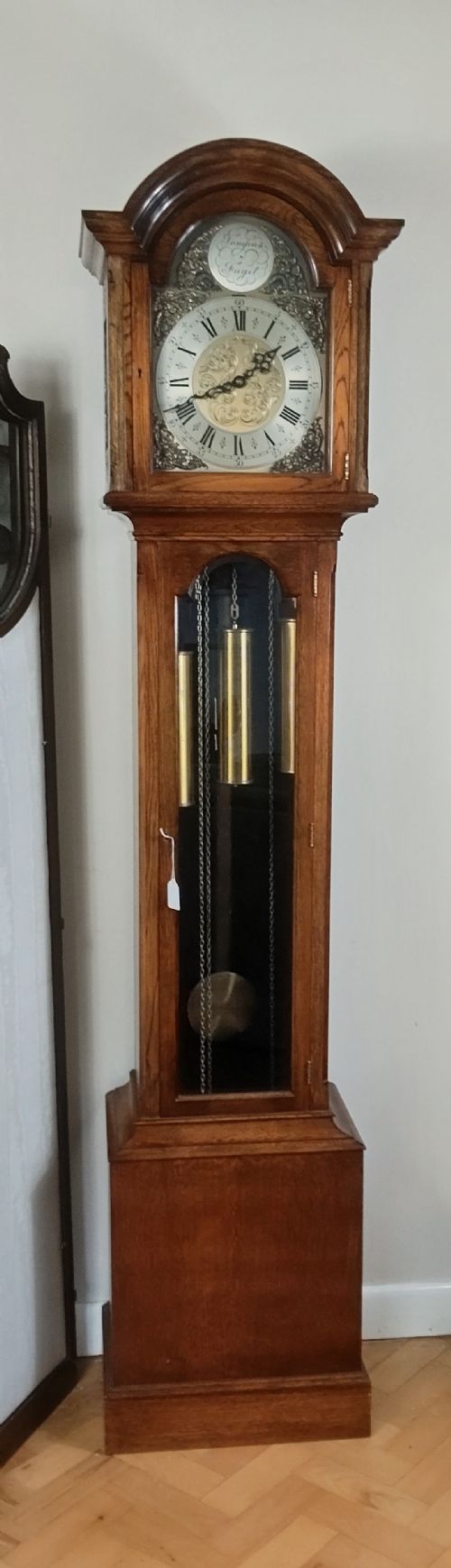
- An internal mechanical system utilising three separate gear trains to power the timekeeping, the hour strike, and the musical chime sequence. This setup requires three suspended weights or spring barrels.
- Tubular bell
- A cylindrical metal chime hung vertically inside the clock case and struck by hammers to produce deep, resonant musical notes. These tubes replace traditional wire gongs in high-grade architectural models.
- Quarter chiming
- A mechanism that sounds a melodic sequence of notes on every quarter hour, culminating in a full hour strike. Common melodies include Westminster and Whittington chimes.
- Chime silent lever
- A manual control on the dial that allows the owner to disengage the musical chimes while permitting the clock to continue keeping accurate time.
Chime Grandfather Clock: Frequently Asked Questions
How do I wind a chime grandfather clock?
Winding involves using a specialised key to draw up the weights suspended inside the trunk or turning the winding arbors on the dial face. Care must be taken not to over-wind the movement.
For three-train models, all three weights or springs require regular attention to keep both the timekeeping and the musical chime trains operational.
What is the difference between a grandfather and a grandmother clock?
Grandfather clocks are taller floor-standing timepieces, whereas grandmother clocks represent smaller, more compact versions of the traditional longcase form. Both styles frequently incorporate musical chime movements and similar wood veneers.
Proportions vary to suit different ceiling heights and room dimensions without altering the mechanical complexity inside.
How do tubular bells work?
Tubular bells hang vertically within the upper trunk of the clock case, struck by small internal hammers operated by the music train. This configuration creates deep, resonant chime tones.
Longer tubes produce lower pitches, whilst the arrangement of multiple tubes allows the clock to play complex multi-tune melodies.
Where should I place my chime clock?
A chime clock requires a stable, level floor away from direct sunlight, excessive heat sources, and damp environments to protect the wood case and delicate internal mechanics. Placing the clock against an interior wall helps prevent environmental temperature shifts.
Sufficient clearance is also needed around the case to allow the pendulum to swing freely and the chimes to resonate clearly.