






Child with Dog Painting
A child with dog painting captures an enduring domestic bond, offering intimate glimpses into historical family life through canvas and paper.
Child with Dog Painting
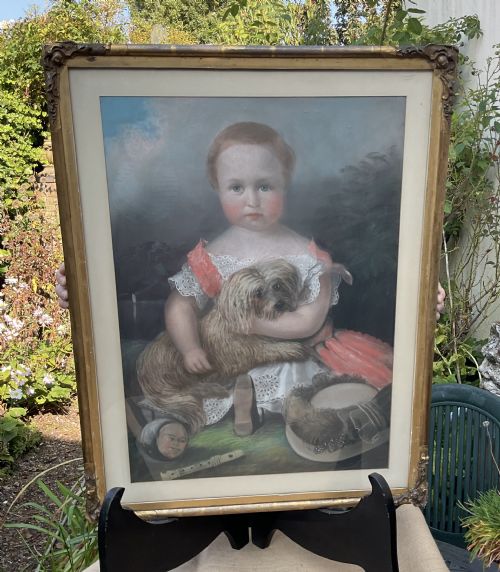
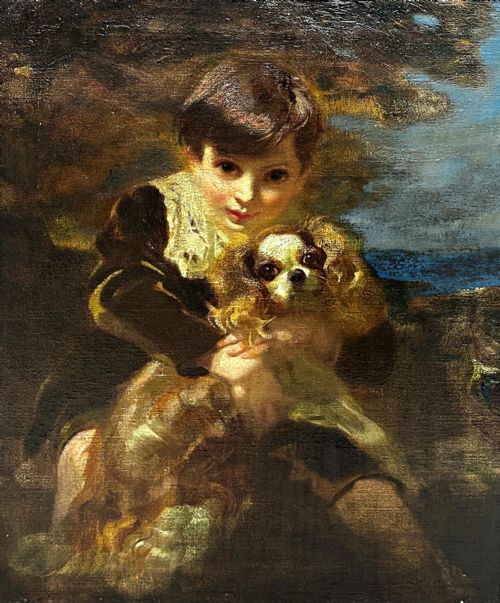
A child with dog painting presents young subjects accompanied by their pets, ranging from naive folk art depictions to formal Victorian fine art. You will frequently encounter nineteenth-century canvases and watercolours showing children with spaniels, terriers, and ponies.
These works vary from provincial primitive portraits to accomplished equestrian and cottage garden scenes. The companions include Cairn terriers, King Charles spaniels, and larger working breeds.
Subjects span from eighteenth-century aristocratic children to nineteenth-century rural youngsters. The compositions document how families wished to record their children alongside beloved animals.
Materials and execution
Oil on canvas forms the primary medium for these portraits, complemented by watercolours on paper and occasional works on panel. Artists applied oil paint to build rich textures in clothing and animal fur.
Gilded wood frames often house the canvases, adding depth and period character to the wall art. Watercolours utilise paper supports, sometimes protected beneath glass.
Techniques range from the detailed brushwork of academic painters to the flat perspective and bold outlines characteristic of naive folk art.
Several dogs double as cart-pulling assistants, proving that working animals earned their keep long before modern pet pampering.
Assessing quality and execution
Anatomical proportion and facial expression separate accomplished portraits from naive works. The convincing rendering of a child's hands and a dog's posture distinguishes finer hands.
The integration of subject and animal defines the composition's success. Superior pieces capture genuine interaction between the child and the pet rather than stiff, isolated figures.
Condition of the canvas, pigment stability, and original framing contribute to the overall integrity of the piece.
John Alfred Wheeler·Mary Beale·Arthur Claude Strachan·Frank Owen Salisbury·Richard Buckner·Mabel Lucie Attwell
The Child with Dog Painting Glossary
- Naive art
- Artwork created by an artist without formal training, often characterised by flat perspectives and direct charm. These pieces rely on instinct rather than academic rules.
- Equestrian portrait
- A painting featuring a subject on horseback, frequently accompanied by dogs. Such works often denote rural gentry and land ownership.
- Oil on canvas
- Pigment suspended in drying oil applied to stretched woven fabric. This medium allows for rich blending and longevity.
- Watercolour
- Paint consisting of colour pigments with a water-soluble binder, used on paper. It creates luminous, transparent washes.
- Gilt
- A thin layer of gold leaf applied to wood or other surfaces for decoration. It frames and elevates the artwork.
Child with Dog Painting: Frequently Asked Questions
How do I date a child with dog painting?
Examine the children's clothing styles, hairstyles, and the specific dog breeds depicted in the canvas. Portrait conventions often shift noticeably between the Georgian and Victorian eras.
Material analysis of the canvas, stretcher frames, and pigments also helps determine the approximate decade of creation.
Where should I hang these paintings?
These domestic portraits suit living rooms, studies, or hallways where natural light enhances the painted details. Avoid placing watercolours in direct sunlight to protect the paper and pigments.
Pairing them with period furniture helps create a cohesive historical interior.
Are these works original?
The selection includes original period works ranging from the seventeenth century through to the mid-twentieth century. Each piece reflects the painting techniques of its specific era.
Signatures, stretcher construction, and canvas ageing help confirm authenticity.