
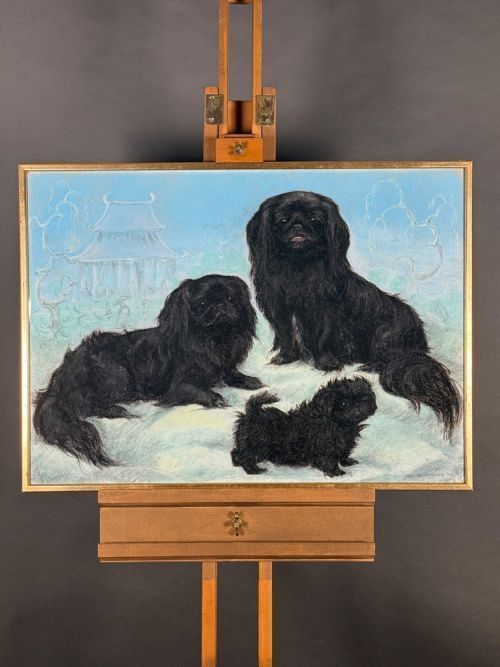


Canine Fine Art Painting
Canine fine art painting captures the character and prestige of dogs through enduring brushwork.
Canine Fine Art Painting
Canine fine art painting encompasses framed artwork and oil paintings depicting dogs across various historical periods, including Victorian and early twentieth century examples. These pieces range from intimate studies of individual pets to larger Victorian sporting art and French school compositions.
Buyers encounter subjects such as Pekingese, fox terrier puppies, bloodhounds, and show dogs rendered on canvas, artist palettes, or paper. The selection includes works attributed to specific artists as well as pieces created in the manner of established followers.
Originating predominantly from the nineteenth and early twentieth centuries, these oil paintings and pastel drawings reflect changing domestic attitudes toward dogs and sporting culture. Each framed artwork offers a distinct glimpse into historical canine portraiture and animal depiction.
Materials and methods
The works rely primarily on oil paint applied to canvas or wood panels, alongside pastel on paper drawings and depictions painted directly onto artist palettes. Canvases are frequently housed within giltwood or gilded wooden frames that complement the traditional subjects.
Techniques range from nineteenth century realism to mid century realism, employing layered oils to capture the texture of fur and the natural light in courtyard settings. Artists utilise careful brushwork to convey the distinct anatomy and expression of breeds like bloodhounds and terriers.
Distinctions in execution
Quality rests upon the precision of anatomical rendering and the ability of the painter to articulate the individual personality and posture of the dog. Superior works display confident handling of light across the coat and a convincing integration of the subject within its background.
The sophistication of the composition and the integrity of the original frame further differentiate the pieces. Works by documented painters or those exhibiting strong regional schools demonstrate greater mastery than simpler domestic studies.
Valentine Thomas Garland·M.E. Hankinson·John Emms·James Ward
The Canine Fine Art Painting Glossary
- Oil on Canvas
- Pigments bound in a drying oil medium applied to a stretched woven fabric support. This surface provides a durable ground for building rich colour and texture in portraiture.
- Giltwood
- Wood carved and coated with gold leaf or a gold coloured finish. It is commonly found on traditional frames surrounding antique paintings.
- Victorian Sporting Art
- Artwork depicting rural pursuits, game, and working dogs produced during the reign of Queen Victoria. These pieces often celebrate the capabilities of hounds and terriers.
- French School
- A designation for artists trained or working within the artistic traditions of France. Such works often emphasise specific academic approaches to lighting and composition.
- Pastel on Paper Drawing
- An artwork created using powdered pigment sticks applied to a paper support. This medium allows for soft blending and immediate atmospheric effects.
Canine Fine Art Painting: Frequently Asked Questions
What subjects appear in these paintings?
The subjects include individual pet portraits, working bloodhounds, terrier puppies, and fighting dogs. Artists also depicted show dogs and animals positioned in domestic or outdoor courtyard settings.
Breeds range from Pekingese and English terriers to Cairn terriers and bloodhounds. Some compositions also feature human figures alongside the animal subjects.
How do I date a canine painting?
Dating relies upon stylistic markers, dress, framing materials, and recorded artist active dates. Nineteenth century and Victorian works often feature distinct clothing styles and heavier gilded wood frames.
Inscribed dates on canvases or paper drawings provide direct evidence of creation. Mid twentieth century pieces display looser realist techniques distinct from earlier academic standards.
Where were these artworks produced?
Production spans English and French schools of painting, reflecting regional artistic traditions. English pieces frequently align with Victorian sporting art and domestic portraiture.
French school works introduce continental approaches to lighting and courtyard settings. Artists worked both independently and within established regional painting traditions.
How should I display a framed oil painting?
Displaying these artworks requires stable indoor environments away from direct sunlight and excessive humidity. Proper placement protects both the oil paint and the historic giltwood frame from degradation.
Secure wall fixings suited to the weight of the wooden frame ensure safe hanging. Gentle dusting preserves the surface without disturbing the aged paint layers.