


Cheval Floor Mirror
A cheval floor mirror is a freestanding, full-length glass mounted on a pivoting frame that lets you adjust the tilt.
Cheval Floor Mirror
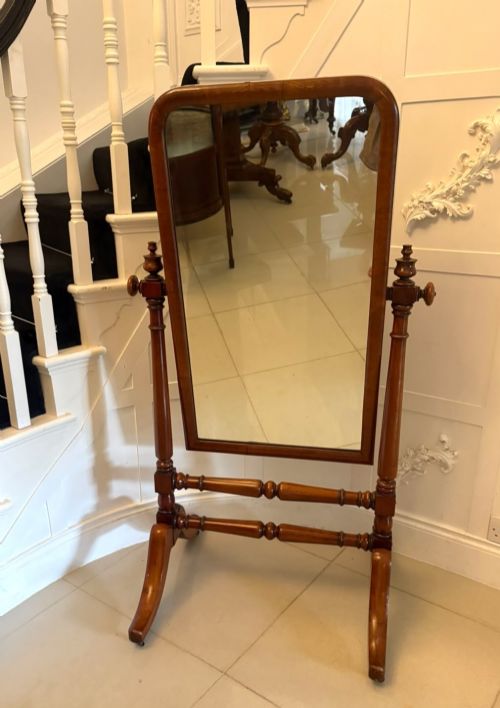
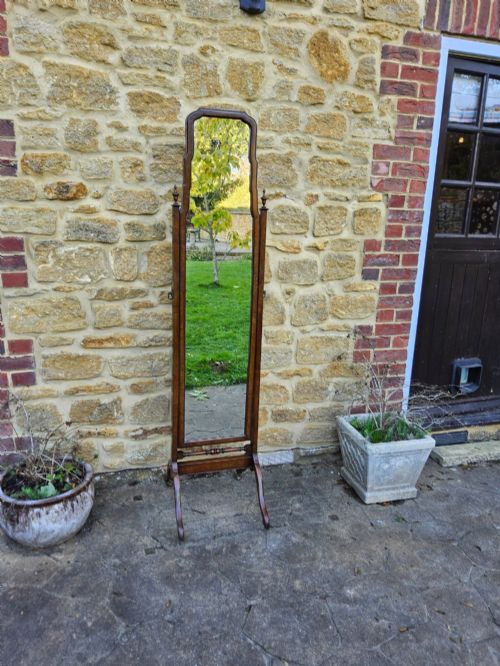
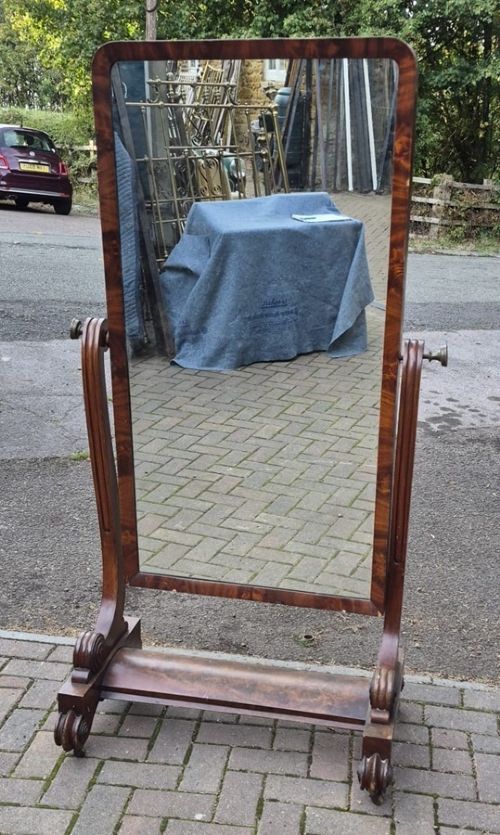
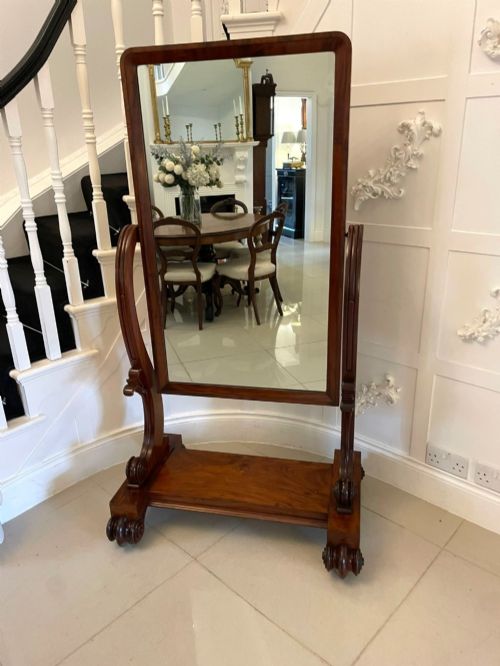
A cheval floor mirror is a freestanding glass designed to show the full figure from head to toe. The frame pivots on vertical side supports, usually mounted on four legs or a heavy platform base. Most examples encountered here date from the nineteenth century and the early twentieth century.
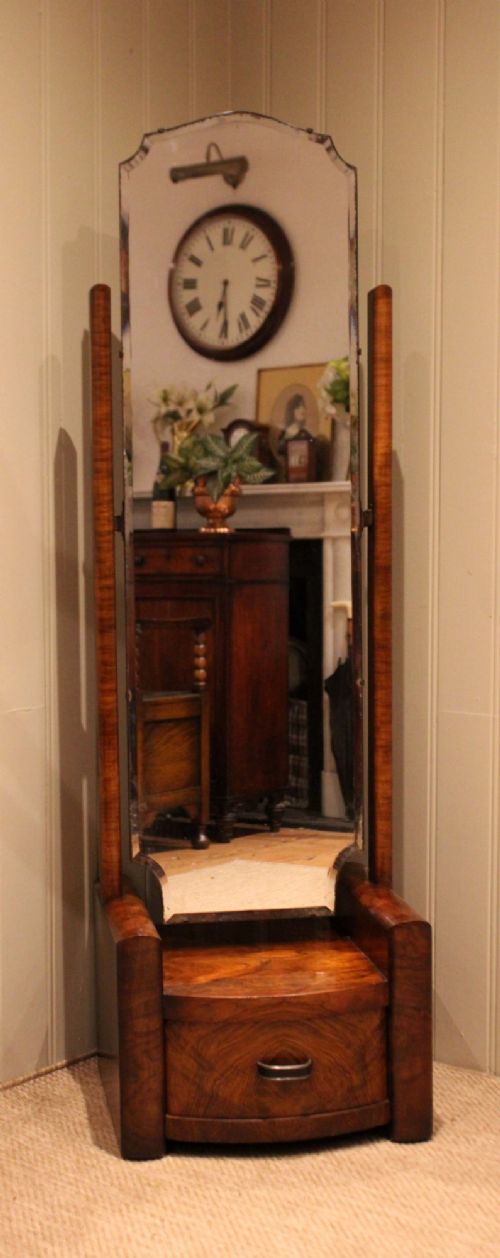
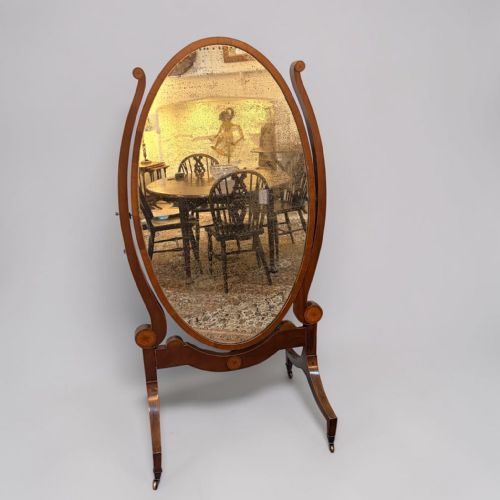
The form developed to aid dressing and grooming in bedrooms and dressing rooms. Versions range from simple mahogany frames to elaborate pieces in burr walnut, satinwood, giltwood, and satin birch. Regional and stylistic variations include Regency, Victorian, Edwardian, William IV, French Empire, and Chinoiserie designs.
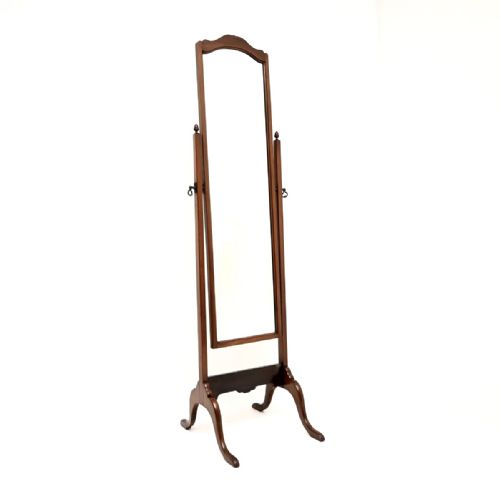
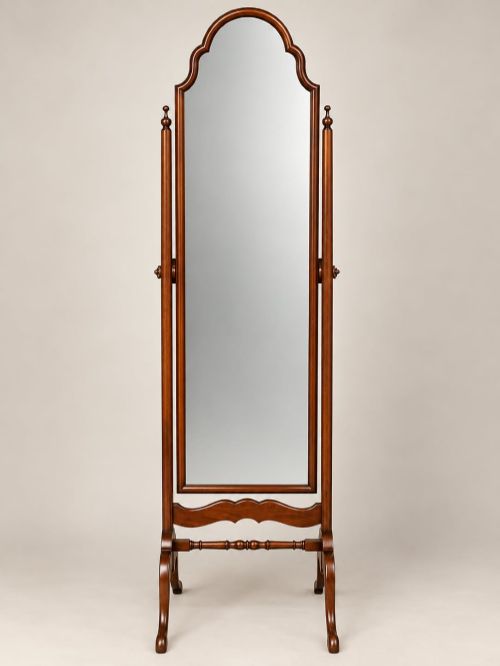
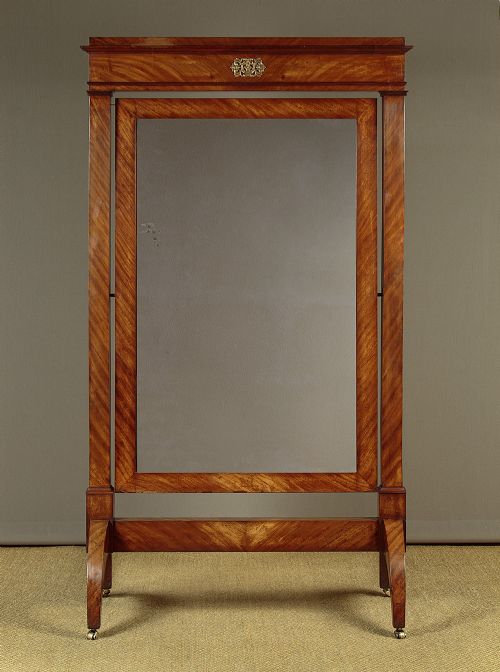
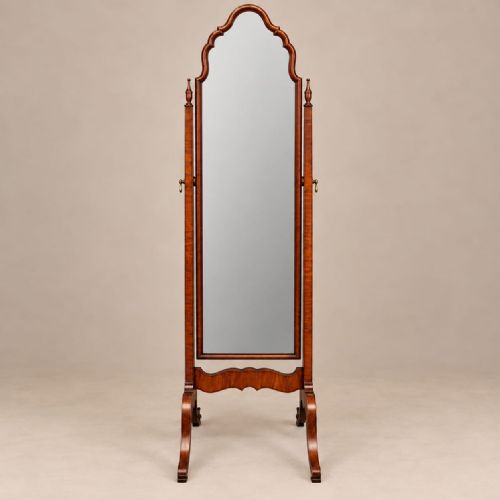
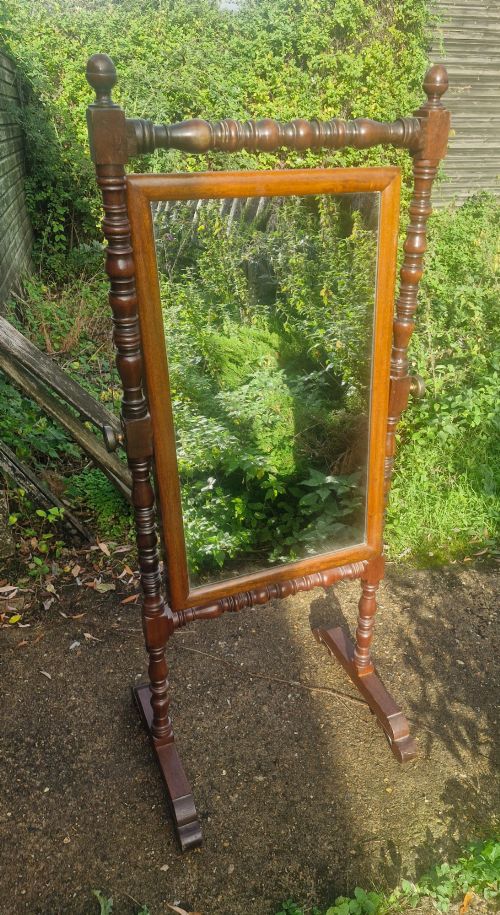
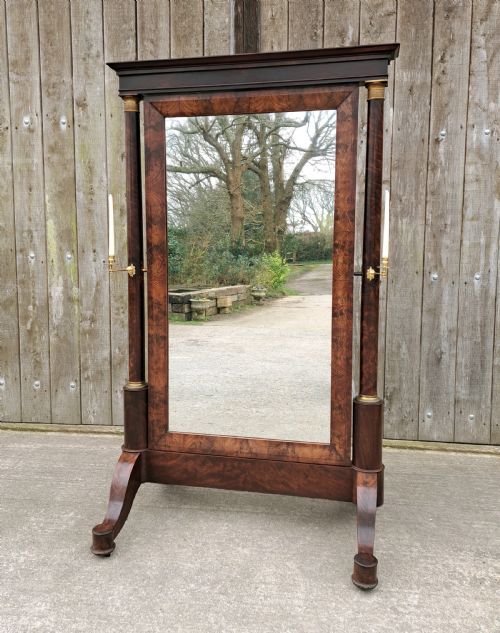
Makers adapted the pivoting glass to suit shifting interior fashions over the decades. Earlier nineteenth-century examples often feature formal architectural lines and flame mahogany, while later pieces incorporate barley twist supports, inlaid details, or revival styles such as Queen Anne.
How they were made
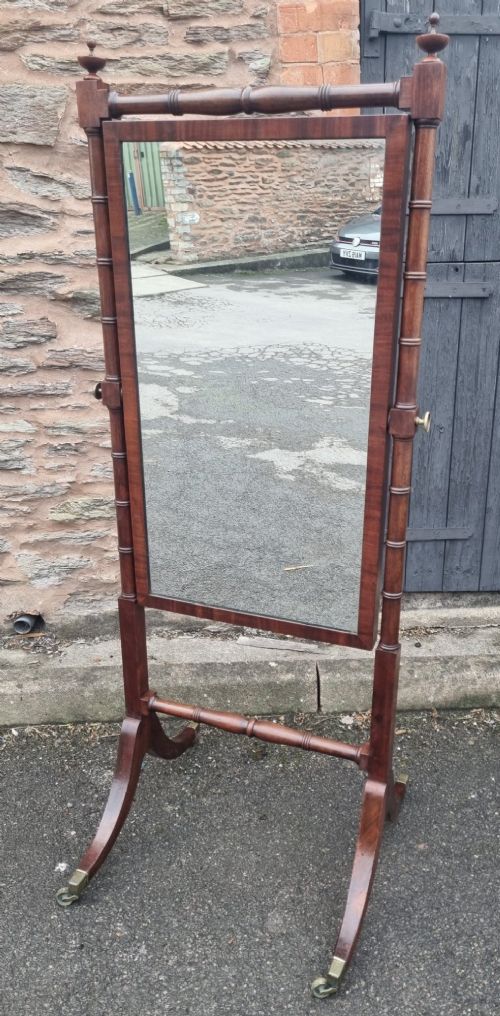
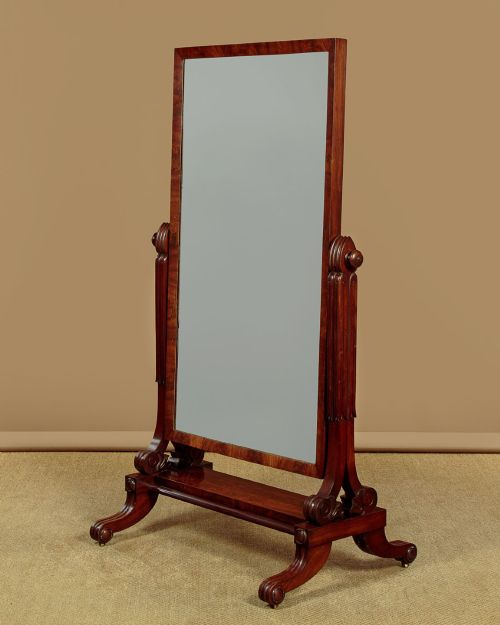
Cabinetmakers constructed the main uprights and frames using dense timbers like mahogany, walnut, and satinwood, frequently selecting figured veneers such as burr walnut and flame mahogany for visual depth. Structural stability relied on sturdy pedestals or splayed legs, often fitted with brass castors to allow smooth movement across carpets and floorboards.
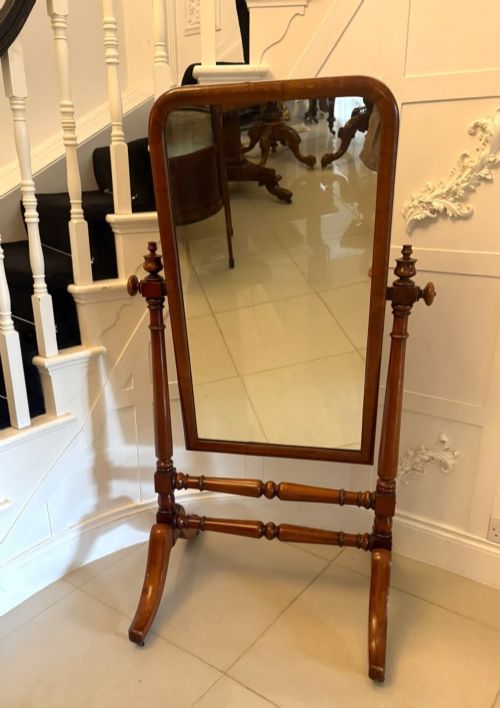
The mirror glass itself hung within a secondary inner frame, secured by adjustable brass or metal pivot screws that permitted the glass to swing freely. Decorative accents ranged from carved giltwood and inlaid stringing to barley twist turnings on the vertical supports.
Cheval Floor Mirror Retail Price Guide 2026
Typical asking prices for cheval floor mirror among the pieces listed under this phrase on Sellingantiques today, from the lower quarter to the upper quarter. They describe what is for sale here now, not the wider market.
Many historical dressing mirrors rolled into position on tiny brass wheels, ready to catch the morning light.
What varies in quality
Quality rests primarily in the selection of timbers and the density of the grain. High-grade examples utilise rich cuts of flame mahogany or burr walnut with careful book-matching, whereas simpler versions rely on plain, straight-grained mahogany or secondary woods.
Engineering of the pivot mechanism and the weight distribution of the base also dictate the grade of a piece. A superior mirror holds its angle firmly without sagging, supported by heavy brass fittings and robust joinery rather than light, loose pivots that allow the glass to slip.
Gillow
The Cheval Floor Mirror Glossary
- Cheval mirror
- A freestanding full-length dressing glass set into a pivoting frame supported by four legs or a heavy base. The name derives from the French word for horse, referencing the trestle-like support.
- Flame mahogany
- A distinct timber figure displaying fiery, flamed patterns created by slicing across the bough where it joins the main trunk. Cabinetmakers prized this veneer for formal nineteenth-century furniture facades.
- Burr walnut
- A prized wood veneer harvested from tree growths or burls, showing swirling, intricate knot formations. It adds rich texture to cabinetwork.
- Giltwood
- Timber carved and coated with gold leaf or metallic paint to create a bright, reflective surface. It appears on decorative frames and decorative mounts.
- Barley twist
- A spiral turning carved into furniture legs or vertical supports, resembling the shape of twisted barley. This decorative technique is common on Victorian stands.
Cheval Floor Mirror: Frequently Asked Questions
Where should I place a cheval floor mirror?
These tall mirrors suit bedrooms, dressing rooms, and wide hallways where you need a full-length reflection. Because they stand independently on legs or a base, you can position them against a wall without permanent fixings.
Ensure the floor is reasonably level so the frame rests securely on its castors or feet, allowing the pivoting glass to swing smoothly without catching the floor.
How do I adjust the mirror tilt?
Most examples use lateral pivot screws or adjustable thumbscrews on either side of the inner frame. Tightening or loosening these metal fittings controls the tension on the hanging glass.
Keep the screws balanced on both sides so the frame tilts evenly and stays in position when you select your viewing angle.
Are these mirrors heavy to move?
Solid timber frames with large glass plates carry significant weight, though many period pieces feature original brass castors beneath the legs. These castors help roll the unit gently across wooden floors or short-pile carpets.
When repositioning, support the lower frame rather than pulling from the top uprights to protect the pivot joints from undue strain.
How do I tell a Victorian mirror from a Regency one?
Regency and early nineteenth-century pieces often feature crisp architectural lines, flame mahogany veneers, and restrained brass mounts inspired by classical or French Empire design. Victorian examples frequently introduce heavier proportions, turned columns, or ornate details like barley twist supports.
Later Edwardian and 1920s versions often bring back lighter woods, satin birch, inlaid stringing, or revival styles such as Chinoiserie and Queen Anne.