


Chestnut Horse Portrait
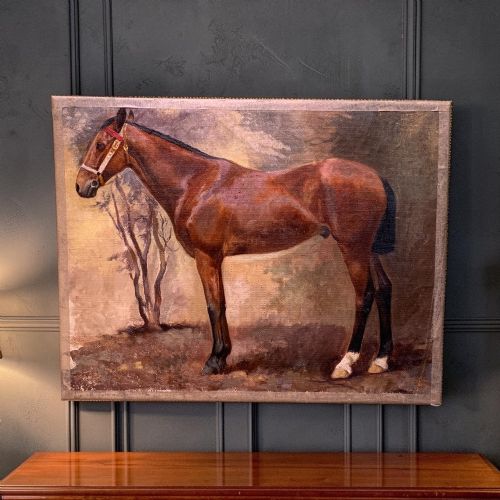
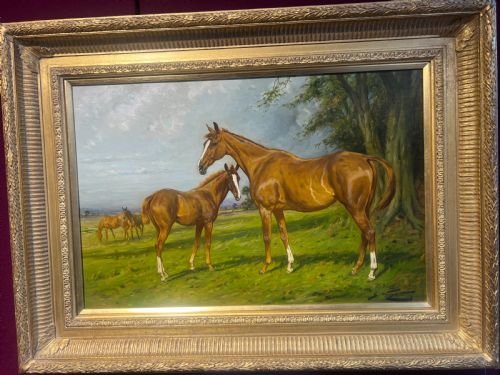
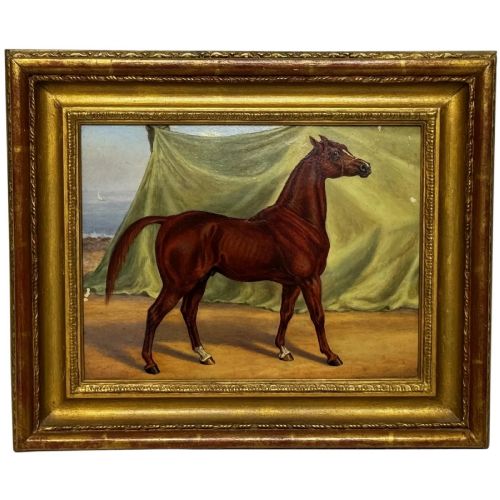
A chestnut horse portrait captures the power and character of these equines in oil, offering a direct window into British and colonial equestrian history.
Chestnut Horse Portrait
A chestnut horse portrait depicts individual animals in oil paint, ranging from stable yards and river landscapes to racing scenes. When searching for a chestnut horse portrait, buyers encounter works executed across the nineteenth and twentieth centuries.
The selections span British Sporting Art, Victorian equestrian works, and colonial pieces. Canvases and oak panels record hunters, thoroughbreds, and stable scenes framed in giltwood.
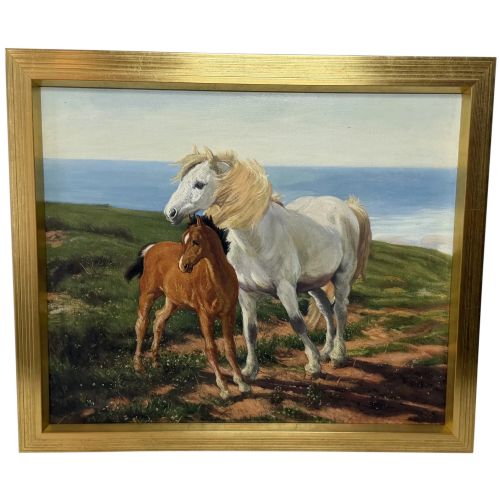
These oils capture specific animals, from purebred Arabians to hunters and foals, often accompanied by dogs, riders, or handlers. Painters record the rich red coats and distinct markings of their subjects with careful observation.
What varies in quality
Quality rests on the artist's command of equine anatomy, the convincing rendering of light across the chestnut coat, and the vitality of the composition. Stronger works capture the precise conformation and individual temperament of the horse rather than relying on generic stock poses.
The handling of the surrounding landscape or stable interior also dictates the standing of a piece. Finer examples integrate the animal harmoniously into its environment, balancing the principal subject with atmospheric depth and detailed accessories.
Represented periods span the Victorian era, the Edwardian period, and the nineteenth century.
George Wright·John Ferneley Senior·C W Tuck·Alfred Moginie Bryant·Abraham Cooper RA·Charles Bilger Spalding RA·Benedict Angell Hyland·Karl Georg Arsenius
The Chestnut Horse Portrait Glossary
- Canvas
- A heavy woven fabric stretched across a wooden frame to serve as a support for oil painting. It provides a slightly textured surface that holds layered pigment well.
- Giltwood
- Timber that has been decorated with a thin layer of gold leaf or gilt powder. Frames of this material are commonly found on nineteenth-century portraits.
- Oak Panel
- A flat sheet of oak used as a rigid support for oil paint. Painters utilised these wooden boards frequently during the nineteenth century before canvas became dominant.
- Equestrian Art
- Works depicting horses, often in sporting, racing, or stable contexts. This genre flourished in Britain throughout the Victorian and Edwardian periods.
- Sporting Art
- A genre focusing on rural sports, hunting, and animals associated with them. These paintings document the prized livestock and hunting dogs of landowners.
Chestnut Horse Portrait: Frequently Asked Questions
How do I identify the period of a horse portrait?
Look to the stretcher frames, canvas type, and the clothing style of any human figures included in the composition. Nineteenth-century works often utilise robust wooden stretchers and heavier oil applications.
Compare the framing and signature styles with known periods such as the Victorian era or the Edwardian years. Changes in artistic convention from romantic landscapes to more direct anatomical focus also help date the work.
Where were these equine paintings displayed historically?
Owners traditionally hung these portraits in country houses, estate libraries, and stable offices to celebrate prized hunters and racehorses. They served as visual records of valuable bloodlines and successful sporting animals.
Today, they suit studies, living rooms, and hallways where traditional oil paintings add depth and historical character to an interior scheme.
What is the difference between a hunter and a thoroughbred in these portraits?
Hunters were bred for stamina and jumping across open country during field sports, possessing a sturdier build and powerful quarters. Portraits of hunters often place them within stable yards or rural landscapes.
Thoroughbreds, conversely, were bred for racing, displaying a more refined head, longer neck, and lighter frame. Artists captured these differences through careful attention to the horse's conformation and musculature.
How should I care for an antique oil painting on canvas?
Keep the artwork away from direct sunlight, extreme temperature fluctuations, and high humidity to prevent the canvas from slackening and the paint from cracking. Gentle dusting with a soft, dry brush is sufficient for routine maintenance.
Avoid using water or chemical cleaners on the paint surface or the giltwood frame. Consult a professional conservator if the canvas requires cleaning or structural repair.