


Antique Hunter Horse Art
These pieces of antique hunter horse art capture the spirit of the stables and the field through the brush and print of the nineteenth and early twentieth centuries.
Antique Hunter Horse Art
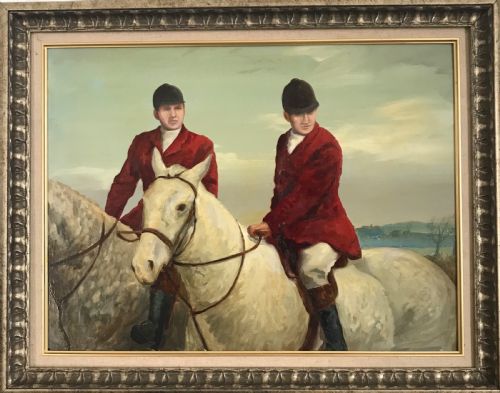
When you search for antique hunter horse art, you enter a rich tradition of equine portraiture recording prized mounts and sporting life. The works on this page span the nineteenth century and the early twentieth century, capturing distinct individual animals in stable settings or open country.
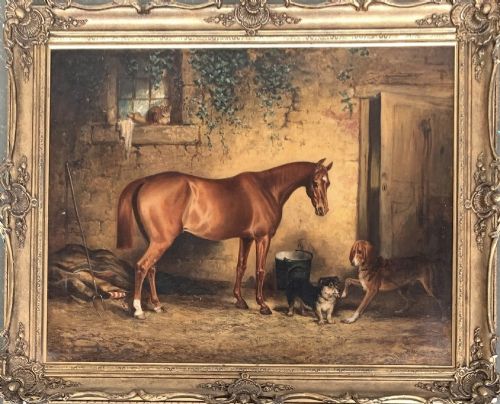
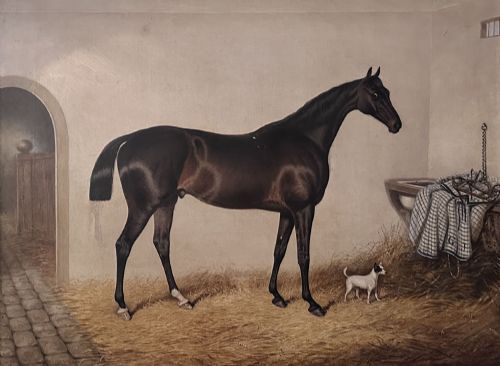
The most common forms you will meet here are oil paintings on canvas and framed art prints. These range from detailed studies of bay and chestnut hunters to lively scenes featuring hounds and grooms.
Originating largely within British sporting art traditions, these pieces reflect the Victorian and Edwardian obsession with fine horses. Many name specific animals and the stables they belonged to, offering a direct link to historical equestrian culture.
Materials and technique
The pieces are executed primarily in oil paint on canvas, mounted in gilt wood frames that complement the rich tones of the subjects. Artists utilised oil paint to build up the glossy coats of the horses and the texture of the stable straw with careful brushwork.
Watercolours and hand-coloured engravings on paper also appear, offering a lighter touch often seen in works meant for framing and domestic display. The support materials range from canvas stretched over wooden frames to heavy paper protected beneath glass.
Several canvases squeeze a small terrier into the stable alongside the massive hunter, ensuring the smallest dog claims the biggest attitude.
Assessing quality and execution
Quality in these works rests upon the anatomical precision of the horse and the skill with which the artist renders light across the animal's coat. Superior pieces capture the individual character and conformation of the hunter rather than relying on a generic equine formula.
The handling of the background details, from stable architecture to the inclusion of handlers and hounds, distinguishes the finer works. Signed pieces by established practitioners show a greater sureness in the handling of oil paint and colour harmony.
Henry Barraud·Benjamin Cam Norton·Edwin Frederic Holt·Alfred Moginie Bryant·Alfred Grenfell Haigh·Abraham Cooper RA·John Sanderson-Wells·Charles Bilger Spalding RA·James Barenger
The Antique Hunter Horse Art Glossary
- Hunter
- A horse bred and trained for fox hunting, typically possessing stamina and strong bone. These animals form the central subject of the sporting art on this page.
- Bay
- A horse coat colour characterised by a reddish-brown body with a black mane, tail, and lower legs. It is the most frequently seen horse colour in these nineteenth-century paintings.
- Roan
- A horse coat pattern featuring an even mixture of white hairs with hair of another colour, such as the strawberry roan recorded in this collection. This distinct colouring provides a varied texture for the artist to render.
- Gilt wood
- Wood that has been treated with gold leaf or a gold-coloured finish to create an ornate frame. These frames enhance the visual weight of the oil paintings.
- Sporting art
- A genre of art depicting blood sports, racing, and equestrian subjects. It flourished in Britain during the Victorian and Edwardian eras.
Antique Hunter Horse Art: Frequently Asked Questions
What is antique hunter horse art?
These works are paintings, watercolours, and engravings depicting horses bred for hunting, primarily produced during the nineteenth and early twentieth centuries.
They serve as historical records of specific animals, famous stables, and the broader culture of British equestrian sports.
How were these horse portraits used?
Owners commissioned these portraits to celebrate prized hunters, record stable favourites, or commemorate specific hunting seasons.
Over time, they transitioned into general domestic decoration, valued for their connection to rural sporting traditions and fine art.
How do I date a piece?
Dating relies on stylistic clues, framing materials, artist signatures, and inscriptions detailing the horse or the hunt.
Victorian and Edwardian works often feature specific clothing, hairstyles of grooms, and frame styles typical of those periods.
How do I care for oil paintings on canvas?
Keep oil paintings away from direct sunlight and fluctuating temperatures to prevent the canvas from sagging and the paint from cracking.
Dust the surface gently with a soft, dry brush and avoid using water or cleaning solutions on the exposed paint or gilt frames.