
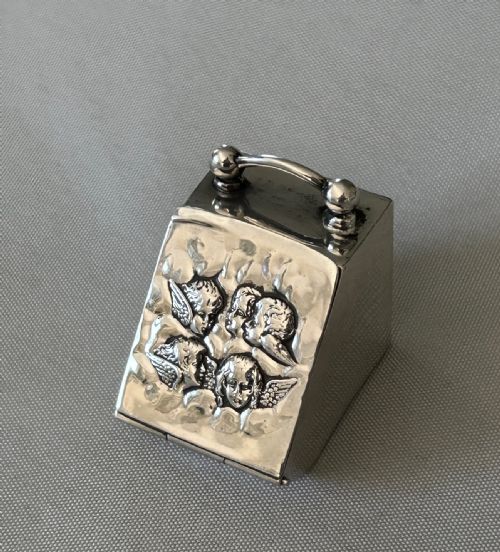


Cherub Repousse Silver Box
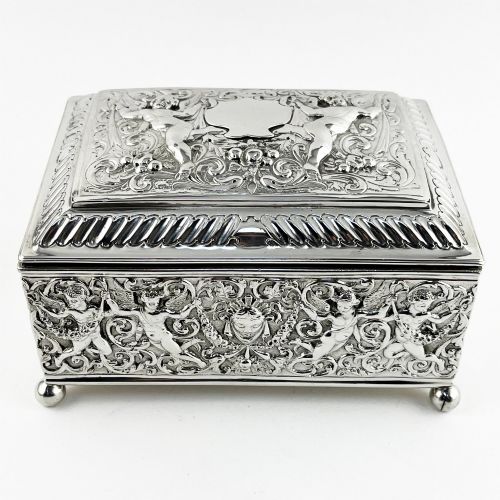
A cherub repousse silver box brings tactile Victorian and Edwardian craftsmanship to your dressing table, offering a small, ornamented vessel for your rings, pins, and keepsakes.
Cherub Repousse Silver Box
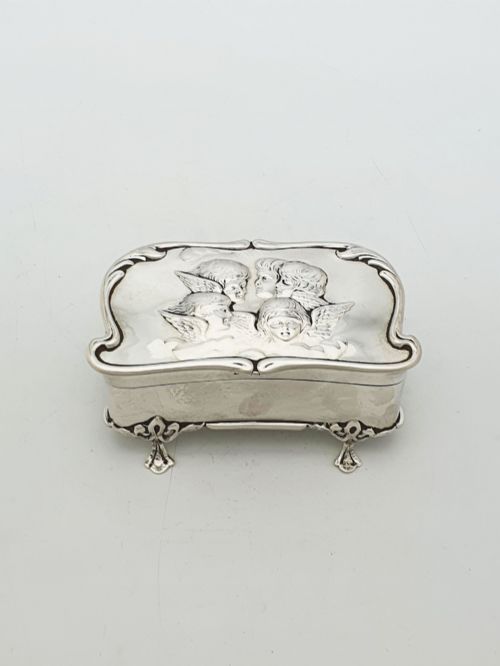
You are most likely to meet pieces from the Edwardian era and the late nineteenth century on this page. They typically appear in sterling silver forms featuring embossed cherub relief work on the lid or body, sometimes lined with velvet, leather, or paper.
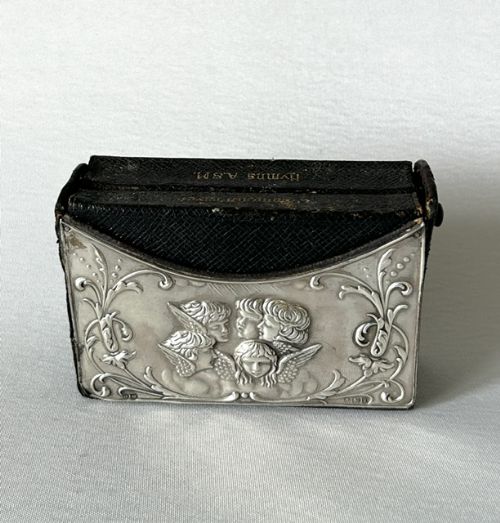
The selection encompasses diverse utilitarian items adorned with sculptural figural motifs rather than plain metal surfaces. Alongside standard ring boxes and trinket cases, the range includes devotional prayer book duos and novelty thimble cases.
Materials and construction
Silversmiths formed these vessels primarily from solid sterling silver, occasionally applying a silver gilt interior finish to the metalwork. The repousse technique involved hammering and pushing the silver sheet from the reverse side to raise distinct cherub motifs in high relief.
Many boxes incorporate internal linings made from materials such as velvet, leather, and paper to protect the contents stored inside. Structural components were fashioned using traditional silversmithing methods during the nineteenth and early twentieth centuries across English assay towns.
Markers of distinction
The weight of the solid silver and the integrity of the hinges, clasps, and internal linings contribute significantly to a piece's standing. Maker marks and clear assay office hallmarks also add formal definition to the silver standard.
William Hutton & Sons Ltd.·William Comyns & Sons·H. Matthews
The Cherub Repousse Silver Box Glossary
- Repousse
- A metalworking technique where the artisan hammers and pushes the metal from the reverse side to form a raised design on the front. This method creates tactile, three-dimensional decorative scenes.
- Sterling silver
- An alloy consisting of pure silver and other metals, usually copper, formulated to increase durability while maintaining a bright lustre. British items meeting this standard typically display a lion passant hallmark.
- Silver gilt
- Silver that has been coated with a thin layer of gold on its surface, often applied to the interior of boxes. This technique provides a rich warm tone and protects the underlying silver from tarnishing.
- Hallmark
- An official stamp applied by an assay office to indicate the metal purity, year of production, and maker or sponsor. These marks provide historical documentation for antique silver pieces.
- Trinket box
- A small lidded container designed for holding rings, pins, and small personal valuables. They frequently feature decorative lids and protective internal linings.
Cherub Repousse Silver Box: Frequently Asked Questions
What is a cherub repousse silver box?
It is a small lidded container made of sterling silver, decorated with raised figural cherub designs created through hammering. These items date primarily from the Victorian and Edwardian eras.
They were produced as decorative vessels for dressing tables to hold personal items like rings, trinkets, and keepsakes safely.
How were these silver boxes used historically?
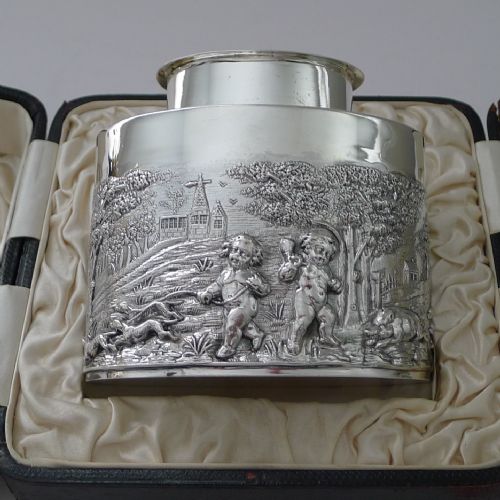
Victorian and Edwardian owners placed them on dressing tables, desks, and mantlepieces to store jewellery, pins, and small daily accessories. Some specialised variants held prayer books or tea.
Their decorative embossed surfaces served to display personal taste while keeping delicate items organised and protected within lined interiors.
How do I care for antique silver boxes?
Regular, gentle dusting with a soft cloth helps maintain the polished surface of the sterling silver without wearing down the raised repousse details. Avoid harsh chemical dips that can damage internal velvet or leather linings.
Store the items in stable humidity conditions to preserve both the metal exterior and the delicate paper or fabric components inside.
How can I tell Victorian from Edwardian boxes?
Victorian pieces often display heavier, more elaborate ornamentation reflecting nineteenth-century revival styles, alongside distinct assay marks for the period. Edwardian examples tend to exhibit lighter forms influenced by changing aesthetic preferences around the turn of the century.
Checking the date letters within the hallmarks provides the precise year of assay and confirms the era of production.