
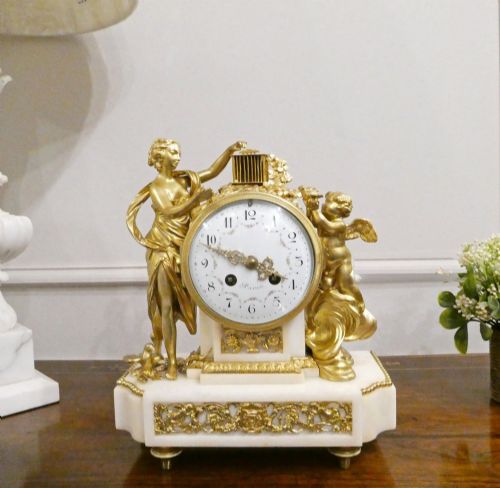
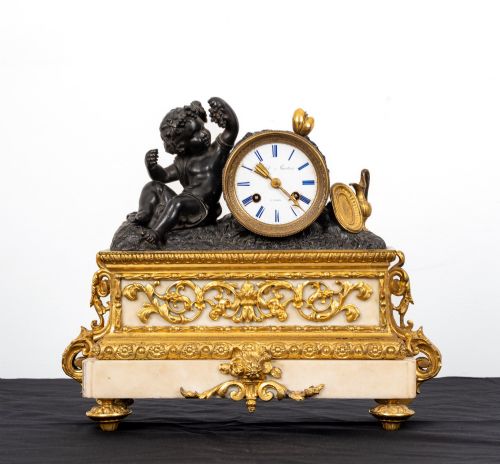


Cherub Figural Clock
A cherub figural clock brings mythological sculpture and precision timekeeping together into a single decorative centrepiece for the mantel.
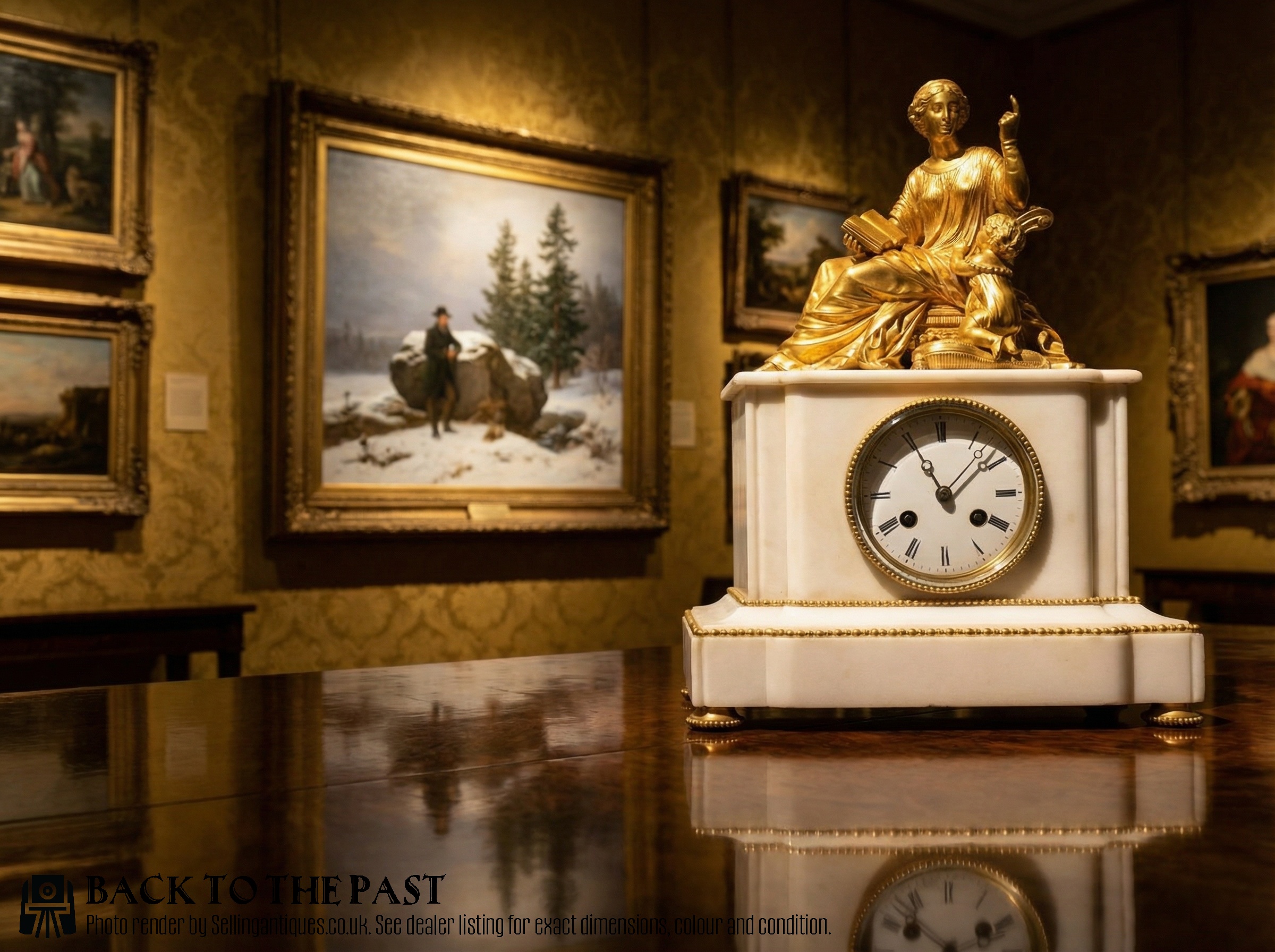
Cherub Figural Clock
A cherub figural clock unites mechanical timekeeping with sculptural figures of putti, cupids, and cherubs cast in metal or carved in stone. These decorative objects take the form of mantel clocks, table clocks, and miniature timepieces designed to sit on surfaces in the principal rooms of a home.
The versions most commonly met on this page originate from nineteenth-century France and England, spanning periods from the Regency era through the Victorian period and into the turn of the twentieth century. French interpretations frequently draw upon Louis XVI, Rococo, and Second Empire styles, incorporating elaborate architectural or naturalistic elements alongside the central figural sculpture.
Makers often incorporate cherubs as active participants in the scene, depicted reaching for birds, holding garlands, or accompanying maidens and dogs. These figural compositions transform a standard clock into a narrative artwork while retaining the practical function of marking the hours.
Materials and Construction
Foundry workers cast the metallic elements of these clocks in bronze, ormolu, and gilt metal, applying fire gilding or chemical patination to achieve varied surface finishes. Specimen marble, white marble, and glass frequently form the structural bases and protective enclosures that support the weight of the metal castings.
Clockmakers fitted mechanical movements driven by springs or weights, including single fusee and chain fusee systems, alongside silk suspension mechanisms in earlier pieces. Dial faces utilise enamel and hand-painted porcelain, punctuated by delicate hands and protected by glazed bezels.
The listings show clocks spanning from the Regency period through the Victorian era, utilising materials like ormolu, marble, enamel, and bronze.
Judging Quality and Craftsmanship
The crispness of the bronze and ormolu chasing dictates visual success, separating sharply defined sculptural casting from soft, blurred surface detail. Fine examples display meticulous hand-finishing on the cherub figures, where hair, feathers, and drapery show individual tool marks rather than flat, mass-produced surfaces.
The integration of the movement with the sculptural housing marks the standard of the piece, with superior examples aligning the clock face harmoniously within the marble or bronze armature. The weight and selection of materials, such as solid ormolu paired with genuine specimen marble, indicate the level of investment made by the original maker.
Siffel & Cartier·BELLENOT PARIS·John Bennett Cheapside London·Henry Berkeley Square London·Baetens London·F Marti·P.H. Mourey·Japy Freres
The Cherub Figural Clock Glossary
- Ormolu
- Gilded bronze produced by applying a mixture of mercury and gold to a bronze base and heating it until the mercury vaporised. This historic technique creates a rich, durable golden surface.
- Putto
- A plump, naked male child figure frequently found in classical art and decorative metalwork. These figures appear as cherubs or cupids on the clock cases.
- Fusee
- A conical pulley used in clock movements to equalise the declining power of the mainspring as it unwinds. This mechanism improves the timekeeping accuracy of the clock.
- Silk suspension
- A method of hanging the pendulum from a short loop of silk thread rather than a metal spring. This technique appears primarily in French clocks from the early and mid-nineteenth century.
- Specimen marble
- Decorative multi-coloured marble composed of various geological fragments embedded in a matrix. Artisans utilise these polished stones for clock plinths and architectural columns.
Cherub Figural Clock: Frequently Asked Questions
What is a cherub figural clock?
A cherub figural clock is a mechanical timepiece housed within an artistic metal or stone case that incorporates sculptural representations of winged putti or cupids. These objects served both as functional timekeepers and as decorative ornaments for mantelpieces and tables.
The design typically places the cherub interacting with surrounding natural or architectural elements, such as trees, globes, or floral garlands. Manufacturers produced them primarily during the nineteenth century in European workshops.
How do I wind an antique clock?
Winding an antique clock requires inserting a matching winding key into the designated arbours on the enamel or porcelain dial. Turn the key gently in the correct direction until you feel firm resistance, taking care not to overwind the spring.
Most nineteenth-century mantel clocks require winding once a week or once every eight days. Consult the specific movement type, as fusee clocks and spring-driven clocks operate with different internal tensions.
Where should I place my clock?
Place your cherub clock on a sturdy, level surface such as a mantelpiece, sideboard, or heavy table away from direct sunlight and draughts. A stable foundation ensures that the pendulum or balance wheel maintains an even beat.
Avoid placing antique clocks in damp rooms or areas with fluctuating temperatures, as moisture and heat can damage the delicate enamel dials and metal gilding.
How do I identify the period?
Identifying the period involves examining the stylistic influences, such as the symmetrical restraint of Louis XVI revival or the ornate curves of Rococo revival. Materials like specimen marble, fire-gilded ormolu, and specific movement signatures also provide clear chronological indicators.
Signatures or stamps on the backplate of the movement often name the maker or foundry, allowing for a precise date range. Stylistic shifts between Regency, Victorian, and Second Empire designs further help narrow down the decade of manufacture.