


Cherub Ceramic Centrepiece
These cherub ceramic centrepiece pieces bring Victorian and Edwardian tables to life with porcelain figures and elaborate bowls.
Cherub Ceramic Centrepiece
A cherub ceramic centrepiece brings together figural sculpture and functional vessels designed for dining tables and sideboards. The pieces on this page span the nineteenth century into the early twentieth century, showing a strong presence of Victorian and Edwardian works.
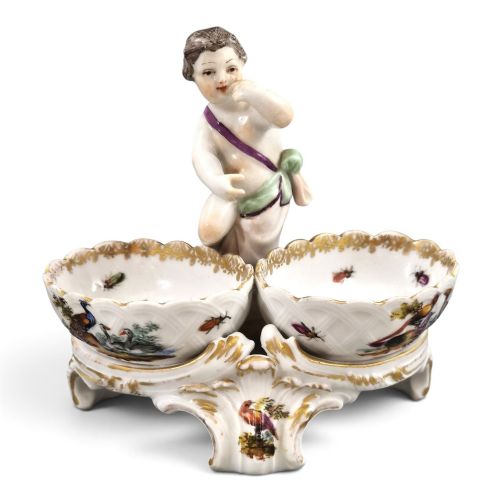
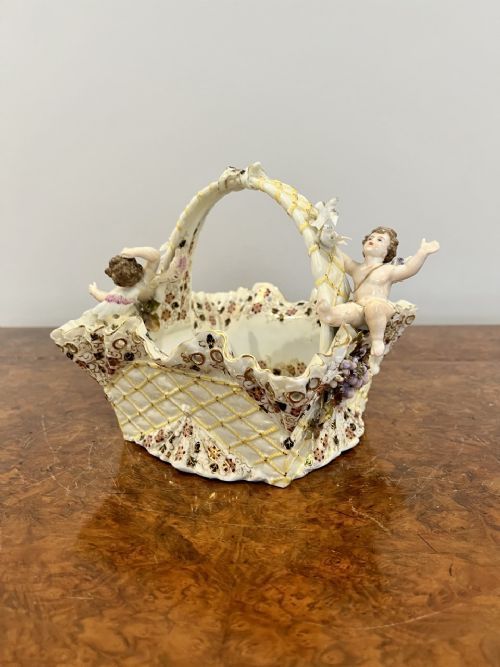
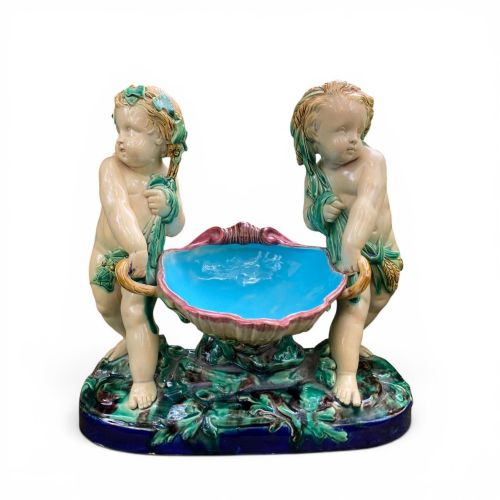
Most examples take the form of large bowls, baskets, compotes, and tazzas supported or surrounded by moulded putti and cherubs. You will also encounter figural salt cellars, sweetmeat dishes, and candelabra alongside the main centrepiece bowls.
Origin points range across German factories such as Schierholz, Plaue, Volkstedt, Meissen, and Dresden, alongside English makers like Minton. French influences appear through Sevres style pieces and classical urns incorporating ormolu mounts.
How they were made
Potters utilised porcelain, earthenware, and majolica bodies to form both the structural vessels and the intricate figural putti. Glazed ceramic surfaces often received hand-painted details and applied elements such as porcelain roses.
Gilding and metal components complete many of the compositions. Gold leaf and gilt bronze or ormolu mounts accent the porcelain bodies, particularly on French neoclassical and Victorian revival pieces.
Listings feature works from the 1860s through the Edwardian era, spanning porcelain, majolica, and gilt bronze materials.
What varies in quality
The degree of hand-finishing marks the difference between standard production wares and exceptional sculptural works. Crispness in the modelling of the cherubs' faces and limbs shows the skill of the original factory hand.
The integration of applied decoration, such as hand-modelled flowers and detailed enamel work, dictates the visual weight of the piece. Larger German and English centrepieces demonstrate more ambitious multi-figure groupings.
KPM Berlin·Royal Dux Bohemia·Schierholz Plaue·Volkstedt·Minton·Meissen·Dresden
The Cherub Ceramic Centrepiece Glossary
- Putti
- Plumed or naked infant figures frequently depicted in art, often synonymous with cherubs on these ceramic pieces. They act as supports or decorative motifs around the main vessel.
- Majolica
- A type of earthenware covered with an opaque tin glaze and painted with metallic oxide colours. Minton and French makers utilised this technique for rich colouration.
- Comport
- A decorative dish raised on a high foot, used for serving fruit or sweets at the table. These often incorporate cherub figures around the stem.
- Tazza
- A shallow bowl or cup on a pedestal, similar in function to a compote. They form the upper vessel on many nineteenth-century centrepieces.
- Ormolu
- Gilded bronze used for mounts and decorative accents on porcelain urns and vases. It adds structural contrast to the ceramic body.
Cherub Ceramic Centrepiece: Frequently Asked Questions
How were centrepieces used?
These large vessels served as the focal point of dining tables during formal meals, often holding fruit, sweetmeats, or flowers.
Guests would admire the sculptural porcelain putti while dining, using smaller matching salt cellars placed around the table.
Where were these pieces made?
Production centred on major European ceramic factories during the nineteenth and early twentieth centuries. German workshops like Schierholz and Dresden created many figural pieces, alongside English factories such as Minton.
French makers also contributed neoclassical urns and Sevres style comports.
How do I style a centrepiece at home?
Place the piece on a large dining table, sideboard, or open console where the figural work can be viewed from all sides.
Keep surrounding decor minimal to let the porcelain cherubs and painted details stand out clearly.
How do I identify the period?
Look to the overall style, such as Rococo Revival curves or Art Nouveau flowing lines, which align with nineteenth and early twentieth-century dates.
Factory marks on the base of the ceramic body often provide a direct guide to the maker and decade of manufacture.