


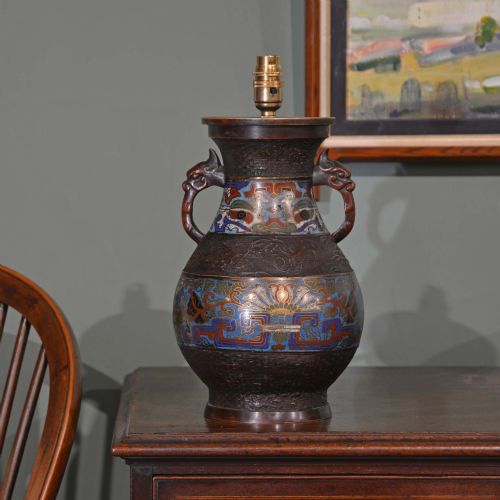


Champleve Enamel Vase
A champleve enamel vase brings vibrant colour and heavy cast metalwork together, prized for intricate recessed patterns filled with vitreous glass.
Champleve Enamel Vase
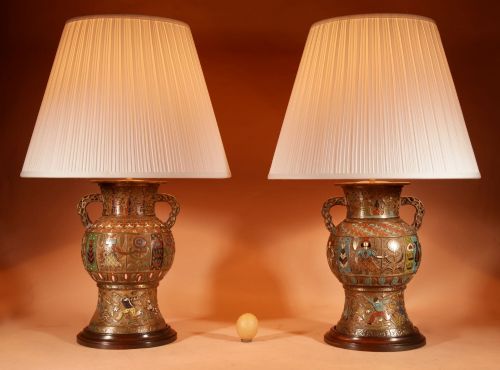
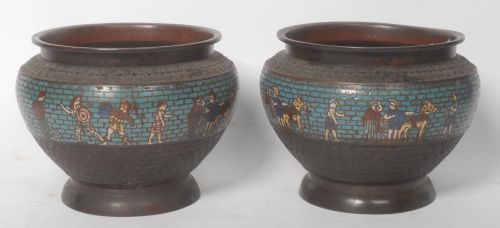
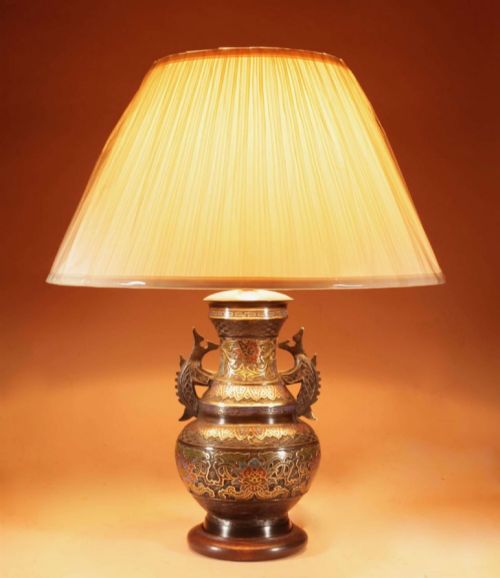
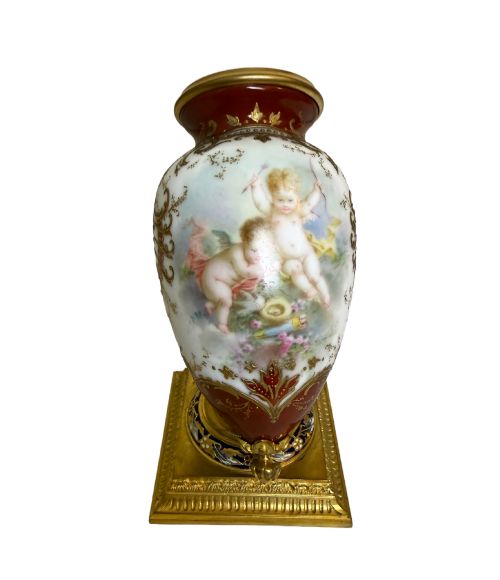
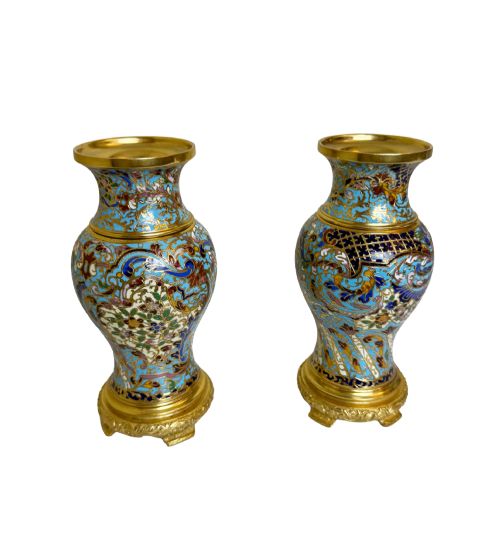
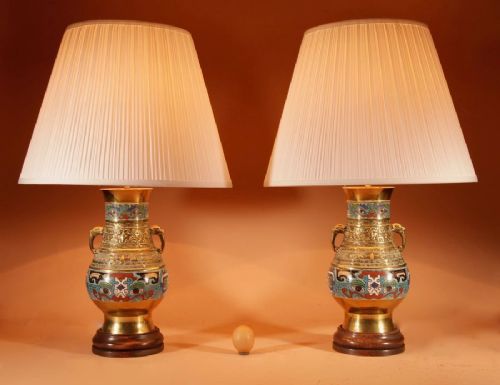
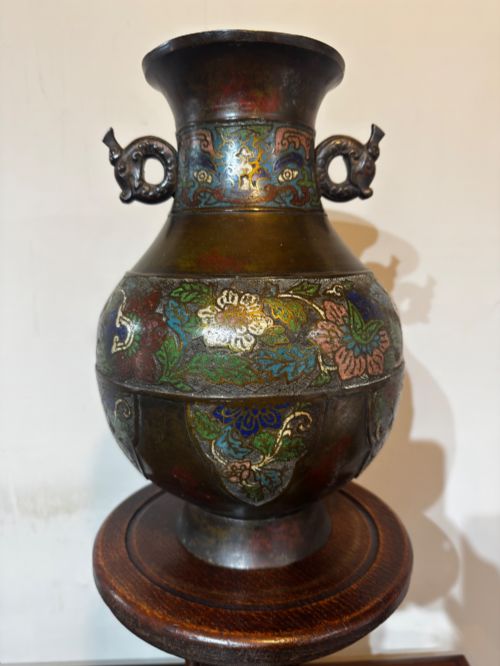
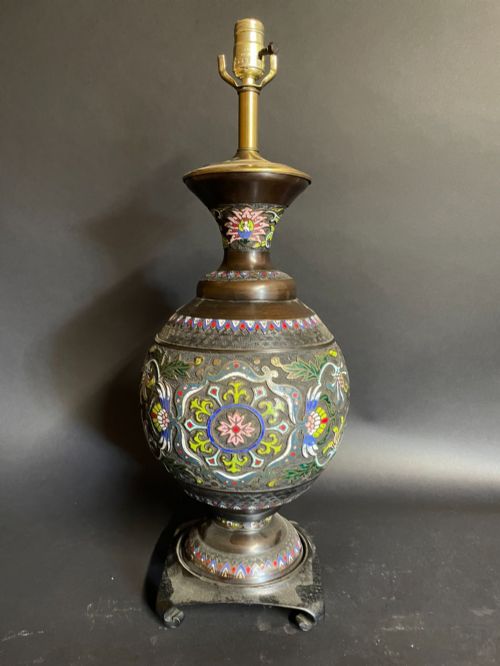
A champleve enamel vase typically appears as a substantial bronze, brass, or gilt bronze vessel decorated with intricate coloured enamel cells. These pieces span the nineteenth century into the early twentieth century, taking the form of traditional vases, lidded cachepots, and converted table lamps.
The aesthetic bridges several distinct traditions, including French Rococo Revival designs, Chinese export work, and Japanese Meiji period craftsmanship. Buyers will encounter both solitary decorative vessels and balanced pairs suited for mantelpieces or side tables.
Materials and construction methods
Artisans created these vessels by casting bronze, brass, or gilt bronze foundations, then gouging or recessing troughs into the metal surface to form the decorative design. These hollowed channels were packed with vitreous enamel paste before the piece underwent high-temperature firing.
Following firing, the metal surfaces were polished smooth, sometimes leaving the raised bronze outlines exposed alongside gleaming fields of coloured glass. Selected pieces incorporate wooden elements, fabric details, or porcelain sections alongside the dominant metal and enamel structure.
Champleve Enamel Vase Retail Price Guide 2026
Typical asking prices for champleve enamel vase among the pieces listed under this phrase on Sellingantiques today, from the lower quarter to the upper quarter. They describe what is for sale here now, not the wider market.
Several brass lamps manage to keep their dignity despite having spent a century shedding light on entirely different centuries.
Distinguishing quality and execution
Quality rests in the crispness of the cast metal framework and the precision of the enamel fill within the recessed channels. Finer examples display rigorous symmetry, complex multi-coloured palettes, and deeply chased bronze details that remain sharp and well-defined.
Weight and substance also separate superior work from simpler productions, as heavier bronze and gilt bronze castings provide a more stable, resonant foundation. The integration of handles, lids, and mounts shows whether the piece received meticulous finishing or hurried assembly.
The Champleve Enamel Vase Glossary
- Champleve enamel
- A technique where troughs are gouged into a metal base and filled with enamel before firing. This differs from cloisonne by utilising recessed metal channels rather than soldered wire partitions.
- Gilt bronze
- Metal coated with a thin layer of gold to give a rich, reflective surface. It frequently highlights the raised borders surrounding enamel work.
- Cachepot
- An ornamental pot designed to hold a flowerpot rather than plant soil directly. These decorative vessels often share materials with standard vases.
- Meiji Period
- A historical era in Japan spanning from eighteen sixty-eight to nineteen twelve, known for exceptional metalwork exported globally. Pieces from this time demonstrate remarkable technical mastery in bronze and enamel.
- Clock garniture set
- A matching group consisting of a central clock flanked by decorative side vases or urns. They create a symmetrical display on mantelpieces.
Champleve Enamel Vase: Frequently Asked Questions
What is a champleve enamel vase?
A champleve enamel vase is a decorative vessel fashioned from cast bronze, brass, or gilt bronze featuring recessed compartments filled with coloured glass enamel. Artisans carved patterns directly into the metal body before firing the vitreous paste.
These pieces originate from various nineteenth and early twentieth century traditions, including French decorative workshops and East Asian export studios. They serve as striking standalone display items or paired decorative objects.
How do I clean my vase?
Cleaning requires a soft, dry cloth to remove dust from the recessed enamel and raised metal surfaces. Avoid using harsh chemical polishes or water, which can damage exposed bronze or fragile enamel.
If the metal requires attention, consult a professional conservator rather than applying abrasive household cleaners. Gentle maintenance preserves the historical patina and integrity of the fired glass.
Where were these vases made?
The available pieces originate from French workshops following nineteenth century revival styles, alongside Japanese Meiji period studios and Chinese export manufacturers. European makers often adapted Eastern motifs or created ornate gilt bronze mounts for domestic interiors.
Asian makers produced substantial bronze and brass vessels with intricate geometric and floral enamel patterns. This global exchange created distinct regional variations in form and palette.
Are these pieces waterproof?
These decorative vessels were primarily designed for visual display rather than holding water and fresh flowers. Internal metal seams and aged construction materials can degrade or leak when exposed to moisture over time.
Utilising a separate inner container or keeping them dry protects the historic metalwork and enamel interior. Treating them as dry decorative art ensures long-term preservation.
How do I date a vase?
Dating relies on examining the casting techniques, mounting styles, and stylistic markers associated with periods like the Victorian era or the Meiji period. Nineteenth century examples often feature heavier bronze foundations and specific patination.
Comparing the decorative motifs, such as French Rococo Revival curves or archaic Chinese forms, helps narrow the production window. Examination of wear patterns on the base also provides clues to age.