


Ceylon Sapphire Jewellery
Ceylon sapphire jewellery combines vibrant corundum with precious mountings across periods from the Victorian era to the mid-century.
Ceylon Sapphire Jewellery
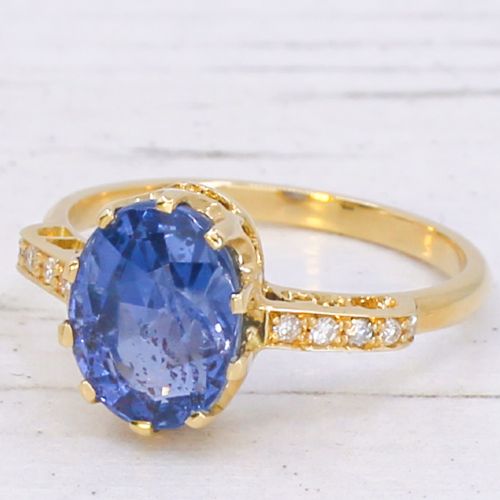
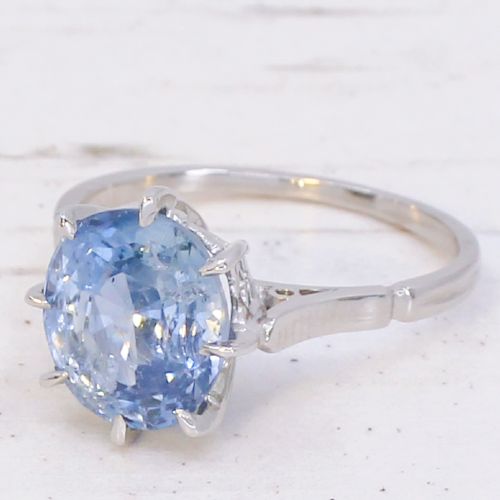
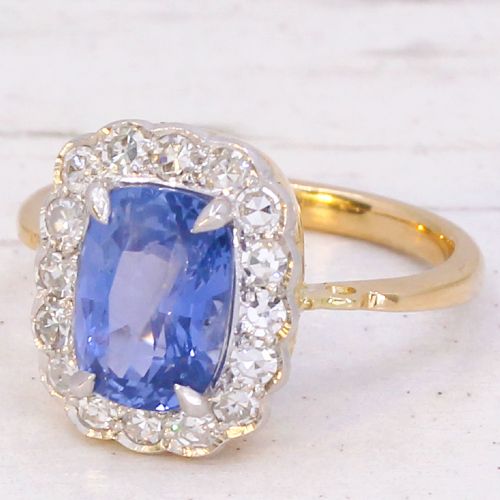
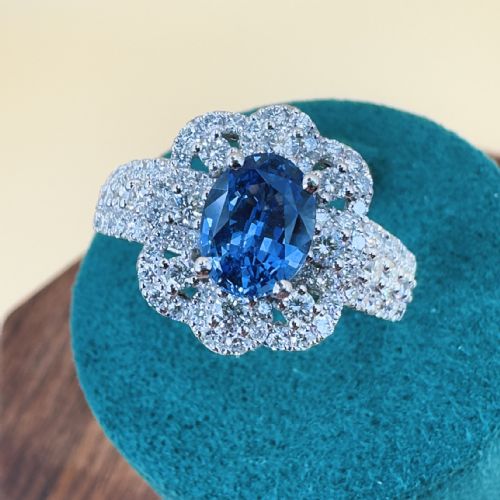
When exploring ceylon sapphire jewellery, collectors encounter pieces defined by striking blue, pink, yellow, purple, and padparadscha gems. These stones appear primarily in rings, cocktail rings, pendants, and bracelets spanning Victorian, Edwardian, Art Deco, and mid-century periods.
The selection heavily reflects geometric platinum cluster designs from the 1920s and 1930s, alongside substantial solitaire and cluster rings from the 1950s. Yellow gold and white gold settings also recur across antique and vintage examples.
Pendants and bracelets introduce alternative forms alongside the dominant ring category, often pairing the central gemstone with accent diamonds or natural pearls.
Materials and construction methods
Makers set these gems in platinum, yellow gold, 18ct yellow gold, and 18ct white gold. Platinum provides strong, slender claws for secure cluster arrangements.
Stones are faceted into oval, cabochon, or other traditional cuts to maximise optical return. Diamonds serve as supporting accents in cluster and trilogy formats.
The inventory encompasses Victorian, Edwardian, Art Deco, and mid-century eras.
Factors influencing quality
The distinction rests upon gemstone weight, saturation, and thermal history, with unheated stones commanding significant interest. Carat size ranges from modest accents to substantial focal points exceeding ten carats.
The precision of period metalwork and the integration of surrounding diamonds dictate the overall refinement of each mounting.
Le Vian
The Ceylon Sapphire Jewellery Glossary
- Ceylon Sapphire
- A corundum gemstone originating from Sri Lanka, noted for lively saturation and brilliance.
- Unheated
- A sapphire that has undergone no thermal enhancement to alter its natural colour or clarity.
- Cluster Ring
- A design featuring a central gemstone encircled by a border of smaller accent stones, typically diamonds.
- Cabochon
- A gem cut with a smooth, rounded, convex upper surface rather than facets.
Ceylon Sapphire Jewellery: Frequently Asked Questions
How do I identify a ceylon sapphire?
These gems are prized for distinctive saturation and brilliance, often accompanied by specific geographical origin reports.
Examination under magnification reveals internal inclusions characteristic of stones from Sri Lanka.
What periods do these pieces span?
The available selection reaches from Victorian and Edwardian items through Art Deco creations to mid-century modern designs.
Each era brings distinct mounting styles, transitioning from delicate gold work to geometric platinum settings.
Are unheated stones common?
Many listed pieces specifically designate their stones as unheated, meaning the gem retains its natural properties without artificial enhancement.
This aspect contributes to the character and desirability of vintage examples.
How should I care for a ring?
Precious metals and durable corundum tolerate careful daily wear, though periodic professional inspection of settings is recommended.
Gentle cleaning with warm soapy water maintains the sparkle of both the central sapphire and surrounding diamonds.