
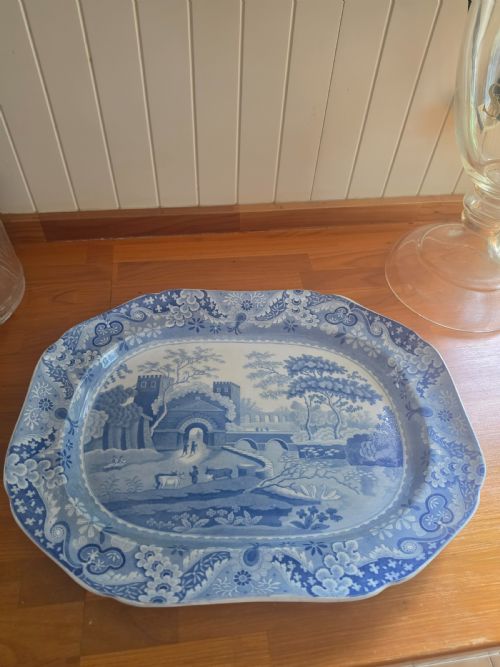
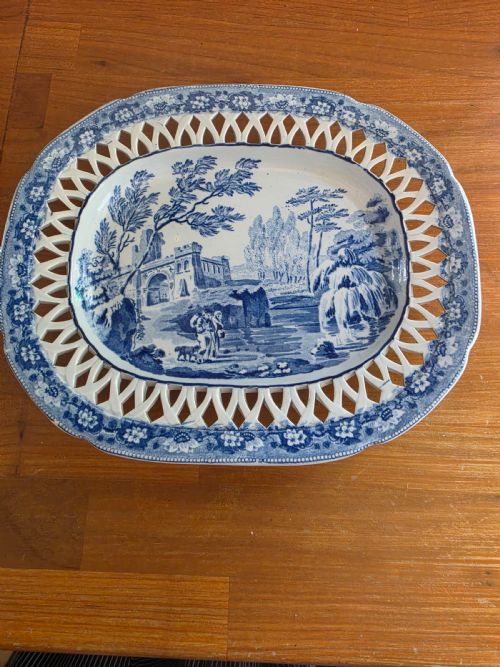
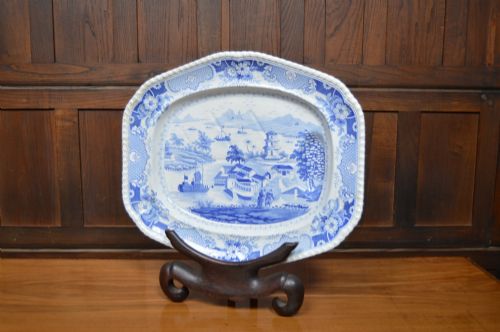
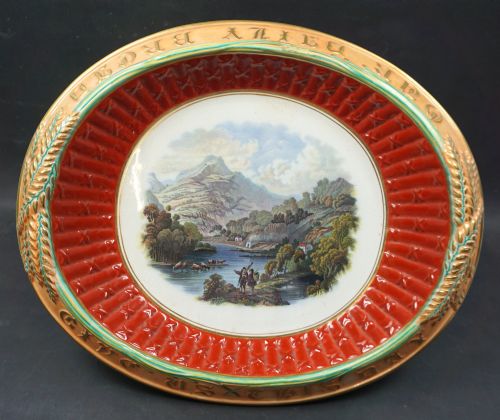


Ceramic Transferware Platter
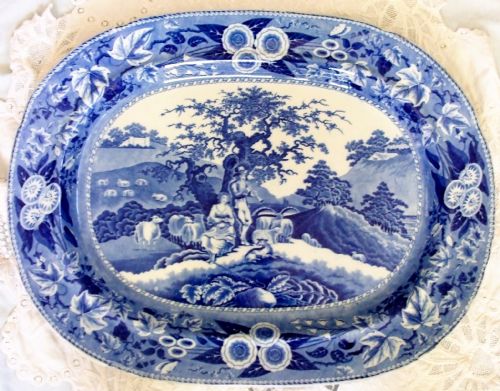
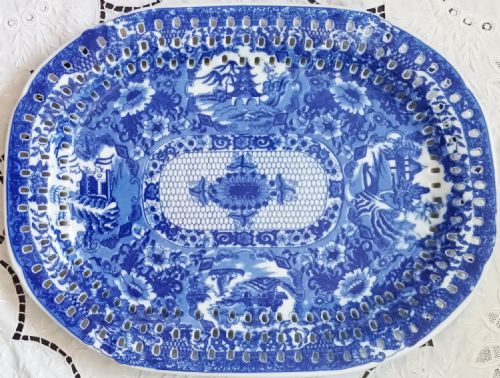
Ceramic transferware platters bring intricate blue and white nineteenth-century scenes to the table.
Ceramic Transferware Platter
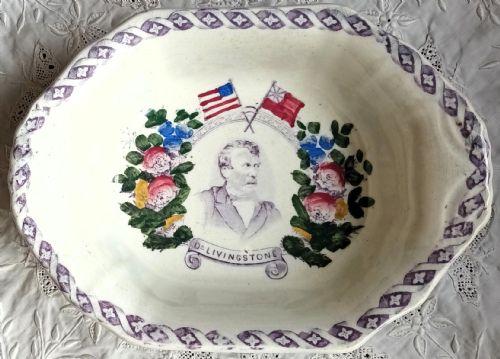
A ceramic transferware platter is a large serving dish decorated by transferring a printed design from a copper plate onto the pottery surface. These pieces emerge primarily from Georgian, Regency, and Victorian periods in English production.
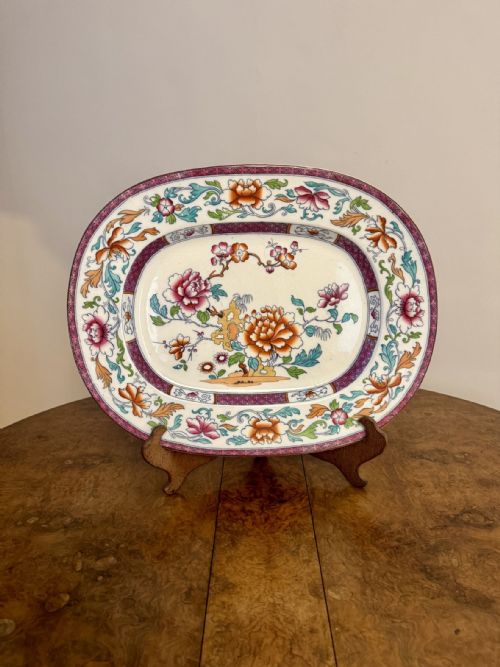
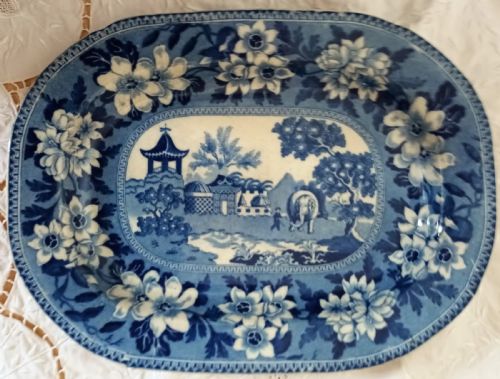
The versions most commonly met on this page are large meat platters, chargers, and serving dishes displaying cobalt pigment scenes in Chinoiserie, botanical, or topographical patterns. Makers such as Spode, Davenport, and Wedgwood dominate the early forms.
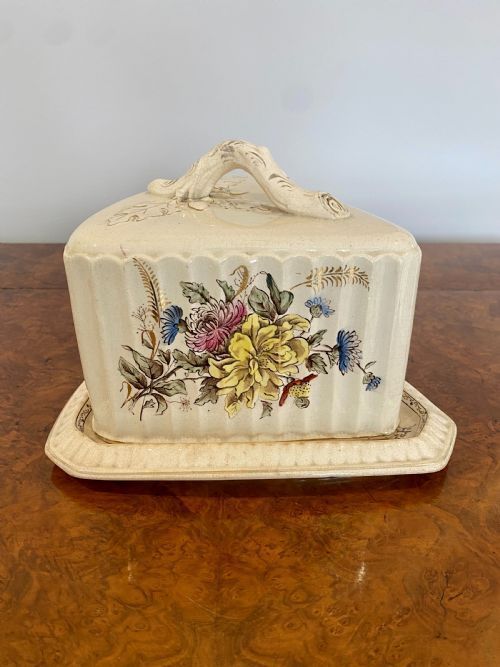
Buyers select these platters for their bold pictorial storytelling and utility as centrepieces for dining tables or wall displays. They bridge utilitarian kitchenware and decorative art from the nineteenth century.
Materials and Technique
Potters formed these platters using earthenware, pearlware, ironstone, or creamware bodies, which provided a stable porous or semi-vitreous base for the decoration. Cobalt pigment supplied the intense blue colour applied beneath a glossy ceramic glaze.
The transfer printing technique involved engraving a copper plate, pulling the design onto tissue paper, and pressing it onto the bisqued ceramic body before firing. This mechanical process allowed for highly detailed pictorial scenes like landscapes and Chinoiserie motifs to be repeated consistently.
The inventory spans the Georgian, Regency, and Victorian periods, capturing shifts in nineteenth-century ceramic design.
Quality and Execution
The clarity of the transfer print defines the visual success of a ceramic transferware platter, separating sharp, well-registered designs from blurred or smudged applications. Crisp lines in complex patterns like India Temple or Bridge of Lucano indicate careful presswork.
The quality of the ceramic body itself, from refined pearlware to dense ironstone, influences the weight, durability, and smooth absorption of the glaze. Earlier pieces often display subtle potting irregularities that contrast with later Victorian mass production.
Spode·Davenport·John Rogers and Son·Wedgwood·Minton·John Ridgway·Mason·Copeland and Garrett·Stubbs
The Ceramic Transferware Platter Glossary
- Pearlware
- A refined earthenware body developed in the late eighteenth century with a bluish-tinted glaze that pooled in recesses to mimic Chinese porcelain.
- Ironstone
- A heavy, durable type of earthenware patented in the early nineteenth century that resists chipping and provides a strong surface for transfer printing.
- Chinoiserie
- A decorative style reflecting European imaginative interpretations of Chinese artistic traditions, frequently seen on early nineteenth-century blue and white dishes.
- Meat Drainer
- A perforated ceramic insert placed inside a platter to keep meat elevated above its juices during carving and serving.
Ceramic Transferware Platter: Frequently Asked Questions
How were transferware platters used?
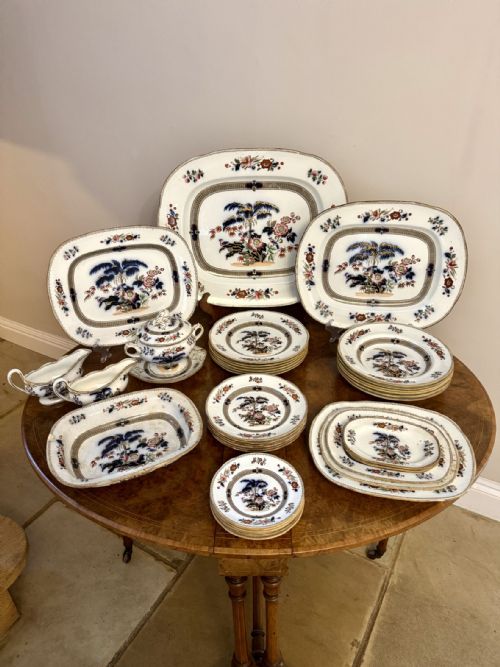
These large dishes served roasted meats and substantial courses at nineteenth-century dining tables. Many included integrated wells or separate ceramic drainers to manage juices.
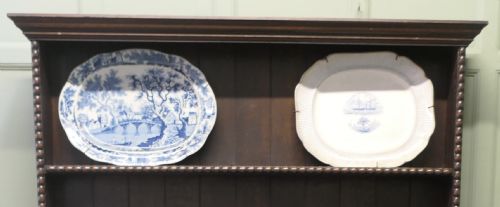
Beyond the dining room, homeowners stood them vertically on sideboards or hung them on walls as decorative statements. Their robust earthenware bodies suited daily service in busy households.
How do I identify a Georgian platter?
Georgian pieces generally date from the late eighteenth century up to the 1830s, featuring pearlware or early earthenware bodies. The blue pigment often has a deep, slightly pooled cobalt tone.
Stylistically, these items lean heavily toward classical landscapes, early Chinoiserie, and distinct border prints. Makers marks from this era are often impressed rather than printed.
Can I use antique platters for food?
Most nineteenth-century earthenware and ironstone platters are structurally sound enough to hold food for modern dining. However, the historic glaze may have minor crazing or vulnerability to staining.
Hand washing is essential to preserve the ceramic body and the transferred design. Avoid dishwashers and harsh detergents to maintain the integrity of the antique glaze.
What is Flow Blue?
Flow blue is a specific nineteenth-century printing technique where lime or chloride gas was introduced into the kiln during firing. This caused the cobalt pigment to blur slightly into the white glaze.
The resulting hazy, atmospheric effect was intentional and highly fashionable during the Victorian era. It appears on various serving pieces and child services from mid-century onward.