




Ceramic Tobacco Jar
These ceramic tobacco jars bring 18th-century Dutch delft and Victorian Staffordshire character directly to the table.
Ceramic Tobacco Jar
A ceramic tobacco jar serves as a lidded container designed to keep leaf or cut tobacco moist, frequently appearing as figural pots or cylindrical canisters. When buyers search for a ceramic tobacco jar, they encounter diverse historical examples spanning the eighteenth and nineteenth centuries.
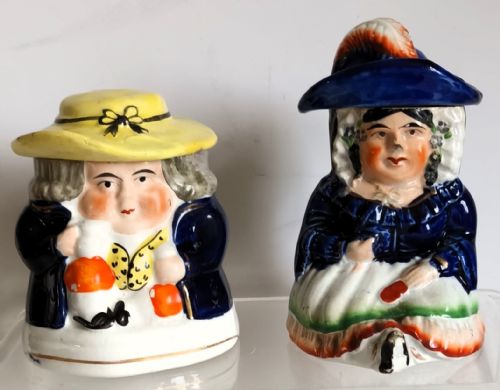
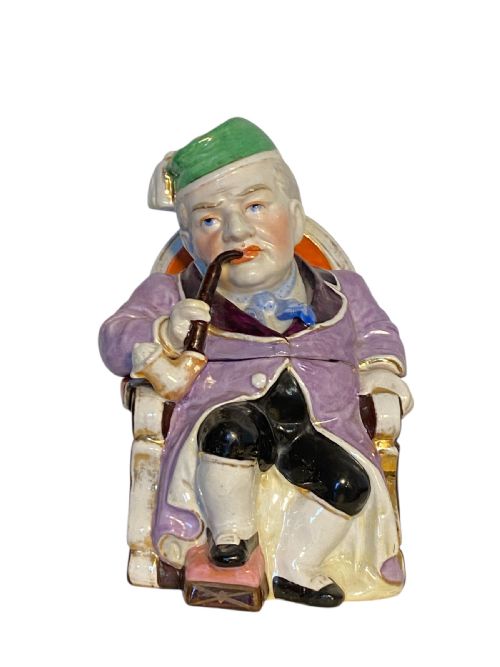
The pieces on this page include Dutch delft vessels, Victorian Staffordshire figures such as Pierrot, and Edwardian porcelain items. Collectors also find converted table lamps and pairs of lidded pots originating from English, German, Austrian, and Dutch workshops.
Figural examples depict characters like a lady and gentleman or an elephant and mahout, whilst other versions rely on cobalt blue glazes or blush ivory surfaces. Lidded jars and storage canisters form the core of the available forms.
Materials and construction methods
Potters utilised earthenware, porcelain, and tin-glazed earthenware to form the body of each jar. Artisans applied tin glaze to create smooth white surfaces suitable for blue painting on eighteenth-century Dutch vessels.
Makers shaped figures and cylindrical bodies through moulding and throwing, finishing them with coloured glazes or enamel details. Brass elements occasionally appear on lids or mounts, whilst some later pieces utilise bronze or metal fittings alongside ceramic components.
An elephant and mahout once shared shelf space with a Victorian Pierrot and a pair of traditional Dutch delft jars.
Assessing quality in ceramic tobacco jars
The fidelity of hand-painted decoration and modelling distinguishes standard storage pots from finely finished figural examples. Intricate details on Staffordshire figures or Dutch delft floral panels reflect the skill of the original decorator.
Royal Doulton·Royal Worcester·Maud Bowden
The Ceramic Tobacco Jar Glossary
- Tin glaze
- An opaque white glaze made by adding tin oxide to lead glaze, providing a smooth surface for painting.
- Staffordshire pottery
- Earthenware produced in the industrial area of Staffordshire, known for popular figures and utilitarian vessels.
- Delft
- Tin-glazed earthenware originating from the Netherlands, traditionally decorated in cobalt blue.
- Blush ivory
- A creamy porcelain finish developed by Royal Worcester featuring soft floral tints.
- Gaudy Welsh
- A style of colourful, hand-painted ceramic ware featuring cobalt blue, copper lustre, and iron-red highlights.
Ceramic Tobacco Jar: Frequently Asked Questions
How were ceramic tobacco jars used?
Smokers utilised these vessels to store loose leaf tobacco on tables or sideboards, keeping the contents sealed away from dry air.
The matching lid helped maintain the moisture and aroma of the tobacco before porcelain or metal humidors became common.
Are converted tobacco jar lamps authentic?
Makers sometimes fitted electrical wiring through the base or lid of a jar to turn decorative containers into functional table lamps.
Collectors find both original lidded pots and period converted examples across various English and European factories.
How do I identify 18th-century Dutch delft?
Eighteenth-century Dutch pieces typically display tin-glazed earthenware bodies with hand-painted cobalt blue designs depicting floral or architectural motifs.
The glaze often shows slight crazing or minor edge chips consistent with age and early Dutch production methods.
What is Victorian Staffordshire pottery?
Staffordshire pottery encompasses earthenware figures, animals, and jars modelled in English factories during the nineteenth century.
These pieces feature hand-painted enamel colours and heavy earthenware bodies designed for domestic display.