





Ceramic Serving Dishes
Ceremic serving dishes bring centuries of painted scenes, moulded forms and glaze traditions directly to the table.
Ceramic Serving Dishes
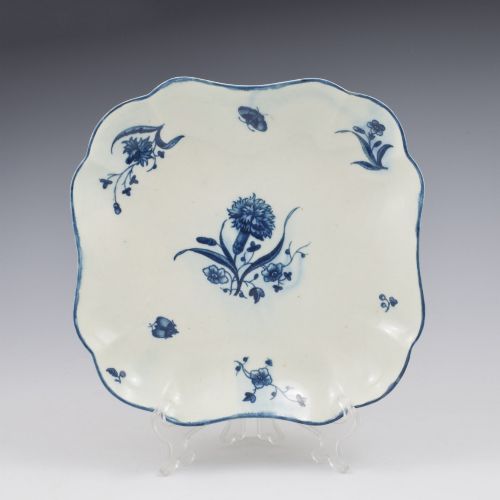
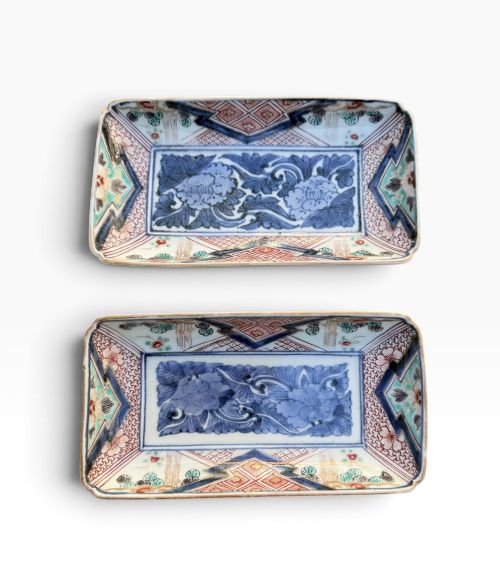
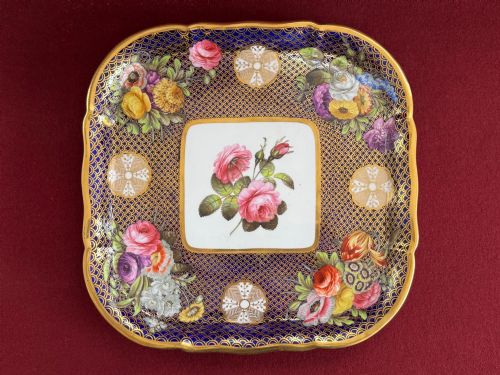
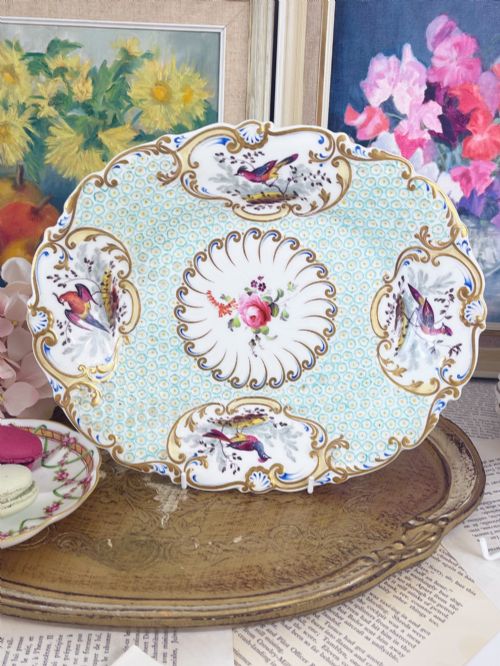
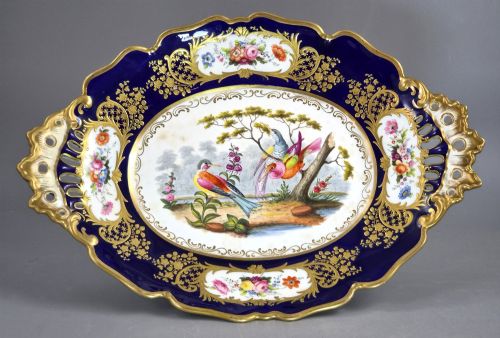
Ceramic serving dishes encompass a wide variety of forms designed to present food, from large platters and chargers to deep tureens and graduated dessert plates. When searching for ceramic serving dishes, buyers encounter works produced across multiple centuries, ranging from eighteenth-century English porcelain to Japanese Imari and nineteenth-century transferware. These pieces reflect both utilitarian dining needs and decorative ambitions, spanning periods such as the Georgian, Regency, Victorian, and Meiji eras.
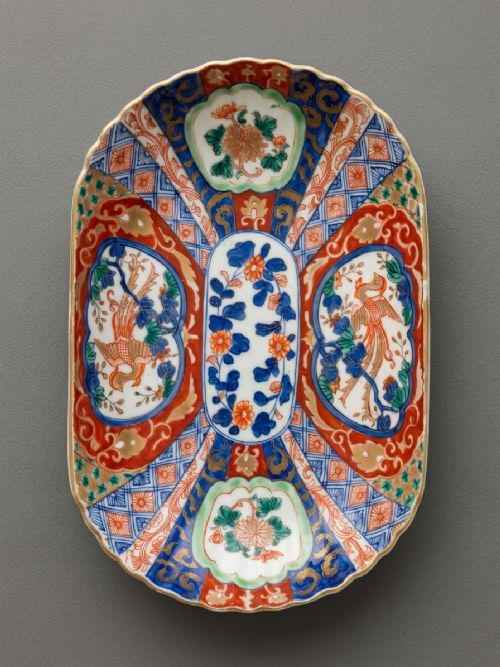
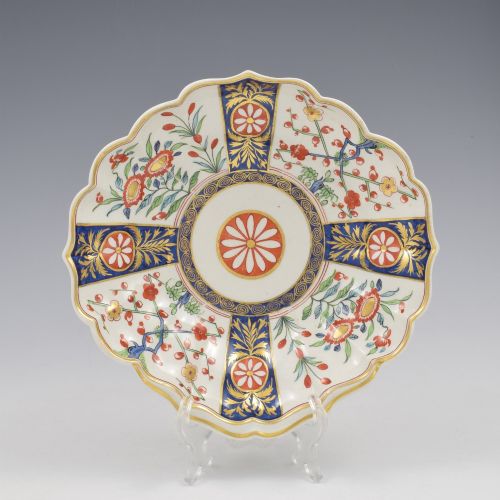
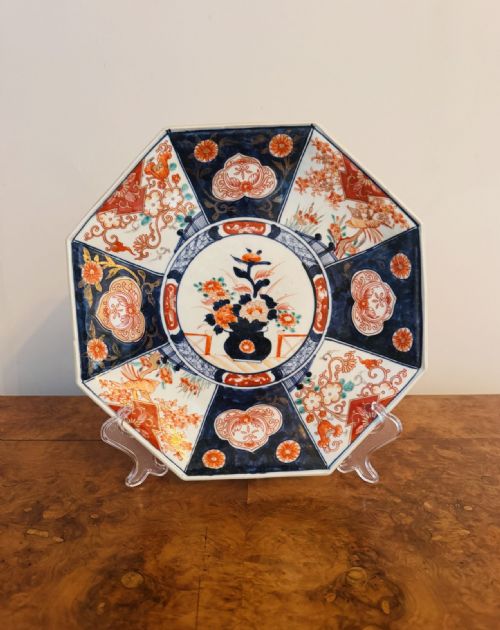
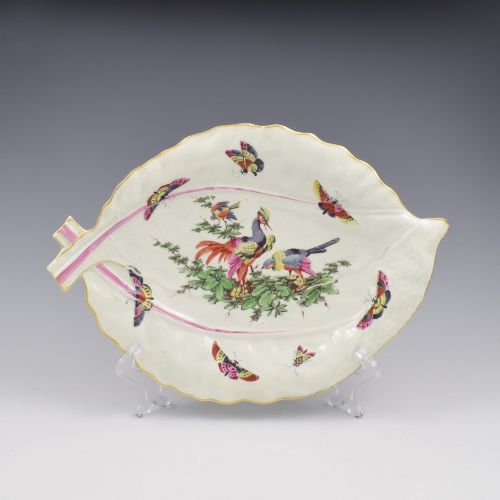
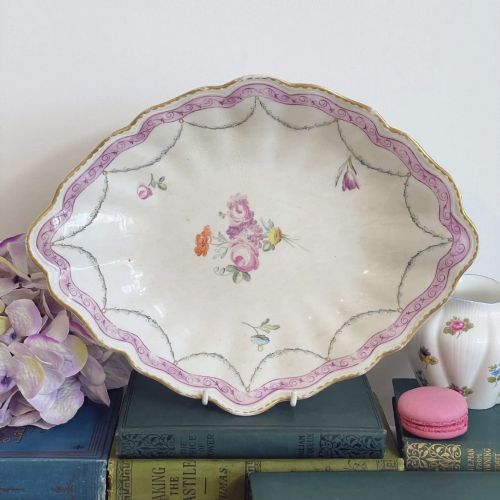
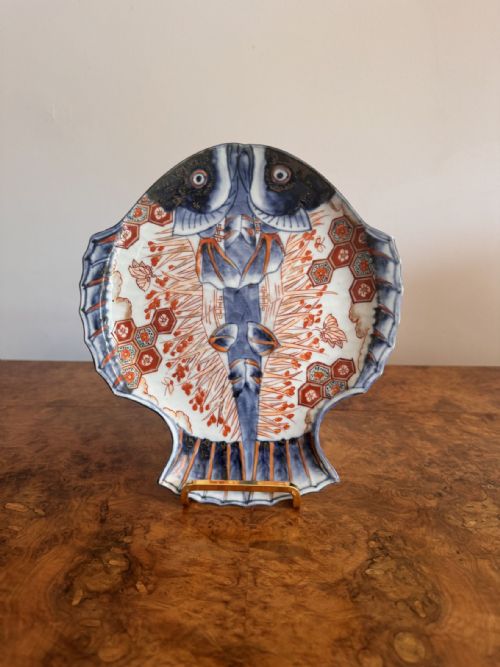
The items found on this page display distinct regional characteristics, uniting European porcelain factories with Asian export traditions. English manufacturers like Worcester, Spode, Derby, and Coalport sit alongside Chinese export wares and Japanese Imari porcelain shaped as fish, fans, and hexagons. Buyers selecting ceramic serving dishes choose between formal blue and white transfer-printed meat platters, richly gilded dessert services, and hand-painted botanical or avian compositions.
Domestic serving vessels on this page also include specialised forms such as game pie dishes, sauce tureens with covers, cheese dishes, and heavy saltglazed chargers. These varied objects demonstrate how dining habits evolved from communal centrepieces to structured multi-course meals requiring dedicated receptacles. Each period brings distinct palette choices, from the cobalt blue of early English earthenwares to the vibrant polychrome enamels of Japanese porcelain.
Materials and production methods
The manufacture of these pieces relies on refined ceramic bodies, predominantly porcelain, earthenware, and ironstone, shaped either by throwing, moulding, or pressing over a form. Early makers utilised tin glazes, saltglazes, and transparent lead glazes to seal the porous clay bodies and provide a smooth surface for decoration. Ironstone offered a heavier, more durable alternative to soft-paste and hard-paste porcelain, suiting large meat platters and heavy serving trays.
Ceramic Serving Dishes Retail Price Guide 2026
Typical asking prices for ceramic serving dishes among the pieces listed under this phrase on Sellingantiques today, from the lower quarter to the upper quarter. They describe what is for sale here now, not the wider market.
Listings span eight distinct periods, stretching from the seventeenth century through the Regency and Victorian eras to the early twentieth century.
Assessing quality and execution
Quality in these ceramics rests on the precision of the moulding, the clarity of the glaze, and the skill demonstrated in the hand-painting or transfer printing. Superior pieces exhibit crisp relief in moulded elements such as shell shapes, wicker textures, or lobed edges, whereas inferior examples suffer from soft contours and pooling glaze. The alignment of transfer prints and the brushwork finesse in handpainted botanical or avian subjects distinguish standard production from exceptional studio outputs.
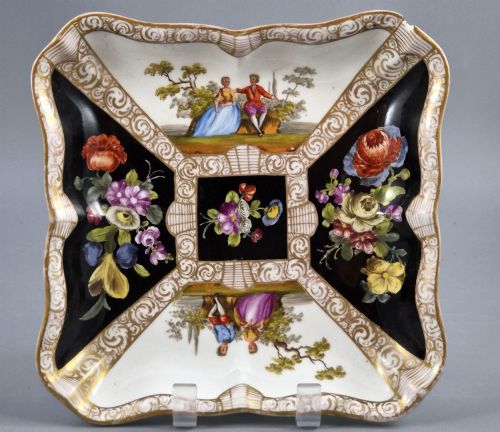
The sophistication of the palette and the preservation of overglaze enamels and gilding also determine the standing of a piece. Wares featuring rich cobalt grounds, meticulous Watteau scenes, or dense Imari brocade patterns require high firing expertise and skilled pigment preparation. Completeness of form, especially in items with matching covers like tureens or cheese dishes, affects the integrity and historical value of the object.
Spode·Royal Crown Derby·H and R Daniel·Coalport·Chamberlains Worcester·Hicks and Meigh·James Wallace and Co·John Rogers and Son
The Ceramic Serving Dishes Glossary
- Transferware
- Earthenware or porcelain decorated by applying a printed design from an engraved copper plate onto tissue paper and then onto the ceramic body. This technique allowed factories to produce complex pictorial scenes in monochrome or limited colours efficiently.
- Imari
- A style of Japanese porcelain named after the port from which it was shipped to Europe, characterised by a palette of underglaze blue, iron red, and abundant gold. These patterns often incorporate floral and brocade motifs arranged in symmetrical panels.
- Tureen
- A deep, covered serving vessel designed for holding soups, sauces, or vegetables at the table. They frequently feature decorative handles, matching stands, and moulded finials.
- Charger
- A large decorative plate or platter used traditionally as a base under other courses or displayed upright on a sideboard. In earlier centuries, earthenware chargers served as centrepieces for communal dining.
- Saltglaze
- A vitreous coating formed on stoneware by throwing common salt into the kiln during the high-temperature firing process. This creates a distinctive textured surface resembling orange peel.
Ceramic Serving Dishes: Frequently Asked Questions
How were antique tureens used at the dining table?
Tureens held soups, stews, or boiled vegetables and sat prominently in the centre of the dining table for communal serving.
Servants would ladle portions from the vessel into individual plates, making covered tureens essential centrepieces for formal dining across the eighteenth and nineteenth centuries.
Can antique ceramic platters still be used for serving food?
Many antique platters remain structurally sound for serving dry foods, bread, or fruit during contemporary meals.
However, collectors often limit older earthenware and soft-paste porcelain to display use to prevent crazing, staining, or accidental damage to delicate surface gilding and enamels.
How do you identify Japanese Meiji period Imari dishes?
Meiji period Imari wares combine traditional dark cobalt blue and iron red enamels with dense gilding on a crisp porcelain body.
The Japanese Meiji era introduced sharper forms and more varied plate outlines, such as fish and fan shapes, alongside traditional circular and hexagonal plates.