
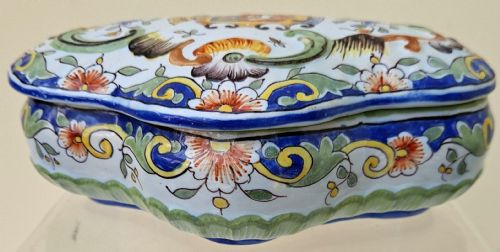


Ceramic Powder Box
A ceramic powder box brings dressing table charm into daily life, offering miniature porcelain sculpture and practical storage for vanity essentials.
Ceramic Powder Box
A ceramic powder box serves as a dressing table vessel for cosmetics and vanity items, appearing most frequently in forms dating from the nineteen-thirties alongside pieces from the Victorian era and the early twentieth century. When searching for a ceramic powder box, collectors encounter bowls, jars, and trinket boxes fashioned in diverse regional workshops.
The selection ranges from French faience and English jasperware to German porcelain figural pieces. Many examples incorporate lids featuring half dolls, flapper girls, bathing belles, and pierrots.
Object types stretch from simple circular patch boxes to elaborate vanity sets and powder puff stands. These pieces function simultaneously as decorative sculpture and functional containers for a dressing room.
How they were made
Maker utilise porcelain, earthenware, and ceramic bodies shaped into bowls, jars, and figural lids, often finished with coloured glaze. Artisans apply hand-painted details, enamel work, and gold leaf or gilt detailing to accentuate the moulded contours.
Moulding techniques allow for complex figural subjects such as half doll dresser boxes and bathing belles, which require separate firing of the base and the upper sculptural lid. Glazing seals the earthenware or porcelain body before final decorative touches are applied.
Bathing belles and pierrots peer out from dressing tables, guarding powder puffs in ceramic hats.
What varies in quality
Quality rests primarily on the finesse of the hand painting, the crispness of the porcelain or ceramic moulding, and the preservation of any gold leaf or gilt detailing. Superior examples exhibit expressive faces on figural lids such as flapper girls and jesters, alongside cleanly executed glaze work.
The distinction between standard production items and finer studio output shows in the precision of the pottery forms and the depth of the enamel decoration. Faience pieces and jasper dip boxes demonstrate varying degrees of relief sharpness and decorative complexity.
Meissen·Wedgwood·Limoges
The Ceramic Powder Box Glossary
- Ceramic powder box
- A vanity container designed to hold cosmetic powder or trinkets on a dressing table. These pieces feature removable lids and ceramic bodies.
- Half doll
- A ceramic upper torso modelled without legs, commonly used as a decorative lid on powder jars and brush sets. They frequently depict figures in period attire from the nineteen-thirties.
- Faience
- Tin-glazed earthenware originating from European pottery traditions, notably French workshops. This technique provides an opaque white surface suitable for hand-painted ornamentation.
- Gilt
- A thin layer of gold or gold-coloured material applied to the surface of ceramics. It accents rims, handles, and decorative motifs.
Ceramic Powder Box: Frequently Asked Questions
What is a ceramic powder box used for?
These vessels were designed to hold loose cosmetic powder, puffs, or small vanity items on a dressing table. They kept personal grooming accessories neatly contained.
Today they function as decorative objects for display or for storing small trinkets and jewellery in a bedroom or bathroom.
How do I identify a nineteen thirties piece?
Nineteen-thirties examples frequently display characteristic Art Deco styling, including geometric lines or stylised figural lids. Popular motifs from this decade include flapper girls, bathing belles, and pierrots.
Many of these items originate from German or French potteries and utilise distinct ceramic bodies and hand-painted enamel colours typical of the period.
What is the difference between a powder bowl and a trinket box?
Powder bowls generally feature a wider basin designed to accommodate a powder puff alongside loose cosmetic powder. They often incorporate decorative figural lids.
Trinket boxes are typically smaller and shallower, intended for holding rings, pins, or small personal items rather than cosmetics.
Are all ceramic powder boxes hand painted?
Hand painting varies across different pieces, with some items featuring elaborate brushwork on the lid and body. Artisans applied fine details in enamel and gilt by hand over glazed surfaces.
Other examples rely on moulded relief decoration, such as jasperware or slip-cast figures, where colour and texture are achieved through the ceramic composition and glaze rather than brush application.