




Ceramic Planter and Pedestal
A ceramic planter and pedestal elevates greenery quite literally, offering a commanding focal point for conservatories and hallways alike.
Ceramic Planter and Pedestal
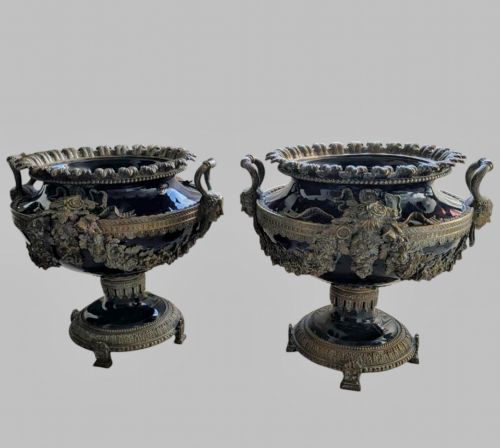
When you search for a ceramic planter and pedestal, you are looking at substantial display vessels comprising a distinct bowl or urn raised upon a matching column or figural base. These paired items function as integrated architectural statements rather than mere pots, designed to display large indoor or terrace plants with theatrical scale.
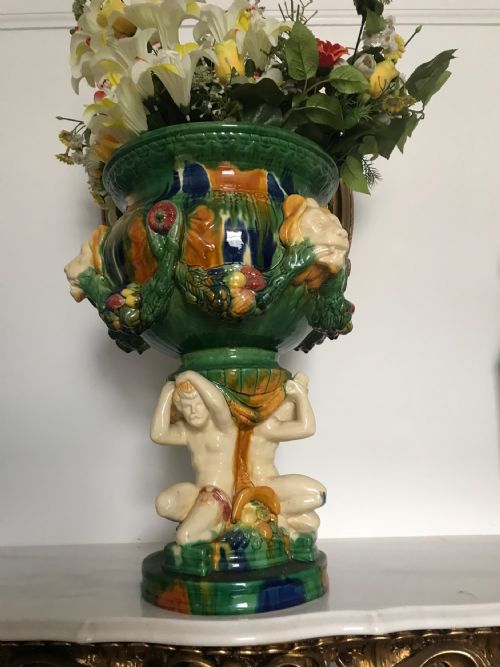
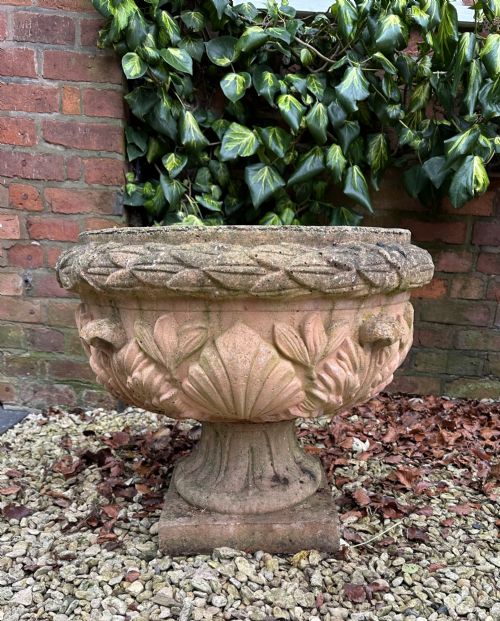
The selections available here span from the mid-nineteenth century through the Edwardian era and into the early twentieth century. You will encounter grand Majolica glazed earthenwares, rustic terracotta garden urns, and striking Art Nouveau creations.
Forms range from classical urns and naturalistic tree-trunk designs to elaborate stands featuring griffins, lions, and figural supports. Most examples unite the planter and the pedestal as a matched set, creating a harmonious silhouette intended for prominent placement in a grand interior.
Assessing Quality and Execution
Quality rests heavily upon the ambition of the modelling and the depth of the glaze. Finer examples display crisp, highly detailed relief work on both the planter and its supporting stand, whereas simpler pieces rely on basic thrown or moulded shapes.
The integrity of the matched pairing dictates much of the appeal. Sets that retain their original corresponding base or pedestal demonstrate superior preservation compared to assembled or mismatched combinations.
Artistic execution in the surface decoration separates standard production from exceptional studio output. Hand-painted majolica details, iridescent lustre effects, and sculptural figures such as griffins or lions indicate higher ambition from the maker.
Listings feature nineteenth-century and early twentieth-century earthenware, terracotta, and majolica forms from Victorian, Arts and Crafts, and Art Nouveau periods.
Burmantofts·Royal Doulton·Clement Massier·Minton·Julius Dressler·Lipscombe and Co
The Ceramic Planter and Pedestal Glossary
- Majolica
- A type of earthenware coated with an opaque tin glaze and painted with bright metal oxide colours. It achieved immense popularity in the nineteenth century for vibrant, glossy garden ornaments and tableware.
- Jardiniere
- A large ornamental pot or bowl designed to hold growing plants or flowers. French in origin, the term frequently describes substantial indoor ceramic vessels.
- Terracotta
- Fired unglazed clay possessing a reddish-brown hue and a porous body. It serves widely for classical urns and garden planters intended for both interior and exterior display.
- Lustre glaze
- A ceramic finish containing metallic elements that produce an iridescent, shimmering surface sheen when fired in a reduced oxygen environment.
- Pedestal
- A structural supporting column or base that elevates a sculpture, urn, or jardiniere. In ceramic sets, it mirrors the decorative language of the planter above.
Ceramic Planter and Pedestal: Frequently Asked Questions
How do I care for a ceramic planter?
Protect the glazed or terracotta body from freezing temperatures if placed outdoors during winter. Use an internal plastic liner to prevent moisture from seeping directly into the historic ceramic.
Dust glazed surfaces gently with a soft cloth and avoid harsh chemical cleaners that might compromise nineteenth-century finishes.
How do I spot a matched pedestal set?
Examine the clay body, glaze coloration, and decorative motifs on both the upper bowl and the lower column. True pairs share identical manufacturing stamps, consistent crazing patterns, and complementary wear.
Mismatched sets often display slight discrepancies in height, diameter, or hue where components from different kilns were later joined.
What periods do these planters represent?
The pieces span the Victorian era, the Arts and Crafts movement, and Art Nouveau design periods. Nineteenth-century examples often favour classical revival or naturalistic themes.
Early twentieth-century works frequently showcase secessionist styling and experimental lustre glazes that reflect changing modernist tastes.