


Ceramic Pitcher Basin Set
A ceramic pitcher basin set brings practical history into a bedroom, offering matching vessels designed for personal washing before modern plumbing.
Ceramic Pitcher Basin Set
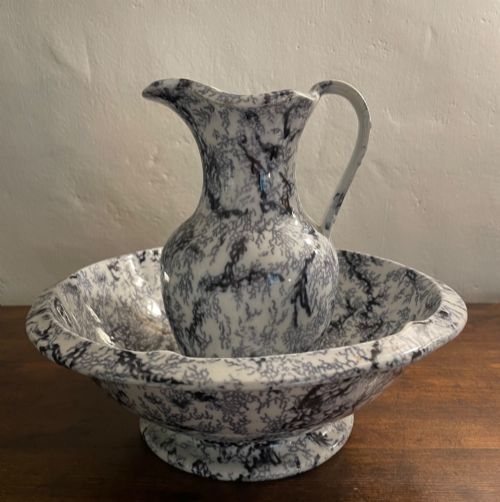
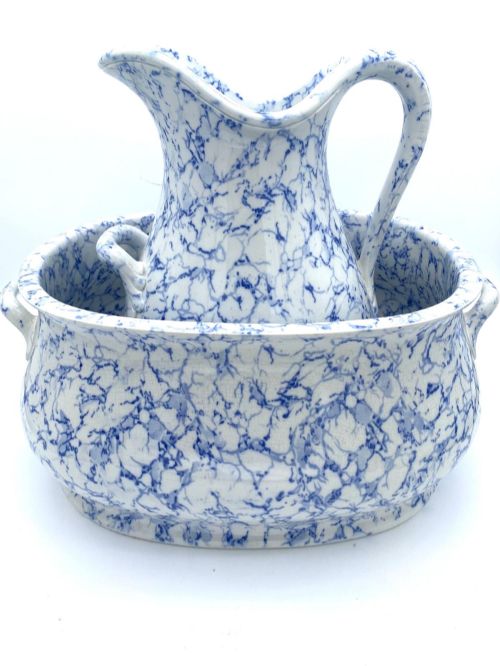
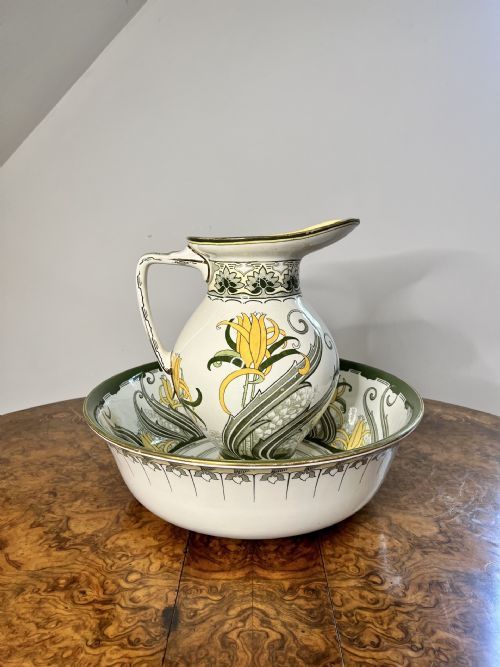
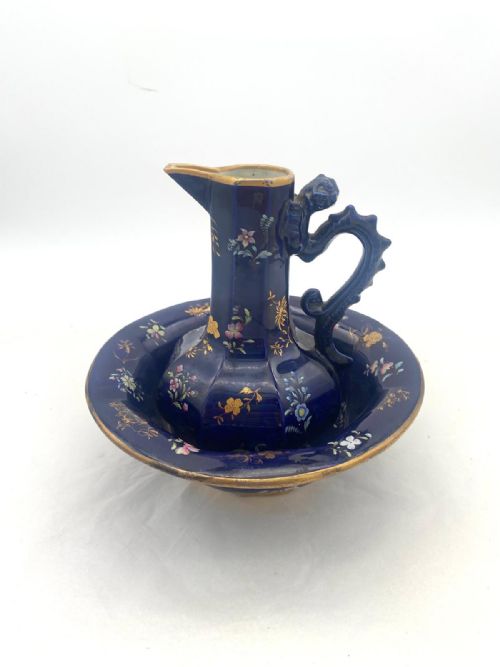
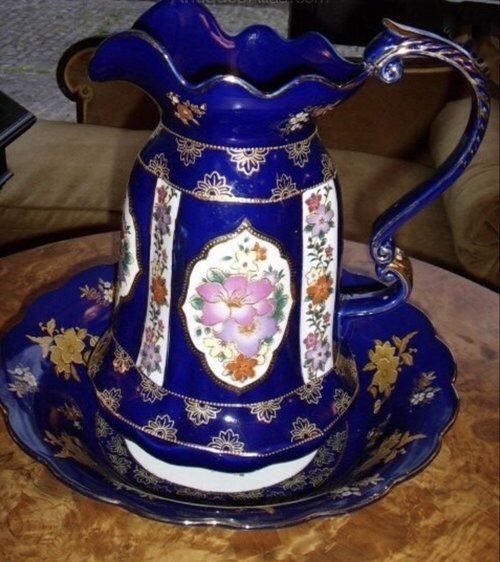
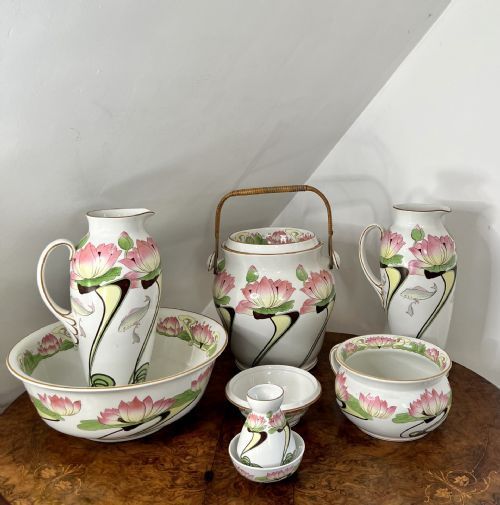
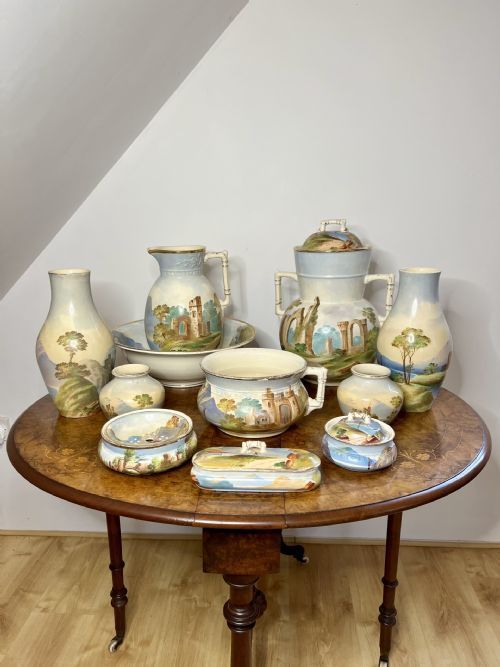
When you search for a ceramic pitcher basin set, you encounter matching combinations of large water jugs and deep washing bowls that served bedrooms before running indoor plumbing arrived. These sets appear under various traditional names such as wash sets, washstand sets, and jug and bowl sets.
The pieces on this page span from the early nineteenth century through the Edwardian era, taking forms in earthenware, ironstone, and porcelain. The most common survivals date from the Victorian and Edwardian periods, frequently displaying blue and white transfer printing or floral motifs.
Beyond full-sized bathroom and washstand sets, you may occasionally find unusual miniature versions or specialised pieces like footbaths paired with jugs. Their origins range across English potteries from Staffordshire and Burslem, reflecting the domestic hygiene habits of past centuries.
How they were made
Potters shaped these earthenware, ironstone, and porcelain bodies using traditional moulding and throwing techniques before applying detailed surface decoration. Many pieces utilise transfer printing in blue and white, while others feature hand-painted floral designs.
Glazes seal the ceramic surfaces to withstand water use, sometimes complemented by applied gilt or gold leaf details. Stoneware variants benefit from denser firing processes, creating robust vessels suited for daily washing routines.
Miniature jug and bowl sets exist, proving that even historic Victorians appreciated the undeniable charm of tiny, fully functional washing equipment.
What varies in quality
The distinction between ordinary and superior sets rests on the crispness of the transfer print, the delicacy of the ceramic body, and the complexity of the form. Octagonal shapes and moulded earthenware require greater skill in the kiln than standard round basins.
Makers known for high-standard ceramics, such as Masons or Doulton, utilised finer clay mixtures and more durable glazes. Preservation of original gilding and the absence of firing warping also separate standard utility wares from exhibition-grade pieces.
Minton·Doulon Burslem·Masons Ironstone·Doulton Lambeth·Doulton Burslem·Shelley·Mark Jones and Sons
The Ceramic Pitcher Basin Set Glossary
- Ironstone
- A dense, durable type of earthenware patented in the nineteenth century that resists chipping better than standard pottery. It provided a robust surface ideal for heavy bedroom wash sets.
- Flow blue
- A nineteenth-century transfer printing technique where the cobalt blue ink bled slightly into the glaze during firing, creating a misty, soft-edged pattern. This aesthetic became particularly popular in Staffordshire potteries.
- Stoneware
- A heavy, impermeable ceramic fired at high temperatures until vitrified. It allowed makers to produce sturdy jugs and basins without relying on porous earthenware bodies.
- Transfer printing
- A method of decorating ceramics by applying an engraved copper plate design onto tissue paper and pressing it onto the unfired or biscuit-fired clay. It enabled complex patterns to be replicated consistently across jug and basin sets.
- Footbath
- A large, deep ceramic vessel designed for soaking feet, occasionally found paired with a matching pitcher. These substantial pieces formed part of larger domestic washing arrangements.
Ceramic Pitcher Basin Set: Frequently Asked Questions
What is a ceramic pitcher basin set?
A ceramic pitcher basin set consists of a matching water jug and a large wash bowl used for daily hygiene before modern indoor plumbing became standard.
These sets were typically displayed on wooden washstands in bedrooms, providing functional water container and washing basin pairings.
How were these wash sets used?
Users filled the pitcher with water brought from a kitchen or pump, poured it into the basin, and used it for washing hands and face.
They served as the primary washing station in homes, often accompanied by smaller soap dishes and chamber pots forming a complete bathroom suite.
How do I date an antique wash set?
Dating relies on stylistic clues like Art Nouveau curves, Victorian transfer patterns, or Edwardian floral motifs combined with ceramic body types.
Maker marks stamped or printed on the base of the jug and basin provide the most reliable indication of the pottery and production era.
Can I use these sets for practical daily washing?
While these antique ceramics were originally built for washing, age and historical glazes mean many collectors prefer to display them.
Using them today requires gentle handling to protect fragile antique surfaces, old earthenware bodies, and delicate gilt or gold leaf decorations.