



Ceramic Parrot Ornaments
Ceramic parrot ornaments bring vibrant colour and character to a room, ranging from grand Meissen pairs to mid-century cockatoos.
Ceramic Parrot Ornaments
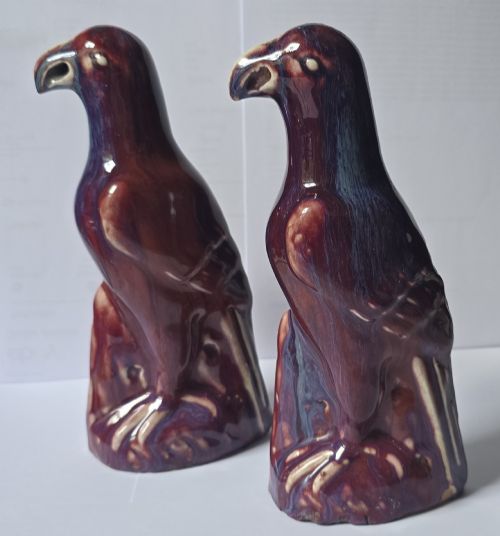
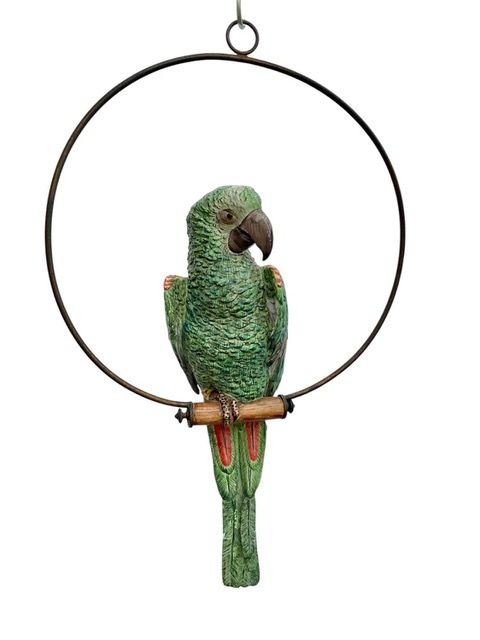
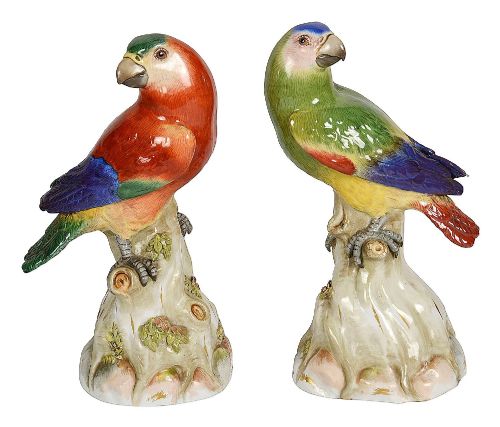
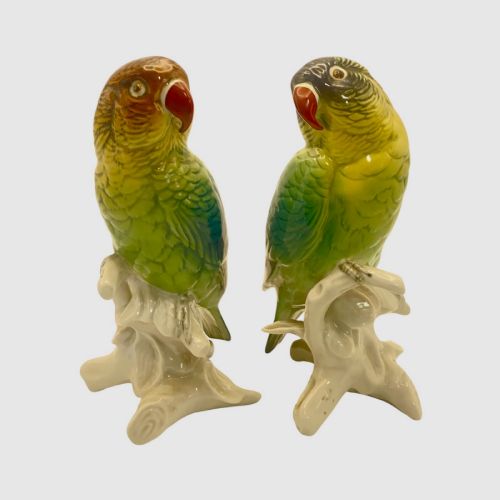
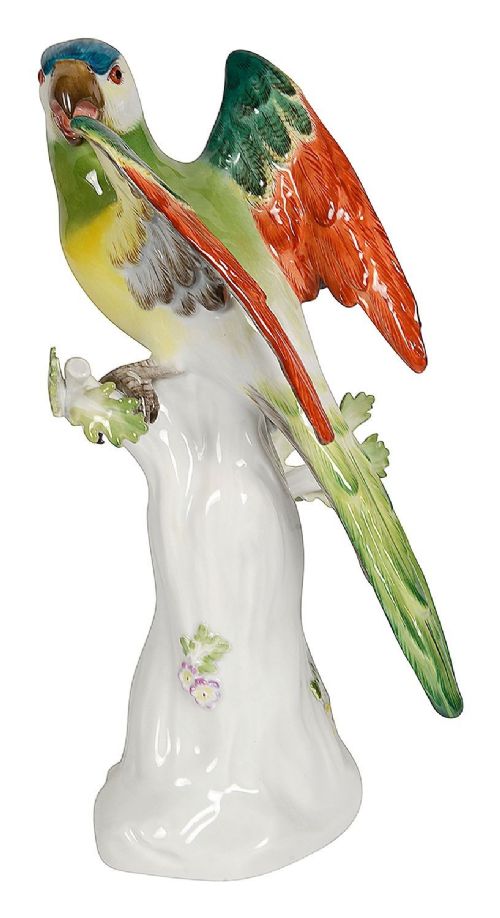
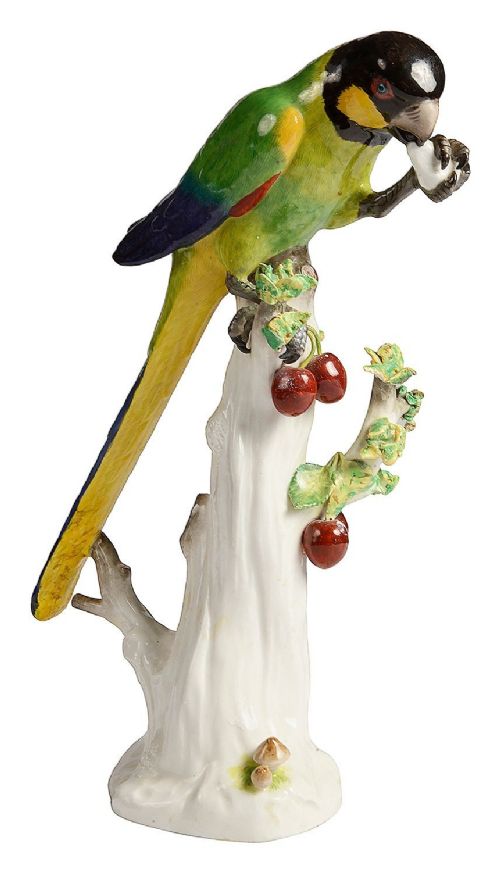
When you search for ceramic parrot ornaments, you are looking at figural pottery and porcelain designed purely for display. These objects take the form of single birds or pairs perched on tree stumps, branches, or hoops, bringing exotic life into nineteenth-century and mid-century interiors.
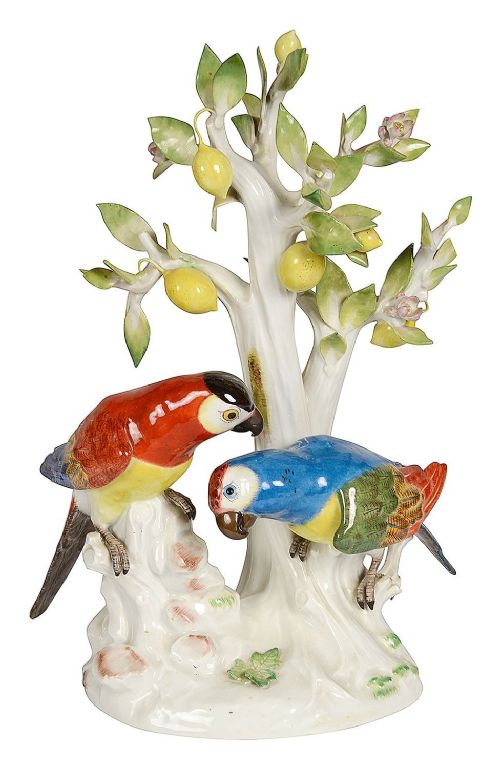
The versions you are most likely to meet on this page hail from European factories, most notably Meissen, alongside German art porcelain and Staffordshire pottery. They span the nineteenth century up to the nineteen-forties, offering everything from large multi-coloured figures to delicate pairs under lemon trees.
Makers such as Karl Ens and T.J. Jones appear among the European pieces, alongside Chinese export examples executed in famille verte palettes. These figures function as decorative focal points on mantelpieces, sideboards, and occasional tables.
Materials and construction methods
These pieces rely on hard-paste porcelain and standard porcelain bodies shaped into detailed avian forms. Artisans utilised lead glazes and overglaze enamels to capture the bright plumage of parrots and cockatoos.
Moulding and hand-modelling allowed workshops to create realistic perched postures, from birds resting on tree trunks to pairs clustered beneath foliage. Firing techniques fixed the vibrant enamel colours onto the glazed porcelain surfaces.
Ceramic Parrot Ornaments Retail Price Guide 2026
Typical asking prices for ceramic parrot ornaments among the pieces listed under this phrase on Sellingantiques today, from the lower quarter to the upper quarter. They describe what is for sale here now, not the wider market.
Some parrots share their perch with lemons, bringing a touch of citrus-scented sunshine indoors.
Distinctions in quality
The finest examples display meticulous hand-painting in the enamel colours, rendering feather details with precision rather than broad washes. Sculptural crispness defines the division between superior factory output and simpler Staffordshire earthenware.
Scale and complexity also separate the tiers, with large multi-figured compositions and pairs under lemon trees demanding greater technical skill from the potter. Preserved overglaze enamel and undamaged lead glazes maintain the visual impact of the original modelling.
Karl Ens·Meissen·T.J Jones
The Ceramic Parrot Ornaments Glossary
- Hard-paste porcelain
- A dense, vitrified ceramic material fired at high temperatures. It forms the robust body of many European decorative figures.
- Overglaze enamel
- Pigments applied on top of the fired glaze and fixed with a lower second firing. This technique delivers the vivid multi-coloured plumage seen on these birds.
- Lead glaze
- A shiny coating containing lead oxide applied to pottery. It provides a glossy finish that catches the light on nineteenth-century earthenware.
- Famille verte
- A green-dominant palette used in Chinese export ceramics. It defines the colour scheme of specific antique parrot figures on this page.
- Staffordshire pottery
- Earthenware produced in the English potteries district. It represents a different material tradition from continental hard-paste porcelain.
Ceramic Parrot Ornaments: Frequently Asked Questions
What are ceramic parrot ornaments?
These pieces are decorative porcelain and pottery figures shaped as parrots and cockatoos for interior display.
European factories and Staffordshire potters produced them across the nineteenth and twentieth centuries as colourful ornaments.
How were ceramic parrots used?
Owners placed them on mantelpieces, sideboards, and tables to add vibrant colour to formal rooms.
They served purely as decorative objects rather than functional items.
How do I identify Meissen parrots?
Meissen figures usually feature detailed porcelain modelling of birds perched on tree trunks or branches.
They often date from the nineteenth century and display sophisticated overglaze enamel painting.
Are mid-century cockatoos different?
Mid-century examples, such as those from nineteen-forties makers, lean towards sleeker modernist styling.
They maintain the bird motif while reflecting the design sensibilities of their later production period.