



Ceramic Musician Figures
These ceramic musician figures capture players in porcelain and pottery, bringing centuries of modelled instrumentation straight to the mantelpiece.
Ceramic Musician Figures
Ceramic musician figures span utilitarian earthenware to fine soft-paste porcelain, capturing players of bagpipes, drums, mandolins and hurdy-gurdies across several centuries. The most common examples met here originate from English factories like Derby and Staffordshire, alongside continental works from Meissen and Volkstedt.
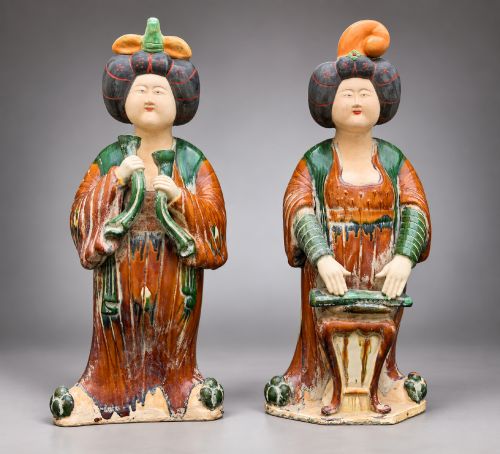
Makers shaped these subjects in various forms, ranging from single standing figures and seated pairs to elaborate candlestick groups framed by bocage. Dating stretches from Georgian productions through Victorian revivals up to twentieth-century Tang Dynasty style interpretations.
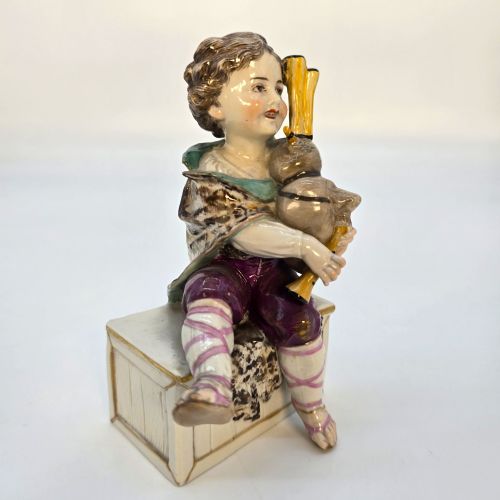
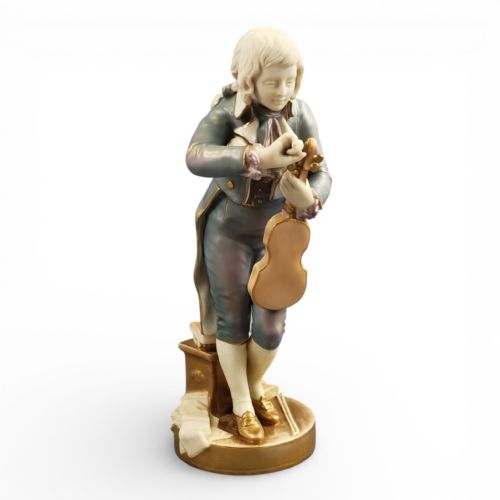
The selection includes specific titled characters like the Piedmontese bagpiper and young Mozart, alongside romanticised rustic musicians and exotic performers. Collectors encounter everything from unglazed bisque groups to brightly enamelled porcelain models.
Materials and production methods
Potters utilised both soft-paste and hard-paste porcelain alongside earthenware, applying lead glazes and vibrant enamels to finish the surfaces. Many pieces incorporate delicate details like applied clay foliage known as bocage, while others rely on rich gilding and sancai glazes.
Factories employed skilled modellers to shape the figures by hand or press them into moulds before firing them in kilns at high temperatures. Enamels and gold leaf were subsequently painted onto the glazed surfaces and fixed with a lower temperature firing.
Ceramic Musician Figures Retail Price Guide 2026
Typical asking prices for ceramic musician figures among the pieces listed under this phrase on Sellingantiques today, from the lower quarter to the upper quarter. They describe what is for sale here now, not the wider market.
Listings feature porcelain, earthenware, and soft-paste ceramic bodies decorated with gold leaf, enamel, and lead glaze.
Distinctions in craftsmanship
Quality rests upon the crispness of the modelling and the precision of the hand-painted enamelling, which separate ambitious factory output from simpler utilitarian wares. Superior pieces retain intricate details like individual fingers, textured instrument strings and sharp facial expressions without blurring in the glaze.
The sophistication of the original design and the complexity of the kiln firing dictate the standing of the work. Well-modelled examples show careful placement of secondary elements like dogs or bocage foliage, whereas lesser pieces display heavy potting and flat decoration.
Volkstedt Rudolstadt Factory·Meissen·Derby·Royal Worcester·Richard Eckert·James Hadley·Samson·Eichwald·Royal Dux·Alois Hampel·Fürstenberg·Bow
The Ceramic Musician Figures Glossary
- Bocage
- Foliage background. This applied ceramic leafwork frames eighteenth-century figures.
- Bisque
- Unglazed porcelain. The surface has a matte texture resembling marble.
- Enamel
- Opaque glass paint. Artisans applied these colours over the glaze before a second firing.
- Soft-paste
- Artificial porcelain body. Factories used this mixture of clay and glass before discovering hard-paste recipes.
- Sancai
- Three-colour glaze. This low-fired lead glaze system typically combines amber, green and cream tones.
Ceramic Musician Figures: Frequently Asked Questions
What periods do these figures cover?
The pieces span the eighteenth century through the Victorian and Edwardian eras, with later twentieth-century interpretations.
Examples range from Georgian factory productions to nineteenth-century continental revivals.
How were candlestick figures used?
Candlestick figures combined functional lighting with decorative sculptural art for the dining table or mantelpiece.
The figures often stood beside or within candle sockets surrounded by foliage.
How do I identify porcelain types?
Early English pieces frequently utilised soft-paste porcelain, which has a warmer tone under the glaze.
Continental factories like Meissen often employed hard-paste porcelain for crisper detail.
What instruments do the figures hold?
The musicians play instruments typical of their respective periods, including bagpipes, mandolins and hurdy-gurdies.
Some depictions feature drummers, singers and exotic performers.