
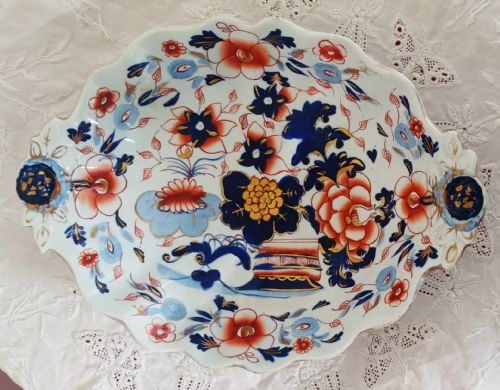


Ceramic Fruit Stand
A ceramic fruit stand brings height and colour to a table, arranged as a pedestal bowl, comport, or tazza for display.
Ceramic Fruit Stand
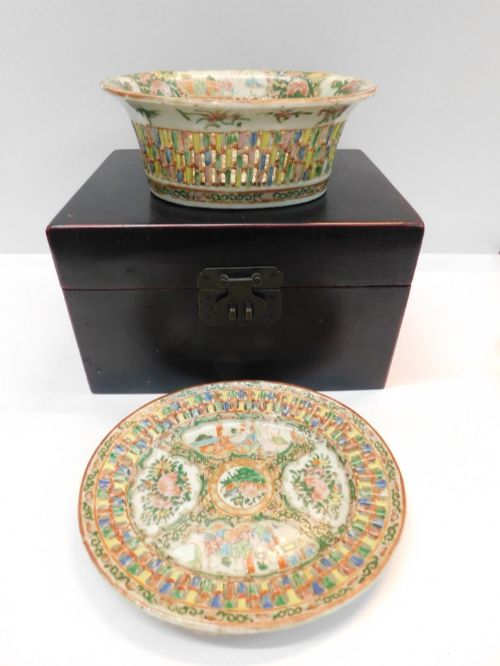
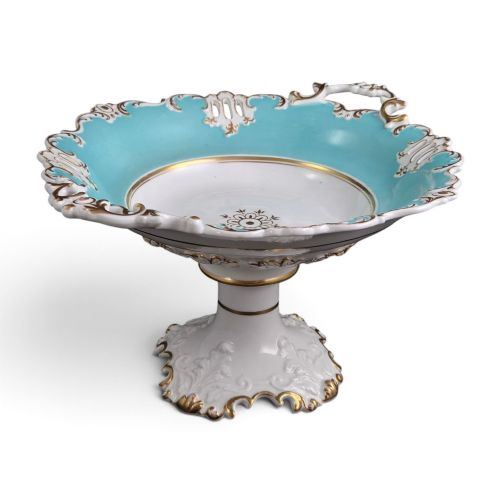
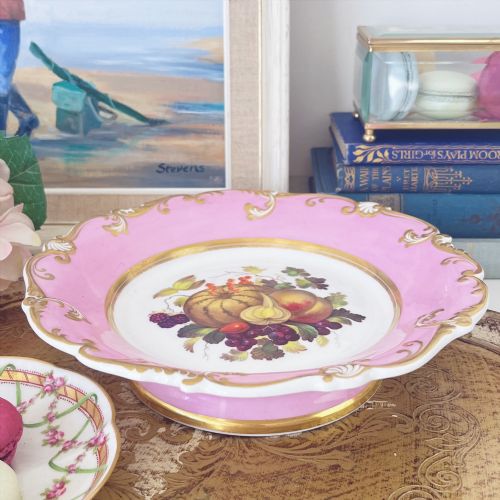
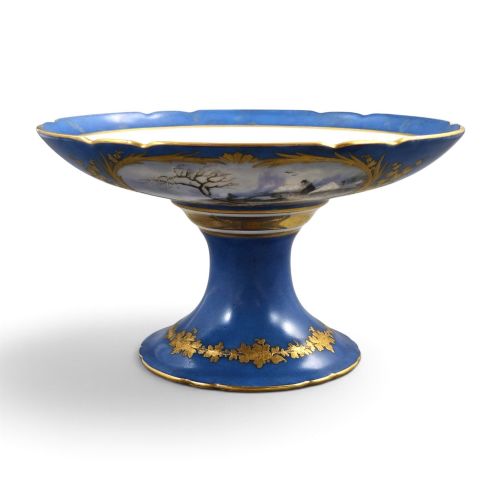
A ceramic fruit stand serves as an elevated vessel for presenting fruit and confectionery, taking forms such as comports, tazzas, pedestal bowls, and chestnut baskets with matching stands. These pieces emerge from the nineteenth century, including Victorian, Edwardian, and Georgian periods, alongside Chinese export wares.
Makers fashioned these stands to sit centrally on dining tables or sideboards, frequently as part of larger dessert services. The commonest examples on this page include bone china and ironstone comports, English porcelain tazzas, and pierced Chinese porcelain baskets.
Design influences range from Rococo Revival and Regency to Chinese Famille Rose and Victorian Naturalism. Buyers encounter pedestal dishes supported by shaped bases, footed bowls, and multi-piece sets comprising a basket with an underplate.
Assessing quality in ceramic stands
Quality rests upon the crispness of the moulding and the execution of the handpainting, where detailed brushwork on fruit and figures elevates a piece above standard transfer-printed wares. The fineness of pierced openwork on chestnut baskets also distinguishes superior examples.
The survival of delicate applied elements, such as leaves, flowers, and figures, marks a higher standard of manufacture and preservation. Rich, stable gilding and clear enamel colours without fading separate finer nineteenth-century factory production from simpler utilitarian items.
Listings feature nineteenth-century porcelain, ironstone, and pearlware forms, including comports, tazzas, and pierced chestnut baskets with stands.
Coalport·H and R Daniel·Sèvres·Schierholz Plaue·Masons Ironstone·Chamberlain Worcester·Minton·Royal Worcester·Worcester·Moorcroft
The Ceramic Fruit Stand Glossary
- Comport
- An elevated pedestal dish or bowl used for serving fruit or dessert. They typically feature a shallow basin raised on a short stem and foot.
- Tazza
- A shallow saucer-like dish mounted on a stem and foot. This Italian term describes ornamental vessels used for display or serving.
- Ironstone
- A heavy, durable type of earthenware patented in the nineteenth century. It resists chipping and provided a sturdy body for colourful patterns.
- Reticulated
- Describes ceramic work featuring an openwork pattern of pierced geometric or decorative holes. Chestnut baskets frequently display this technique.
- Famille Rose
- A palette of Chinese porcelain enamels dominated by opaque pink. The style developed in the eighteenth century and continued into later export wares.
Ceramic Fruit Stand: Frequently Asked Questions
How were these stands used originally?
These vessels sat centrally on nineteenth-century tables during the dessert course to present fresh fruit, nuts, and confectioneries.
Many formed part of larger part-dessert services, accompanied by matching plates and baskets designed to create a symmetrical table arrangement.
How do I care for an antique ceramic stand?
Wash these pieces gently by hand using warm water and mild soap, avoiding abrasive sponges that might damage handpainted enamels or gilding.
Keep them away from direct sunlight and sudden temperature changes to protect the old glaze and any delicate applied porcelain flowers.
How can I tell the age of a piece?
Examine the base for factory marks, pattern names, or impressed ciphers that correspond to nineteenth-century registry systems and maker histories.
Stylistic clues such as Rococo Revival moulding, transfer-printed willow patterns, or handpainted floral grounds also indicate specific ceramic periods.