


Ceramic Female Ornament
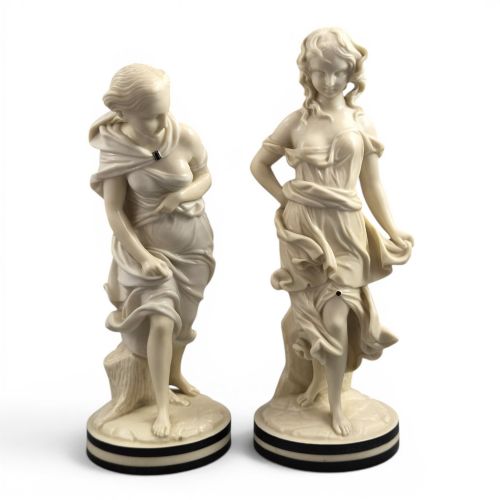
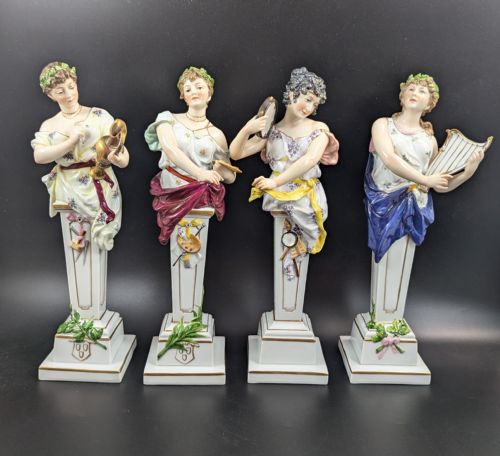
These ceramic female ornament pieces span Victorian, Georgian, and Art Deco periods, offering sculpted portrayals of maidens, dancers, and allegorical figures in porcelain and biscuit.
Ceramic Female Ornament
A ceramic female ornament captures women in sculptural form, ranging from classical maidens and street vendors to dancers and allegorical figures. Buyers seeking this phrase encounter works shaped across the Georgian, Victorian, and 1930s periods.
The objects take the form of freestanding figurines, busts, and sculptural pairs produced by major European porcelain factories. Works depicting classical subjects, dancers, and rural workers dominate the selection available on the market.
Subjects include specific characters such as Marie Antoinette, mythological figures like Daphne, and unnamed water carriers or musicians. Each piece serves primarily as a decorative interior sculpture rather than a utilitarian vessel.
Materials and construction methods
Makers utilised porcelain, biscuit porcelain, and sancai glazed pottery to shape these figures. Biscuit porcelain offers a matte, unglazed surface akin to carved marble, while glazed pieces employ coloured glazes and enamel highlights.
Gilt, gold leaf, and gilding frequently accent garments, hair, and bases to add tactile contrast against white ceramic bodies. Potters cast or hand-modelled the clay before firing at high temperatures in kilns.
Moulds allowed factories to replicate complex sculptural drapery and facial expressions consistently across production runs. Details such as wicker baskets, drums, and foliage were applied by hand prior to the final glaze firing.
Several ceramic maidens share their display spaces with small, unbothered lizards sculpted onto tree stumps.
Distinctions in craftsmanship and finish
The application of hand-painting separates mass-produced items from finer studio output. Precise brushwork on eyes, lips, and patterned garments, alongside controlled gilding, indicates a higher grade of manufacture.
Factory standards dictate the structural integrity of the piece, ensuring that outstretched arms, instruments, and delicate pedestals withstand the firing process without warping or sagging.
Royal Worcester·Derby Porcelain·Meissen·Royal Dux·Royal Doulton·Volkstedt·Achille Mollica·Ernst Whaliss·Vion & Baury·Sitzendorf
The Ceramic Female Ornament Glossary
- Biscuit porcelain
- Unglazed ceramic fired to a hard, matte finish that resembles marble. It absorbs no light, highlighting fine sculptural modelling.
- Allegorical figure
- A ceramic sculpture representing an abstract concept such as Art, Autumn, or Liberty through human form and symbolic attributes. These pieces often rely on classical iconography.
- Parian ware
- A type of fine biscuit porcelain developed in the nineteenth century to imitate white marble. It contains a high proportion of feldspar.
- Sancai
- A low-temperature lead-glazed pottery using a multi-colour palette associated with Tang dynasty styles. The glazes tend to run and intermingle during the firing process.
Ceramic Female Ornament: Frequently Asked Questions
What periods do these ceramic figures come from?
The selections span from the Georgian era through the Victorian period and into the 1930s. Each era brings distinct aesthetic choices, moving from classical allegories to Art Nouveau and Art Deco styling.
Manufacturing techniques evolved across these decades, shifting from hand-modelled earthenware and soft-paste porcelain to precise industrial casting and modern glaze applications.
Where were these ornamental figures originally displayed?
Victorian and Georgian pieces typically sat upon mantelpieces, drawing-room console tables, and enclosed cabinets in prosperous homes. They served as conversation pieces that reflected the owner's cultural interests.
Later Art Deco examples found places on modernist sideboards and dedicated display ledges, matching the cleaner interior lines of the 1920s and 1930s.
How do I identify a classical maiden figure?
Classical maiden figures wear draped garments reminiscent of ancient Greek or Roman attire, often accompanied by motifs like urns, doves, musical instruments, or architectural columns. Their poses are frequently contemplative or engaged in gentle domestic tasks.
Makers frequently titled these models after mythological figures or generic classical archetypes, drawing upon Neoclassical revival tastes popular throughout the nineteenth century.