




Central Asian Folk Art Textile
A central asian folk art textile brings vibrant tribal energy and historic needlework into modern rooms.
Central Asian Folk Art Textile
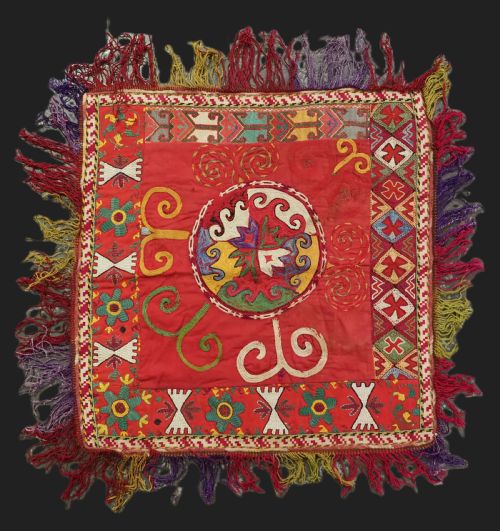
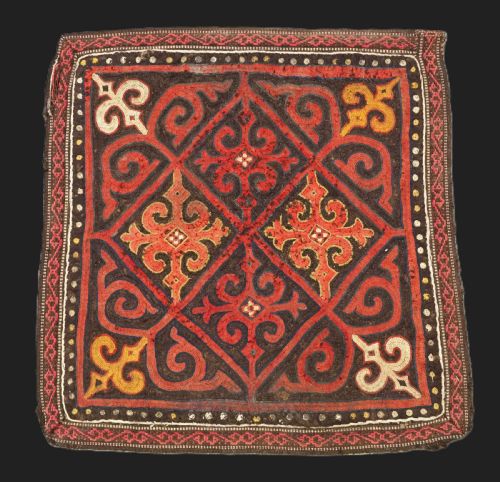
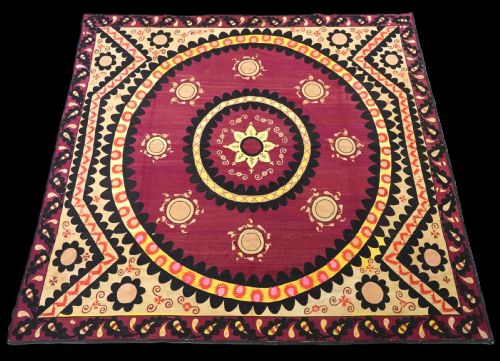
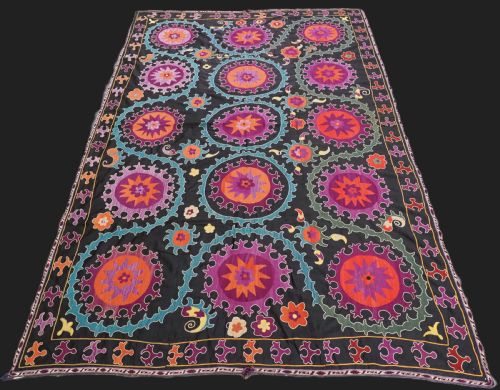
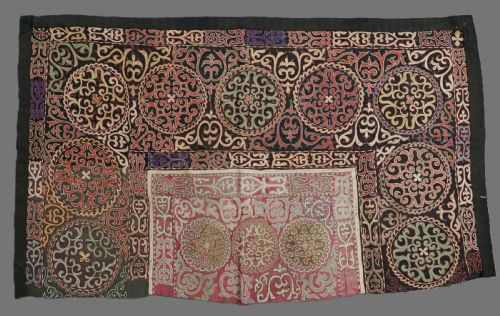
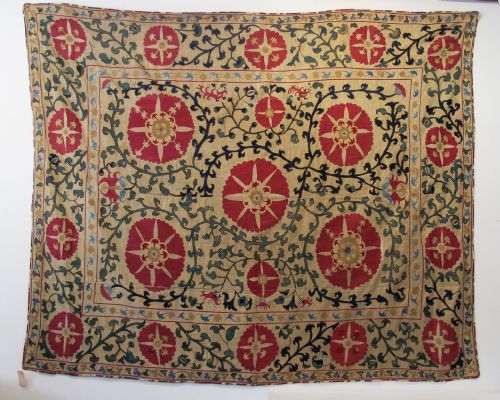
A central asian folk art textile encompasses rich embroidered wall hangings, dowry pieces, and yurt panels created across the nineteenth and early twentieth centuries. These works reflect nomadic traditions and regional tribal identities through striking needlework.
The pieces on this page are predominantly Uzbek suzanis and tribal panels from groups such as the Lakai and Kyrgyz. Wall hangings and textile panels form the core of these listings, representing domestic textiles transformed into decorative objects.
How They Were Made
Artisans stitched vibrant silk thread onto woven cotton grounds, wool, or felt backings by hand. These materials provided sturdy foundations for dense pictorial and geometric embroidery.
Makers utilised techniques specific to their tribes, such as the distinctive chain stitch and couching found on ilgiches and palak suzanis. The combination of silk yarn on contrasting dark or red cotton grounds defined the visual impact of each piece.
Central Asian Folk Art Textile Retail Price Guide 2026
Typical asking prices for central asian folk art textile among the pieces listed under this phrase on Sellingantiques today, from the lower quarter to the upper quarter. They describe what is for sale here now, not the wider market.
Materials across this selection are strictly cotton, silk, wool, and felt, spanning the nineteenth and early twentieth centuries.
What Varies in Quality
The density of the silk embroidery and the complexity of the design determine the visual hierarchy of these textiles. Fully worked surfaces and intricate geometric motifs distinguish ambitious works from simpler regional examples.
Condition and the survival of original grounds dictate desirability among collectors. Intact foundations and vibrant, unfaded silk threads elevate a piece within its category.
The Central Asian Folk Art Textile Glossary
- Suzani
- An embroidered tribal textile from Central Asia, traditionally worked in silk on a cotton or linen ground as part of a bride's dowry. These large panels were used to decorate the interior walls of nomadic tents and houses.
- Ilgich
- A small embroidered wall hanging or dowry piece associated with the Lakai tribe. They display bold geometric patterns and vibrant needlework.
- Tush kyiz
- A large, elaborately embroidered felt or cotton wall hanging made by Kyrgyz women to commemorate the marriage of a son or daughter. These pieces feature symbolic flora and fauna motifs.
- Palak
- A fully embroidered suzani variant where the ground fabric is entirely covered in dense silk stitching. This style represents a monumental investment of time by the maker.
Central Asian Folk Art Textile: Frequently Asked Questions
How were suzanis used originally?
Nomadic and village families utilised these large embroidered textiles to line the walls of yurts or homes. They also served functional roles within marriage ceremonies and dowries.
Over time, these domestic textiles transitioned into decorative wall hangings valued for their bold folk art aesthetics.
How do I hang a textile safely?
Mounting requires weight to be distributed evenly across the top edge rather than pinned at single points. A professional framer or conservator can attach a cotton sleeve for a concealed support rod.
Keeping textiles away from direct sunlight protects the natural silk threads from fading over the years.
How do I date these textiles?
Stylistic evidence, material choices, and natural dye signatures help establish the period of a piece. Nineteenth-century examples often display subtle shifts in colour and hand-spun foundation fabrics.
Comparing stitch density and regional motifs against documented tribal types refines the timeline.
What is the difference between a suzani and an ilgich?
Suzanis are typically larger, expansive wall hangings or bed covers featuring elaborate floral and medallion layouts. They originate primarily from urban and rural workshops across Uzbekistan.
Ilgiches are smaller, intensely geometric dowry pieces created specifically by the Lakai tribe with distinct triangular and hooked motifs.