
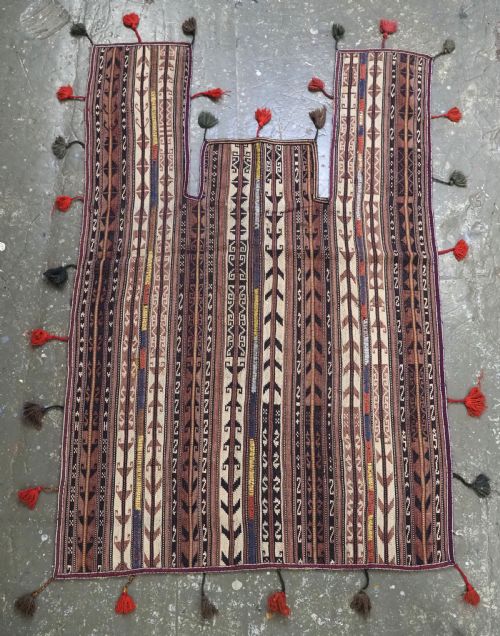


Central Asian Flatweave Kilim
Central asian flatweave kilim pieces are tribal woven textiles offering graphic wool patterns and nomadic utility.
Central Asian Flatweave Kilim
A central asian flatweave kilim brings together tribal and nomadic textiles created across the region during the late nineteenth and early twentieth centuries. Buyers examine items ranging from runner rugs and carpets to utilitarian horse blankets, storage bags, and tent bands.
The most common examples on this page are Uzbek gajeri kilims and Yomut Turkmen palas soumak kilims featuring banded patterns. These pieces reflect the distinct weaving traditions of specific tribal groups operating across Central Asia.
Materials and construction
Weavers utilised hand-spun wool and cotton combined with natural dyes to construct durable flatweaves without pile. Certain utilitarian textiles integrate camel hair grounds alongside specialised structural techniques such as soumak and cicim work.
Many works were assembled in multiple strips, ranging from narrow panels to larger carpets joined together. The incorporation of original backs, tassels, and extended ends demonstrates traditional nomadic craftsmanship.
Listings feature pieces made from wool, cotton, and camel hair created across the nineteenth and twentieth centuries.
Assessing the craftsmanship
Quality rests upon the fineness of the weave and the crispness of the graphic design. Tighter structures and deliberate colour placement elevate an individual textile.
The integrity of the construction, from multi-strip assembly to the preservation of original tassels and kilim ends, defines the standing of each piece.
The Central Asian Flatweave Kilim Glossary
- Kilim
- A flatweave textile produced without pile by tightly interweaving warp and weft strands. These pieces function primarily as rugs, covers, or wall hangings.
- Soumak
- A brocade-like weaving technique where supplementary threads wrap around the warp threads to create a textured surface. This method adds strength and distinct pattern definition to the textile.
- Mafrash
- A large tribal storage bag or container face produced in flatweave or soumak techniques. They were utilised inside nomadic tents for bedding and household possessions.
- Gajeri
- A specific style of banded flatweave kilim traditionally associated with Uzbek weavers. These panels display striking linear graphics and repeat motifs.
- Cicim
- An embroidery-like supplementary weft technique worked on a plain weave ground. It introduces raised patterns directly onto the surface of the textile.
Central Asian Flatweave Kilim: Frequently Asked Questions
How were these flatweaves used originally?
Nomadic and tribal communities utilised these textiles for practical daily requirements inside tents and dwellings. They served as floor coverings, blankets, horse covers, and durable storage bags for household goods.
Larger strips were also joined to form structural tent bands or rugs. Every item fulfilled a specific domestic function within tribal life.
What materials are typical in these textiles?
Traditional pieces rely heavily on hand-spun wool and cotton dyed with natural colorants. Some specialised utilitarian covers also incorporate camel hair foundations for added durability and texture.
Natural materials provide the structural strength necessary for nomadic life. Dyes derived from local plants and minerals create the characteristic faded red and earth tones.
How do I care for an antique kilim?
Protect the flatweave by placing a suitable rug underlay beneath it to prevent slipping and uneven wear. Regular gentle vacuuming without a rotating brush roll keeps dust from settling into the fibres.
Keep the textile out of direct sunlight to protect the natural dyes from fading. Professional cleaning tailored to antique wool textiles should be employed when necessary.
How are different tribal styles identified?
Tribal attributions rely on specific structural designs, colour palettes, and weaving techniques particular to groups such as the Yomut, Uzbek, and Tekke. Banded layouts and graphic motifs offer clues to regional origins.
Examining the construction methods, such as multi-strip assembly or soumak work, helps differentiate between nomadic workshops. Each group maintained distinct aesthetic traditions.