




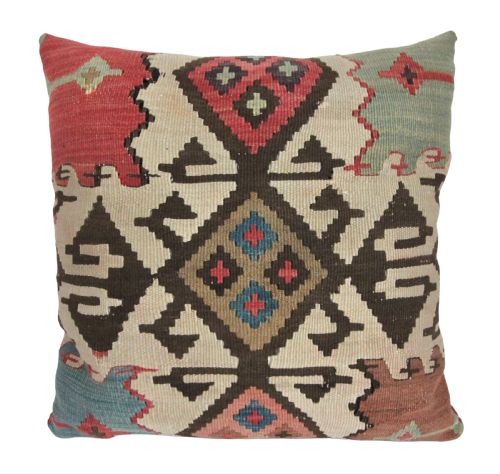
Patterned Wool Kilim Rug
These patterned wool kilim rug examples bring flatweave textiles from regional traditions into contemporary interiors.
Patterned Wool Kilim Rug
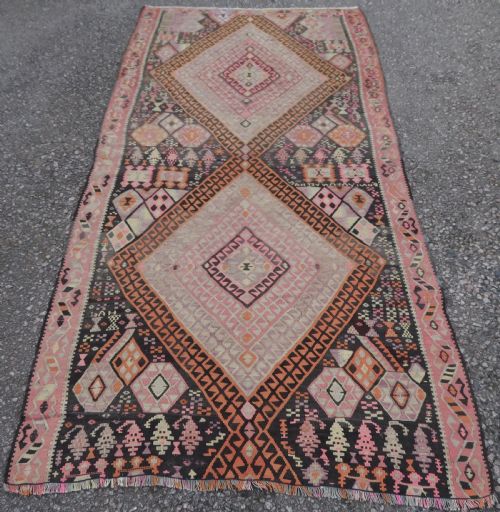
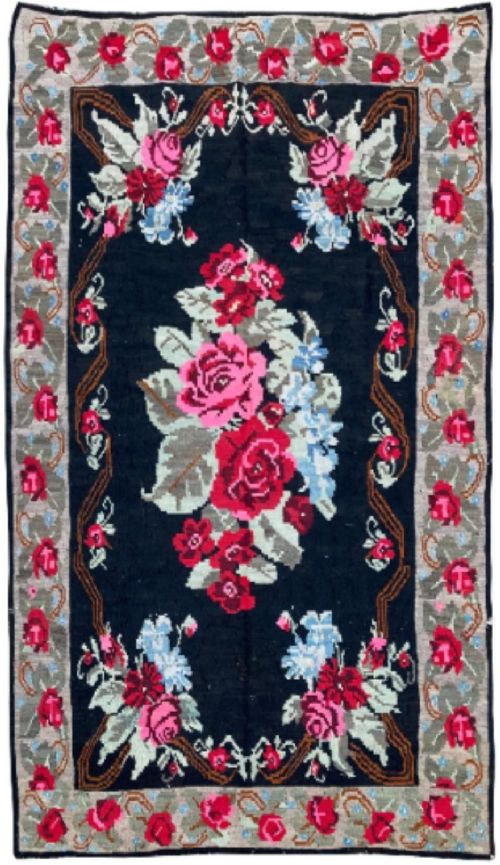
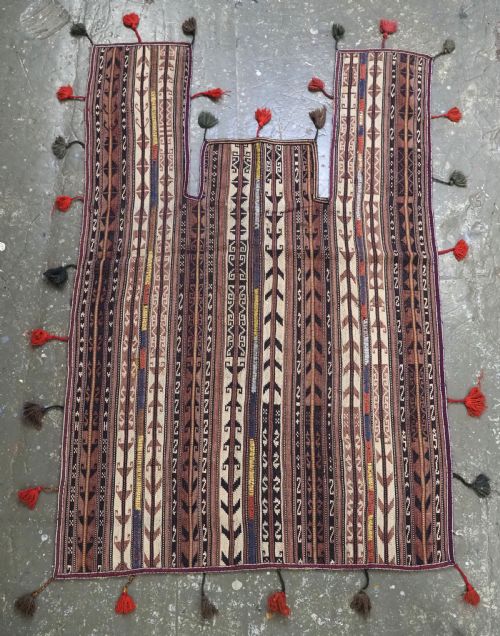
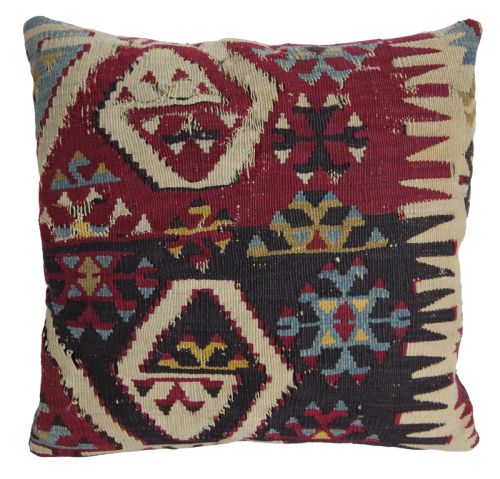
A patterned wool kilim rug encompasses flatwoven floor coverings and associated domestic textiles originating from tribal and nomadic weaving traditions across Anatolia, Persia, Central Asia, and the Balkans. These textiles include large carpets, long runner formats, bread sofreh, horse blankets, storage bags, and scatter cushions adapted from larger woven pieces. The selection spans production dates from the mid-nineteenth century through the early twentieth century, reflecting diverse regional aesthetics.
The most common formats encountered on this page are vintage and antique scatter rugs alongside cushions fashioned from older flatweave textiles. Buyers frequently find Anatolian and Persian tribal pieces alongside Bessarabian and Balkan folk art items. These textiles served functional roles within nomadic and village households before entering the decorative market as collectible furnishings.
What varies in quality
Quality in a patterned wool kilim rug relates to the tightness of the weave and the precision of the geometric motifs. Finer textiles exhibit greater knot density in the flatweave structure and sharper delineation of regional design elements.
The depth and preservation of natural dye colours significantly influence the visual impact of the piece. Examples with well-maintained structural integrity and rich, original colouration represent the upper tier of the available range.
Listings span production dates from eighteen-fifty to nineteen-thirty, utilising wool, cotton, and natural dyes across Anatolian, Persian, and Balkan styles.
The Patterned Wool Kilim Rug Glossary
- Kilim
- A flatwoven textile or rug produced without a pile. These pieces are traditionally used as floor coverings, wall hangings, or covers across the Near East and Central Asia.
- Sofreh
- A dining or bread cloth used in Persian and nomadic households. These textiles often feature specific regional iconography related to food preparation and communal meals.
- Soumak
- A brocade-like flatweaving technique where decorative weft threads are wrapped around the warp threads. This method adds structural weight and distinct surface texture to the rug.
- Warp
- The vertical threads stretched on a loom prior to weaving. In these textiles, wool or cotton forms the foundational warp grid.
- Weft
- The horizontal threads passed through the warp to create the patterned fabric. Natural dyed wool wefts form the visible design of the flatweave.
Patterned Wool Kilim Rug: Frequently Asked Questions
How were kilims used originally?
Nomadic and village communities utilised flatwoven textiles primarily as floor coverings, blankets, and storage containers for daily domestic life.
They also served as saddle covers, bread cloths, and ceremonial furnishings within tribal households.
How do I clean an antique flatweave?
Gentle surface vacuuming without a beater bar removes loose dirt from the flatweave structure. Professional textile cleaning is recommended for deeper maintenance.
Harsh chemical detergents and excessive water immersion must be avoided to protect natural wool fibres and traditional dyes.
Where do these tribal rugs originate?
The pieces originate from weaving centres across Anatolia, Persia, Central Asia, the Caucasus, and the Balkans.
Specific regional groups such as the Qashqa'i, Afshar, and Yomut Turkmen developed distinct patterns and colour palettes.
Are flatweave rugs durable for floors?
The dense flatweave construction provides strong resistance to foot traffic in domestic settings. Using an appropriate underlay helps prevent slipping and reduces friction against hard flooring.
Rotating the rug periodically ensures even wear across the surface over time.