





Caucasian Woven Bag
A caucasian woven bag carries the geometric stories of nomads through hand-spun wool and natural colour.
Caucasian Woven Bag
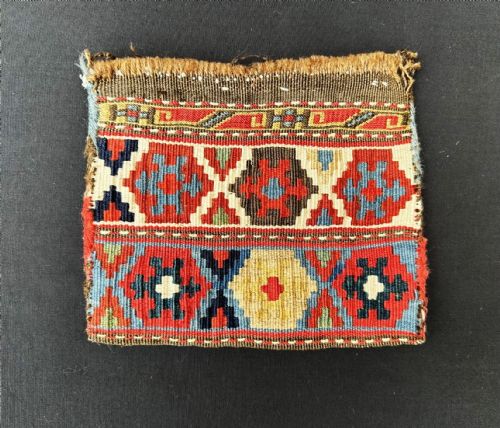
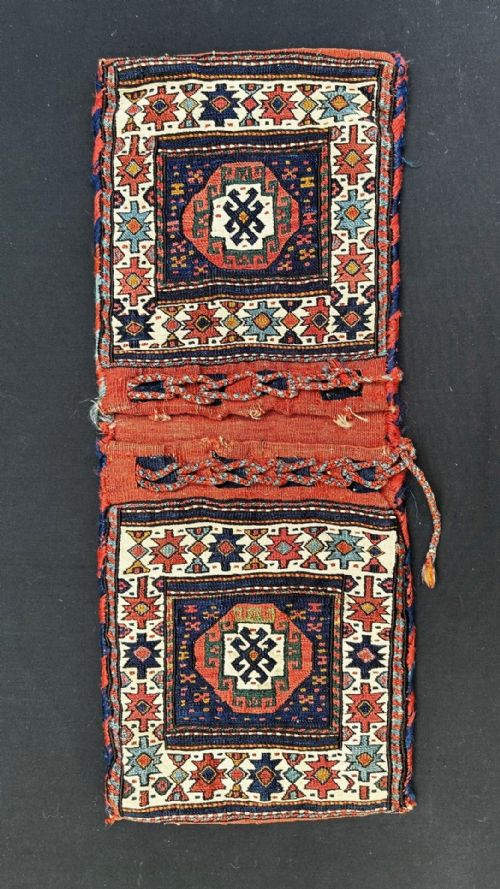
A caucasian woven bag encompasses utilitarian items made for nomadic life, including complete storage receptacles, individual bag faces, and saddle bags. The pieces encountered here stem principally from the nineteenth century, reflecting tribal traditions across regions such as Azerbaijan and the Caucasus.
Makers utilised these textiles for practical storage and transport on horseback, creating forms like the mafrash, khorjin, and vanity-bag. Many survive today as isolated bag faces or cushions adapted from their original functional contexts.
The aesthetic bridges several tribal identities, notably Shahsavan and Kurdish groups. These objects display the distinct design vocabulary of nomadic weaving traditions.
Materials and Construction
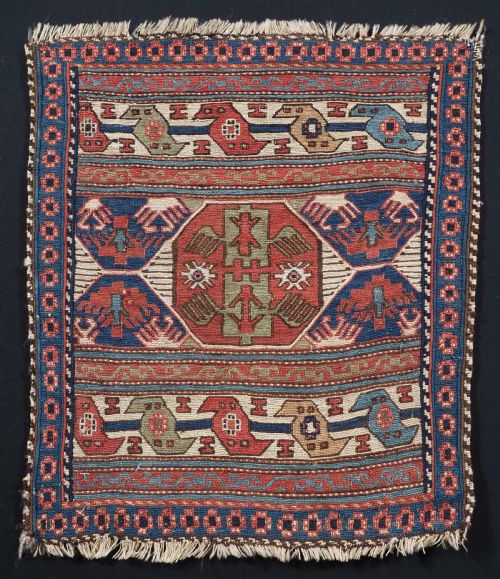
The construction relies fundamentally on hand-spun wool and cotton, worked into robust structures capable of enduring daily nomadic use. Artisans employed specialised techniques such as soumak wrapping alongside flatweave kilim structures.
Colour derives from natural and vegetable dyes, producing rich tones that age with distinct character. These organic colourants interact with the wool fibres to create the depth observed across nineteenth-century examples.
Caucasian Woven Bag Retail Price Guide 2026
Typical asking prices for caucasian woven bag among the pieces listed under this phrase on Sellingantiques today, from the lower quarter to the upper quarter. They describe what is for sale here now, not the wider market.
Listings demonstrate that Shahsavan production dominates this category, spanning flatweave and soumak techniques from the nineteenth century.
Factors of Quality
Superior examples of a caucasian woven bag are distinguished by the precision of their soumak technique and the complexity of their iconography. Pieces featuring distinct motifs such as birds and dragons demand higher appreciation than simpler geometric fields.
The integrity of the hand-spun wool and the vibrancy of the vegetable dyes govern the visual longevity of the piece. Crisp execution in structural weaving separates standard utility items from masterwork tribal expressions.
The Caucasian Woven Bag Glossary
- Soumak
- A brocade-like flatweaving technique where coloured threads are wrapped over the warp threads before being bound. This method creates a textured surface often seen on finer storage pieces.
- Mafrash
- A large rectangular storage box or chest panel used by nomads for bedding and household goods. These containers were typically constructed in pairs.
- Khorjin
- The traditional term for a double saddle bag used for transport on animals. Complete pairs feature a connecting bridge panel.
- Bag face
- The decorative front panel of a storage or saddle bag preserved after the plain back has deteriorated or been removed. These are frequently mounted as cushions or wall art.
- Kilim
- A flatweave textile produced without pile by tightly interweaving warp and weft strands. This method yields a lighter, flexible fabric utilised for utilitarian bags.
Caucasian Woven Bag: Frequently Asked Questions
What was a caucasian woven bag used for?
These textiles served practical storage needs for nomadic groups, holding household items, clothing, or provisions during seasonal migrations. Saddle variants transported belongings across rough terrain on horses and pack animals.
Over time, many of these utilitarian containers were separated into individual panels or converted into decorative cushions. Their origins lie firmly in the functional daily requirements of tribal life rather than purely decorative production.
How do I care for a tribal textile?
Protect antique wool textiles from direct sunlight to prevent natural and vegetable dyes from fading over decades of display. Gentle vacuuming through a mesh screen helps remove dust without damaging the hand-spun fibres.
Avoid placing these items in high-moisture environments or areas prone to heavy foot traffic. Professional cleaning by a specialist in antique rugs is recommended if deep conservation becomes necessary.
How can I tell different tribal groups apart?
Distinctions rely on specific structural methods, colour palettes, and recurring geometric motifs unique to each weaving community. Shahsavan work frequently displays intricate soumak wrapping and crisp medallion arrangements.
Kurdish or Jaf pieces often exhibit alternate structural balances and distinct border arrangements. Examining the particular weave and wool preparation provides clues to the origin.
Are bag faces complete pieces?
A bag face represents only the decorative front of an original saddle bag or storage container. The plain back webbings often wore out from friction against pack animals and were removed.
While incomplete, these surviving panels display the finest artistic effort of the weaver. They stand alone as finished decorative objects suitable for display.