

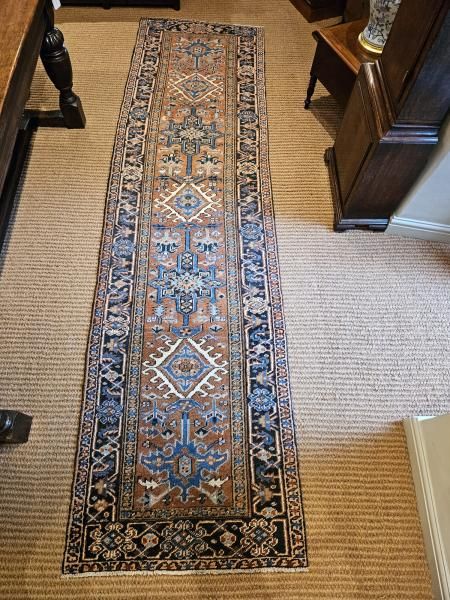
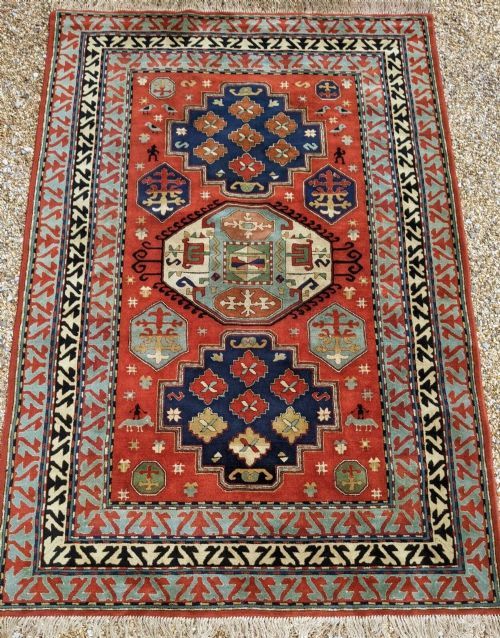
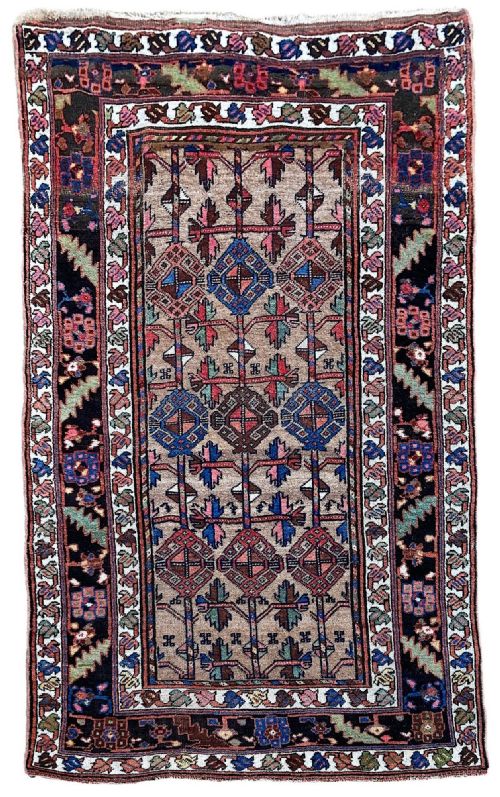


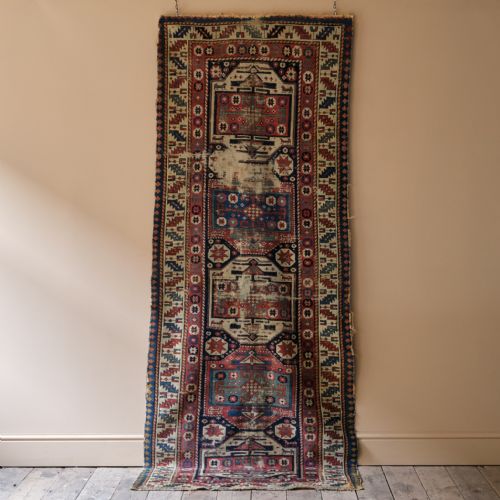


Caucasian Style Wool Rug
A caucasian style wool rug brings geometric motifs and rich dye palettes into a room, offering durability and historical character.
Caucasian Style Wool Rug
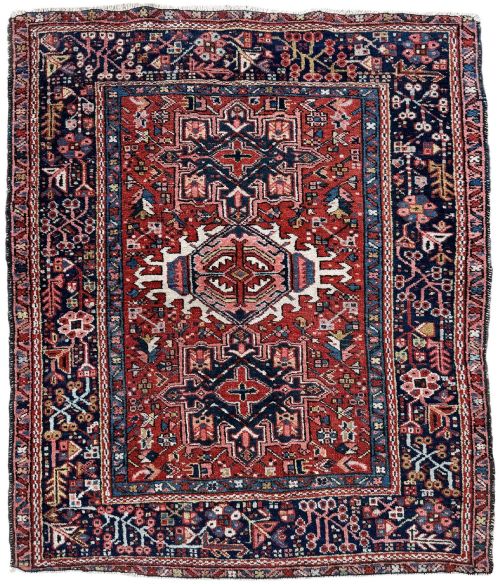
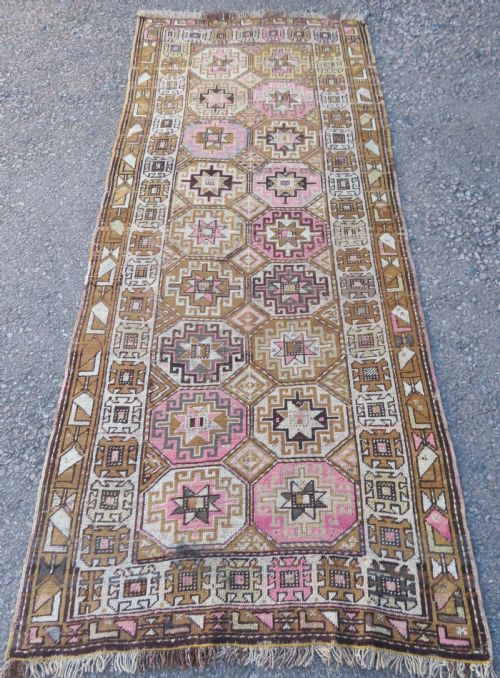
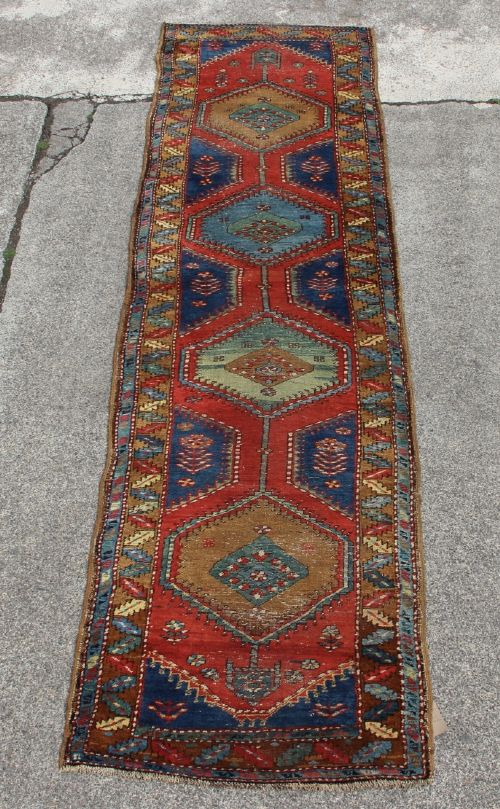
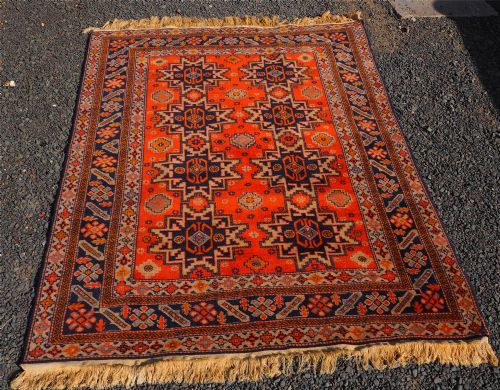
A caucasian style wool rug draws upon traditional tribal weaving traditions from the Caucasus and north-west Persia, taking form as area rugs, runners, and village carpets. These pieces typically display structured geometric medallions, stylized animals, or repeated floral elements across the field.
Most examples found in this inventory originate from the late nineteenth century through to the 1930s, spanning periods such as 1900, 1920, and the nineteenth century. Buyers encounter regional village and tribal naming conventions in the titles, ranging from Kazak and Shirvan to Karaja, Heriz, and Sarab.
Formats vary significantly, including long hallway runners, square area rugs, and smaller items like bag faces or prayer rugs. Each piece reflects the utilitarian output of nomadic and village weavers working within established local motifs.
How they were made
Construction relies primarily on wool piles knotted onto cotton or wool foundations, occasionally incorporating hand-spun wool and camel hair to add texture and natural tonal variation. The materials are worked by hand into knotted pile structures that provide resilience for heavy foot traffic.
Dyes and patterning reflect regional village techniques, utilising saturated hues on dark or ivory grounds to delineate distinct tribal borders and central medallions. The hand-knotted technique ensures each rug maintains structural integrity over decades of domestic use.
Listings span multiple decades from the nineteenth century into the 1930s, featuring materials such as hand-spun wool, camel hair, and cotton foundations.
What varies in quality
Quality in these textiles depends upon the precision of the knotting, the stability of the foundation, and the clarity of the geometric design. Tightly packed piles and well-balanced proportions separate finer weaving from coarser village production.
The choice of materials also influences character, particularly where hand-spun wool or camel hair creates subtle shifts in pile depth and colour absorption. Condition varies from crisp, untouched pile to distressed surfaces showing natural wear over time.
The Caucasian Style Wool Rug Glossary
- Kelleh
- A large format carpet, typically longer than a standard room-size rug, often utilised in narrow spaces or grand halls.
- Bag face
- The front panel of a nomadic storage bag, woven with dense pile and intricate patterning before being separated from the backing.
- Prayer rug
- A small rug featuring a mihrab or arch design indicating the direction of prayer, traditionally used for personal devotion.
- Runner
- A long, narrow carpet format designed specifically for hallways, corridors, or narrow passageways.
- Medallion
- A central ornamental motif set into the middle of the rug field, surrounded by secondary borders and corner spandrels.
Caucasian Style Wool Rug: Frequently Asked Questions
How do I clean an antique rug?
Vacuum gently without using a rotating brush roll to remove embedded grit from the wool pile. Professional specialist cleaning is recommended for deep washing to preserve natural dyes.
Avoid using domestic carpet shampoos or soaking the foundation, as excess moisture weakens old cotton or wool warps and risks colour bleed.
Where should I place a wool runner?
Place a runner in hallways, entryways, or narrow corridors where durable wool pile can withstand regular foot traffic. They also function well alongside kitchen islands or beside beds.
Use a suitable underlay beneath the rug to prevent slipping on hard floors and to reduce friction between the foundation and the floorboards.
What is a village rug?
A village rug is woven by independent artisans working in regional communities rather than large urban manufactories. These pieces display local tribal designs passed down through generations.
Designs often feature asymmetrical quirks and spontaneous colour changes that distinguish them from rigid, mass-produced workshop carpets.
How do I identify regional rug types?
Look to the specific geometric structures, border arrangements, and palette choices recorded in the title and description. Regions like Karaja, Sarab, and Shirvan each maintained distinct design vocabularies.
Comparing the knotting style and secondary motifs helps differentiate between Persian village work and Caucasian tribal weaving.