
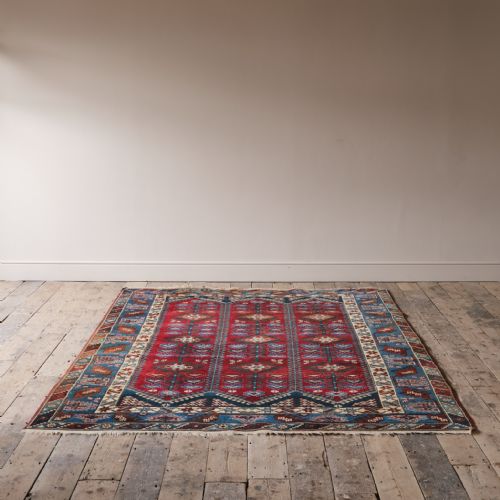
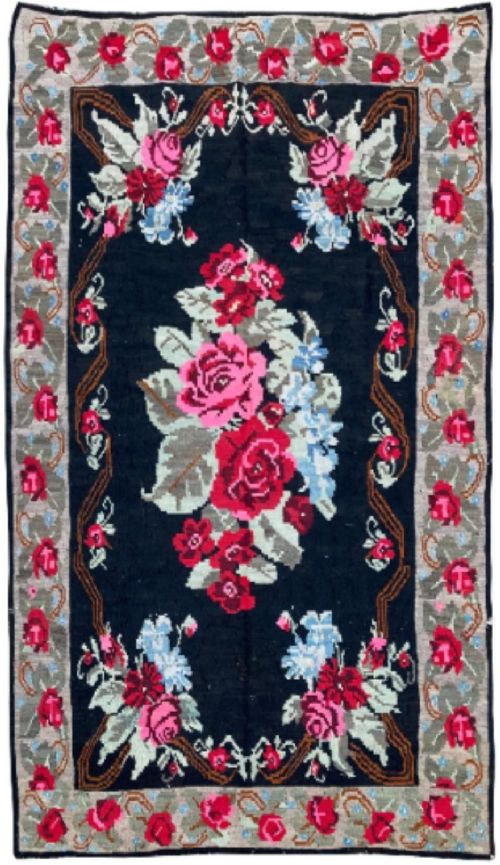
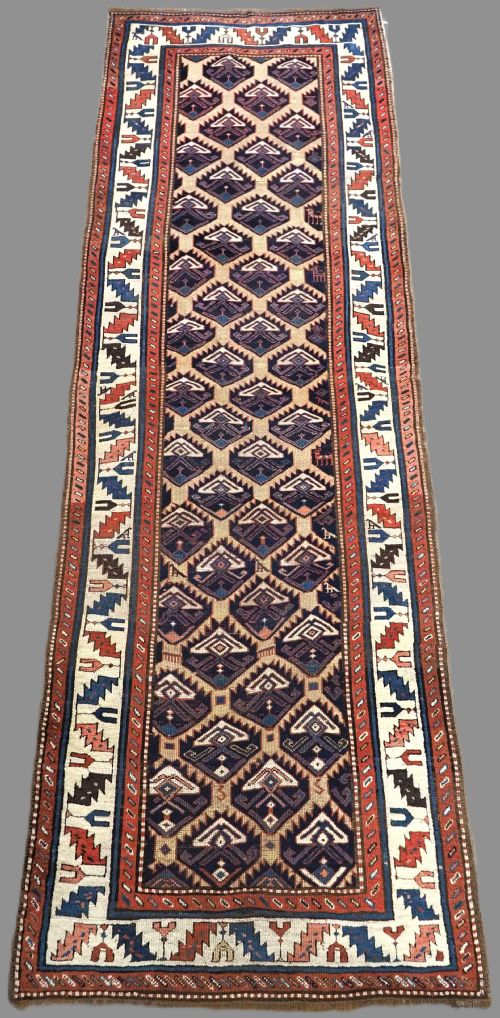
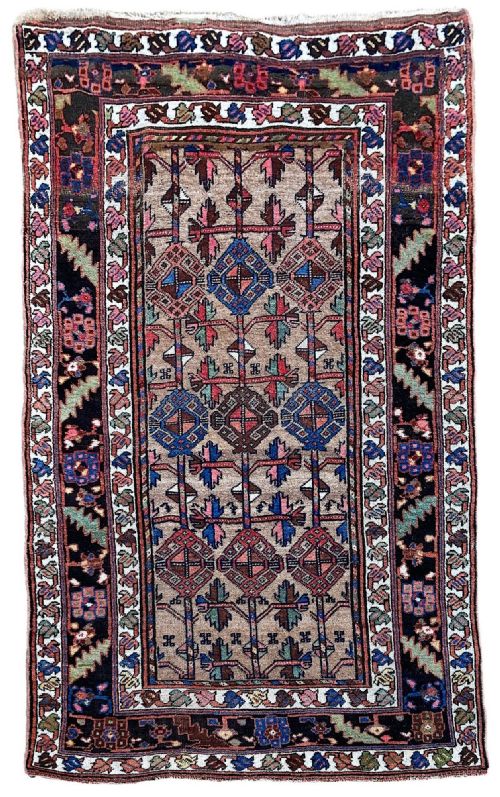

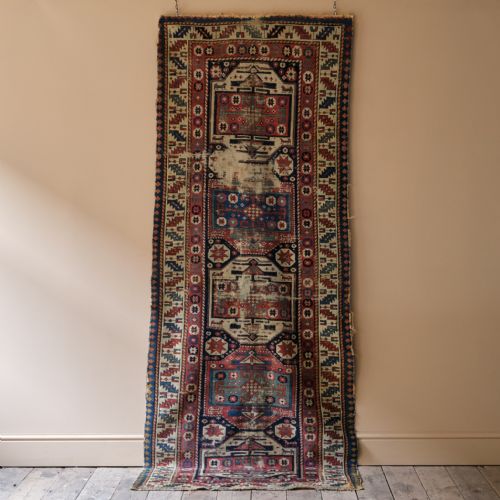
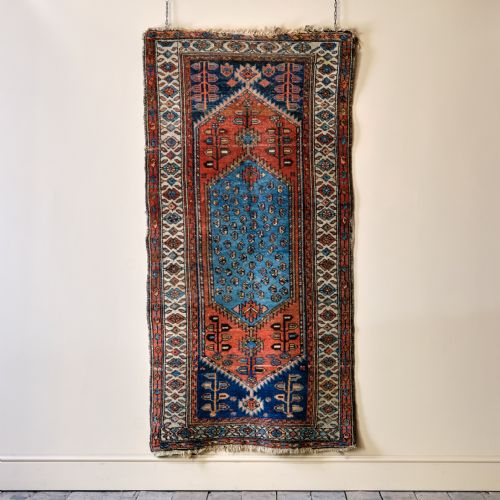


Caucasian Pattern Rug Runner
A caucasian pattern rug runner brings distinct tribal motifs and narrow proportions to long hallways.
Caucasian Pattern Rug Runner
A caucasian pattern rug runner is a long, narrow textile designed for corridors, hallways, and passage spaces. These pieces combine traditional regional weaving traditions with geometric patterns, often appearing in forms originating from the Caucasus alongside related tribal styles from Persia and Kurdistan.
Most examples found here date from the late nineteenth century through to the early decades of the twentieth century. They encompass both pile woven carpets and flat-woven kilims, executed in long formats suited to narrow domestic floors.
How they were made
Makers utilised hand-spun wool and cotton foundations, binding the materials through traditional hand-knotting and flat-weave construction techniques. These methods produced dense, durable floor coverings capable of withstanding heavy daily foot traffic.
Colour palettes rely upon natural dyes applied to wool fibres, creating rich hues that age gracefully over time. The structural integrity depends on tight knot density and sturdy selvages characteristic of tribal workshops.
Some weavers playfully incorporated slight geometric asymmetries into their repeating motifs, ensuring no two tribal carpets are identical.
What varies in quality
Quality separates along the fineness of the knotting and the complexity of the design layout. Superior examples display crisp geometry, balanced proportions, and careful handling of regional motifs like the boteh or lattice.
The choice and saturation of natural dyes also dictate overall distinction. Pieces with deep, harmonious colour saturation and well-preserved structural edges stand apart from simpler or more heavily worn counterparts.
The Caucasian Pattern Rug Runner Glossary
- Boteh
- A teardrop or almond-shaped motif representing a floral spray or cypress tree. This pattern appears frequently across regional runner designs.
- Kilim
- A flat-woven carpet produced without a pile. These textiles are lighter and feature sharp geometric colour transitions.
- Kazak
- A regional style originating from the Caucasus known for bold primary colours and strong geometric layouts. They typically display robust wool and distinctive tribal iconography.
- Runner
- A long, narrow carpet format tailored for corridors and stairs. Dimensions emphasise length over width to fit restricted floor spaces.
- Selvage
- The finished side edges of a rug that prevent the weave from unravelling. Secure side bindings indicate careful original construction.
Caucasian Pattern Rug Runner: Frequently Asked Questions
Where should I place a runner?
These long carpets suit hallways, corridors, and narrow entryways where linear floor space requires definition. Their proportions guide movement through a home while protecting timber or tiled floors from heavy wear.
Ensure you measure the corridor width and length carefully before selecting a piece, leaving a margin of exposed flooring around the edges for a balanced look.
How do I care for antique wool runners?
Regular gentle vacuuming without a rotating brush roll prevents dust accumulation within the wool pile. Professional cleaning by specialists in antique textiles preserves the natural dyes and fibres.
Keep the piece out of direct, prolonged sunlight to prevent fading of the natural colour palette over time. Using a quality underlay prevents slipping and cushions the foundation against hard floors.
How can I tell regional styles apart?
Regional types often declare themselves through specific colour combinations and geometric vocabularies. For instance, pieces from specific weaving centres utilise distinct motifs like stars, lattice grids, or repeated shrub patterns.
Examining the weave structure, wool texture, and edge finishing provides further clues to geographic origin. Tribal groups maintained traditional patterns that remained consistent across generations of makers.
Are these runners suitable for heavy traffic?
Hand-knotted wool construction inherently provides high durability for everyday domestic use. The dense pile absorbs foot traffic while maintaining its structural integrity across decades.
Routine rotation of the runner ensures even wear patterns across the entire length of the textile. Proper underlay support further reduces stress on the cotton and wool foundation.