




Caucasian Design Carpet
A caucasian design carpet brings centuries of nomadic storytelling and geometric mastery into a room through rich tribal motifs.
Caucasian Design Carpet
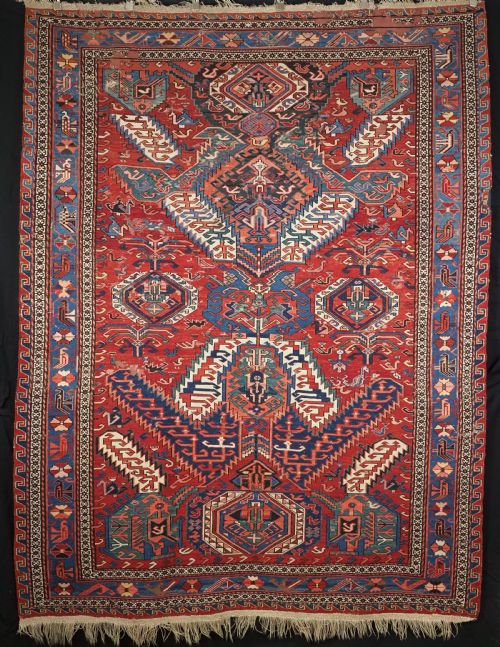
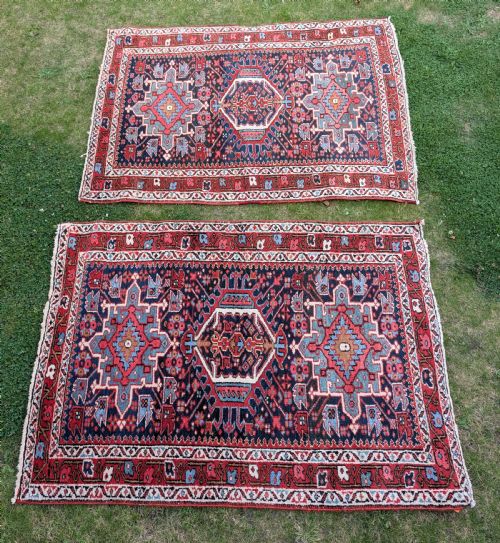
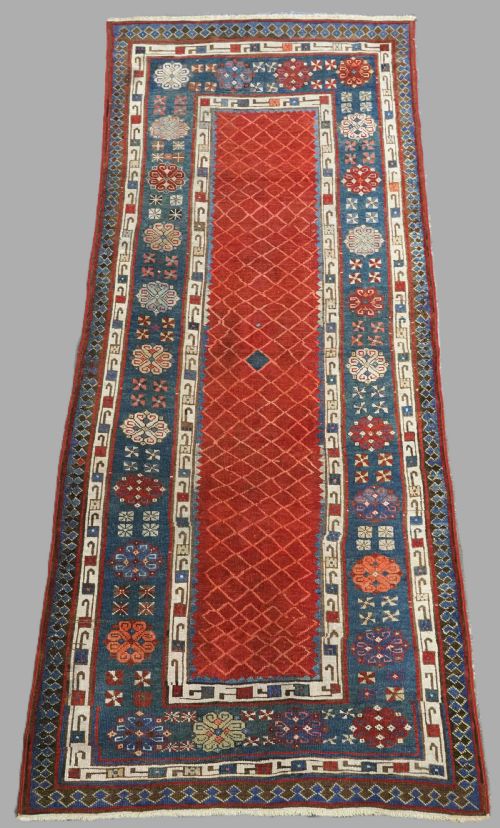
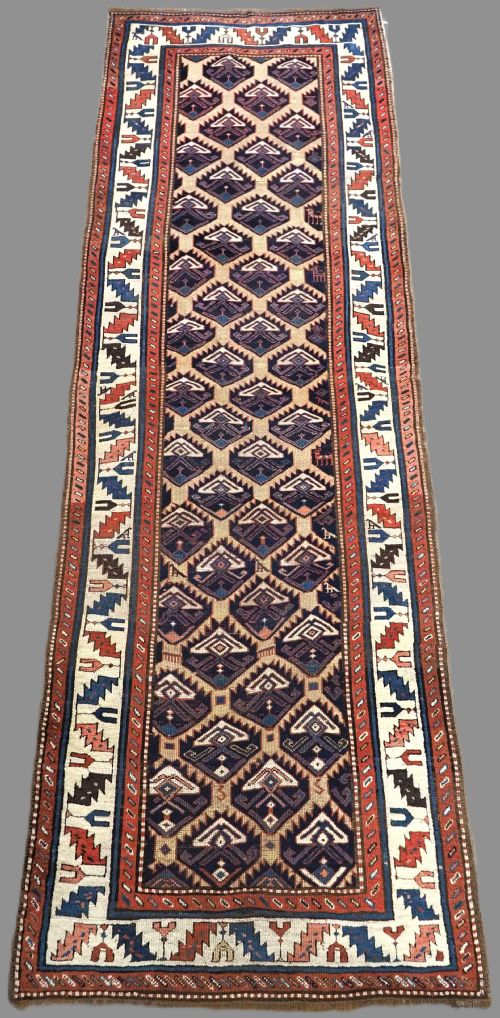
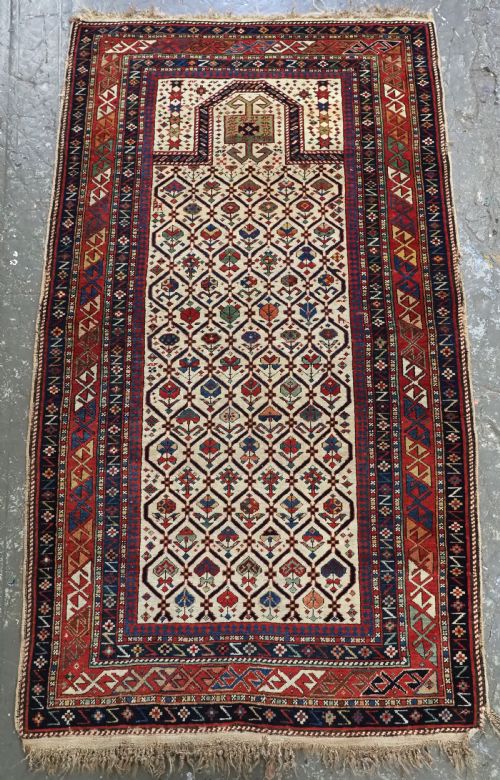
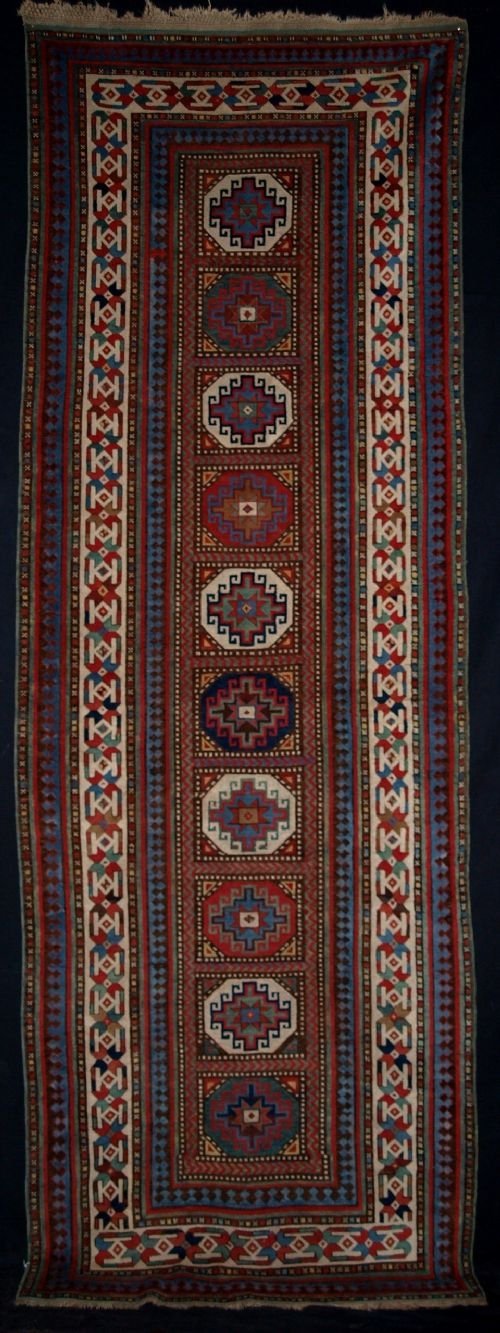
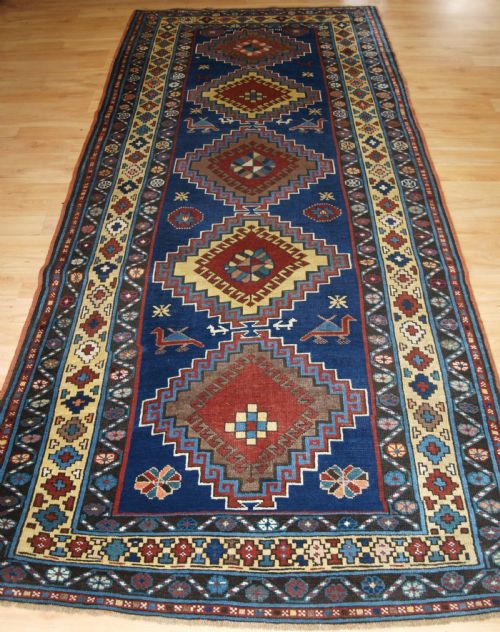
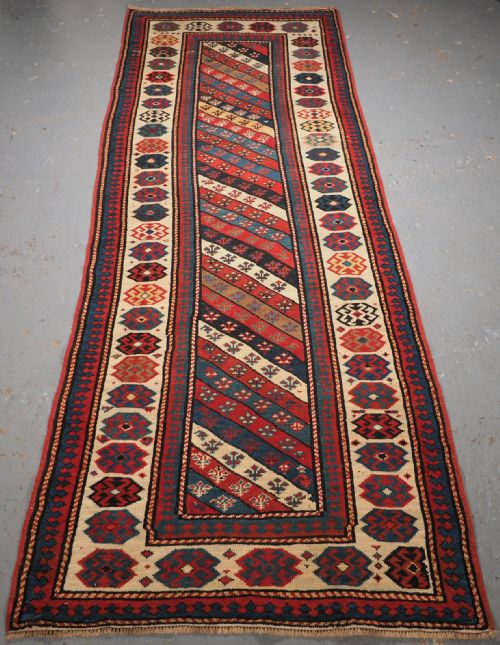
When you search for a caucasian design carpet, you enter a field defined by nineteenth-century tribal output from regions such as Gendje, Kazak, Dagestan, and Karabagh. The pieces on this page span runners, long rugs, prayer formats, and flatwoven kilims, each bearing the characteristic geometric medallions, lattice patterns, and animal motifs of the Caucasus.
Most examples date from the late nineteenth century to the early decades of the twentieth, reflecting the traditional output of Kurdish, Shahsavan, and Armenian weavers. Formats range from intimate bag faces to grand room-sized carpets, with narrow runner formats appearing frequently among the listings.
Materials and Construction
The pieces listed here rely primarily on hand-spun wool foundations and pile, combined with cotton elements in specific regional works. Weavers utilised natural vegetable dyes to achieve deep palettes, producing tones that mellow gracefully over decades of use.
Techniques vary from hand-knotted pile construction to flatwoven soumak and kilim structures. The careful manipulation of warp and weft threads creates the crisp geometric lines characteristic of these mountainous weaving traditions.
Caucasian Design Carpet Retail Price Guide 2026
Typical asking prices for caucasian design carpet among the pieces listed under this phrase on Sellingantiques today, from the lower quarter to the upper quarter. They describe what is for sale here now, not the wider market.
Listings feature pieces spanning from the 1850s through the 1930s, constructed with hand-spun wool, cotton, and natural vegetable dyes.
Assessing the Weaving
Quality in these carpets rests upon the precision of the knotting and the crispness of the geometric drawing. Finer pieces demonstrate a disciplined execution of complex motifs, such as dragons, memling guls, and detailed floral lattices, maintaining structural integrity across the entire field.
The depth and stability of the natural dye palette also dictate the standing of a piece. Examples that retain vibrant yet harmonious vegetable colours without muddying show superior material preparation and dye mastery by the maker.
The Caucasian Design Carpet Glossary
- Soumak
- A flatweaving technique that wraps supplementary weft threads around the warp to produce a textured, durable surface. This method creates characteristic chevron patterns on the reverse.
- Boteh
- A stylised almond or pear-shaped motif representing a shrub or floral spray. It appears frequently in various configurations across regional runner designs.
- Medallion
- A central ornamental design element placed in the field of the rug. These range from single hooked octagons to complex triple-lobbed configurations.
- Kilim
- A tapestry-woven carpet made without a pile. These pieces rely on tightly packed interlocked wefts to form flat geometric surfaces.
- Prayer rug
- A format featuring a distinct niche or mihrab design at one end. Historically, this indicated the direction of prayer for the user.
Caucasian Design Carpet: Frequently Asked Questions
Where were these carpets made?
These pieces originated in the Caucasus region, spanning historical production centres like Dagestan, Shirvan, and Karabagh. Tribal groups including the Shahsavan and Kurdish communities also contributed distinct regional styles.
Weavers utilised local materials and traditional motifs specific to their towns and nomadic camps, resulting in distinct visual dialects across the mountainous terrain.
How do I care for an antique rug?
Protect your textile by placing it in areas with moderate foot traffic and keeping it away from direct sunlight. Vacuum gently with the suction attachment rather than a rotating brush.
Rotate the piece periodically to ensure even wear across the foundation. Professional cleaning tailored to antique wool is recommended when necessary.
What is a runner format?
A runner is a long, narrow carpet designed specifically for hallways, corridors, and staircases. These pieces guide movement through domestic spaces while displaying repeating medallion or lattice patterns.
The elongated proportions allowed nineteenth-century weavers to showcase continuous sequences of boteh or floral motifs.
How do I identify regional designs?
Regional attribution relies on specific combinations of colour palettes, border arrangements, and central medallion structures. Dagestan works often feature crisp geometric lattices, while Karabagh pieces frequently display bolder floral elements.
Comparing knot counts and secondary wool colours helps connect a piece to its specific Caucasian workshop or tribal origin.