

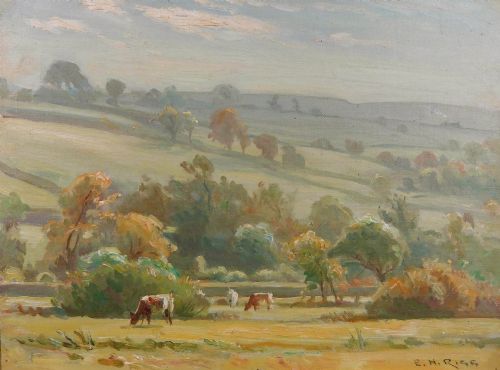
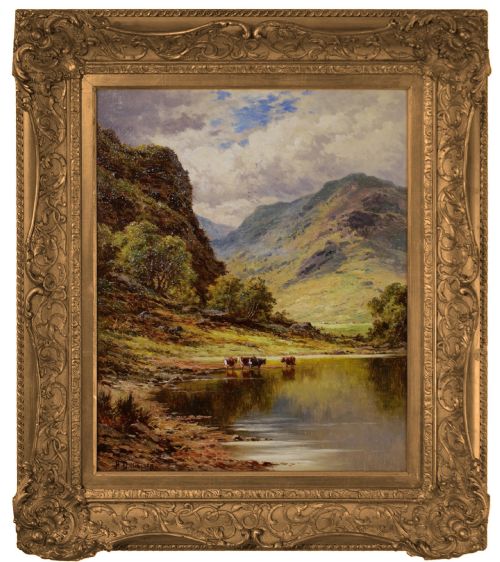
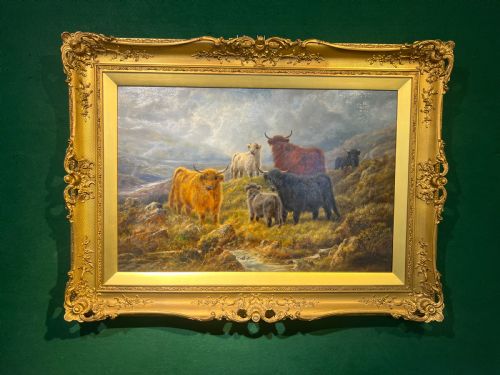
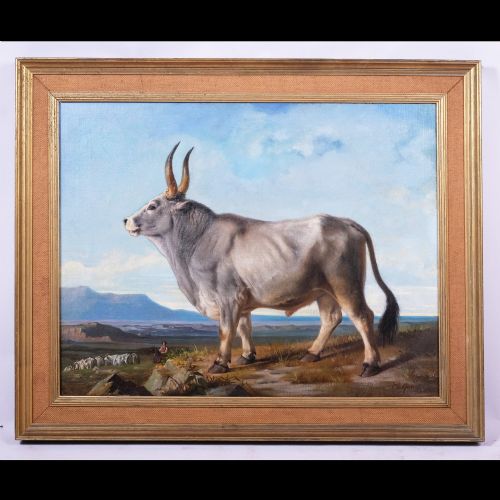
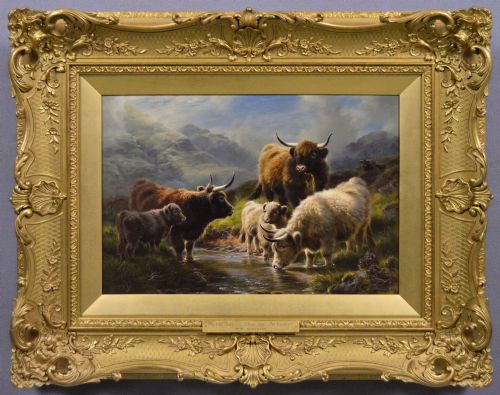
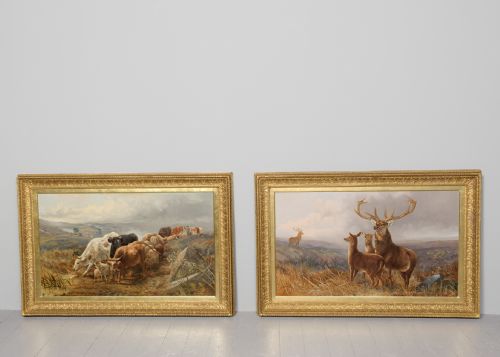
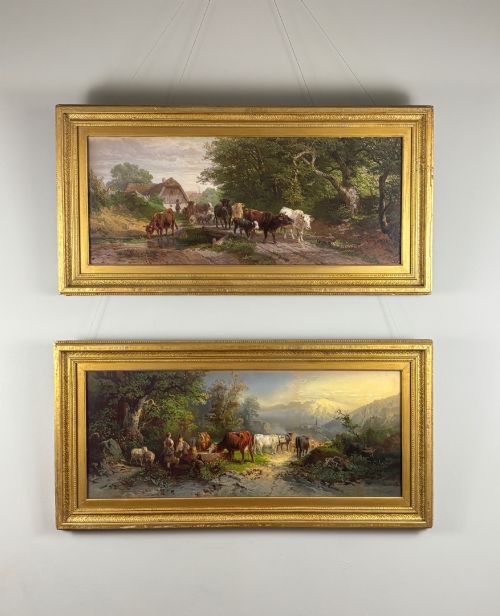
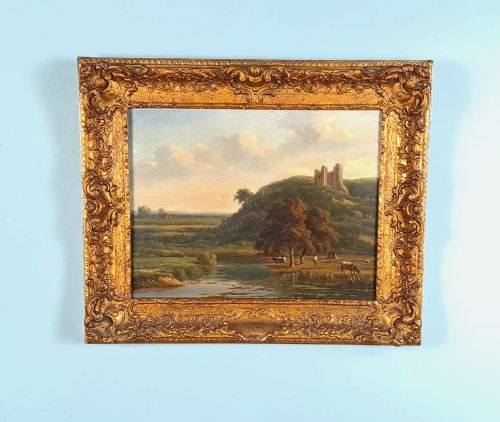
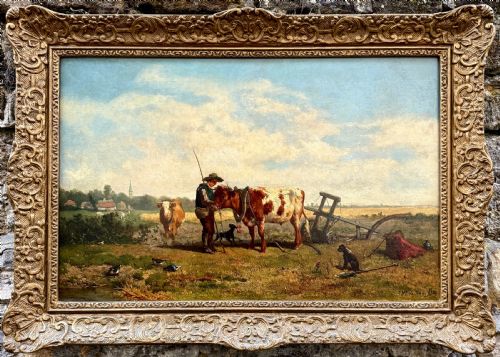


Cattle Landscape Oil Painting
These cattle landscape oil paintings capture pastoral and river scenes from the nineteenth and early twentieth centuries, bringing rural British and European countryside directly into your home.
What these paintings are
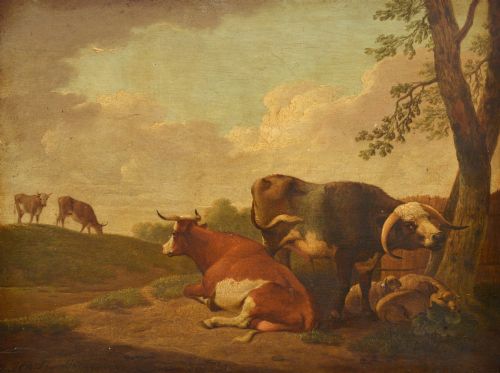
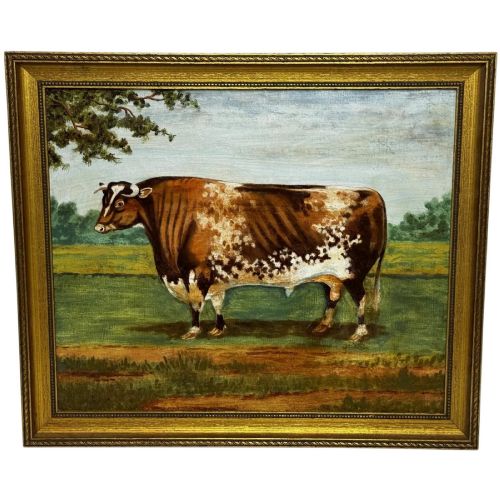
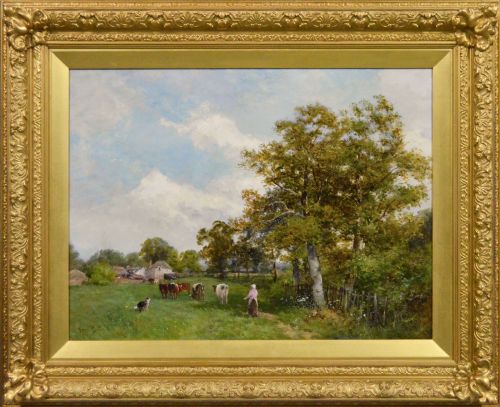
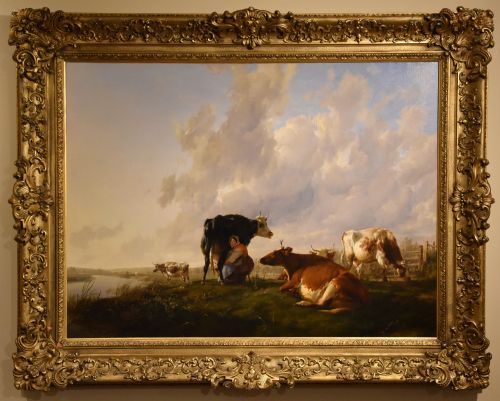
When you search for a cattle landscape oil painting, you encounter pastoral scenes dominated by herds grazing near rivers, streams, or Scottish lochs. These artworks range from mid-nineteenth-century British depictions to early twentieth-century interpretations, showing animals resting in rural landscapes.
The version you are most likely to meet on this page is a nineteenth-century or early twentieth-century canvas depicting cattle by water, often framed in giltwood. Works span Victorian pastoral styles, British impressionism, and continental European compositions.
Subjects stretch from English riverbanks and country lanes to dramatic Highland settings featuring mountains and abbey ruins. The cattle serve as focal points within broader topographical and romantic vistas painted by named artists and regional schools.
Materials and technique
Artists painted primarily with oil paint on stretched canvas, though surviving examples also utilise wood panels, boards, milk glass, and copper panels. Canvas laid onto board appears among the methods used to support older works.
Surviving pieces frequently retain their period frames constructed from gilt wood or carved giltwood, sometimes preserved under glass. The physical construction relies on traditional stretched linen or wooden supports suited to nineteenth-century studio practices.
Retail Price Guide 2026
Typical UK retail prices for cattle landscape oil painting, calculated from the Sellingantiques database of over a million retail prices indexed since 2003. This retail price guide relies exclusively on Sellingantiques data; no external sources or auction records are used, so the figures do not describe the wider market.
Listings feature works spanning the nineteenth and early twentieth centuries, executed in oil on canvas, board, and panel.
Variations in quality
The distinction between ordinary and exceptional works rests on the handling of light, atmosphere, and animal anatomy. Master painters render the texture of cattle hides and the subtle reflections of water with assured brushwork, whereas lesser examples rely on formulaic repetition.
The integrity of the original surface and the retention of a period carved giltwood frame significantly influence the standing of a piece. Finer works demonstrate careful composition where the cattle integrate harmoniously into the surrounding topography rather than appearing secondary to the landscape.
Henry H. Parker·George Vicat Cole·Thomas Baker·Owen Bowen·William Greaves·William Sidney Cooper·T H McKay·A Wallace·William H Watson·William Traies·Fredrik Borgen·Henry Cheadle·William E Tindall·William Samuel Jay·Robert Burrows·Alexander Hieronymus Bakhuyzen·Thomas Sidney Cooper·Julius Jacobus van de Sande Bakhuyzen·Alfred Augustus Glendening·Robert Fenson·Camille Magnus·Emma Von Boeckh·J Gibb·Jean-Baptiste Coene·Edmund Bristow
The Cattle Landscape Oil Painting Glossary
- Giltwood
- Wood that has been coated with gold leaf or a gold-coloured finish. This material is frequently found on the ornate frames enclosing nineteenth-century canvases.
- Pastoral
- A genre of art depicting rural life, shepherds, and grazing animals in an idealized countryside. These scenes emphasise peace and simplicity.
- Canvas
- A heavy woven fabric stretched over a wooden frame to form the primary support for oil paint. It remains the most common ground seen across these listings.
- Board
- A rigid flat panel used as a substitute for stretched canvas in smaller or sturdier paintings. Artists frequently painted directly onto wood or composition board.
- Impressionism
- A style of painting characterised by relatively small, thin yet visible brush strokes and an emphasis on accurate depiction of light. British variations appear in works from the early twentieth century.
Frequently Asked Questions
How do I date a cattle landscape?
Dating relies on stylistic clues, artist signatures, and framing materials. Nineteenth-century works often feature darker varnishes and heavier giltwood frames.
Later pieces from the early twentieth century show brighter palettes influenced by impressionism. Examining the canvas preparation on the reverse also aids verification.
Where should I hang an oil painting?
Display these works away from direct sunlight and damp environments to protect the oil paint and canvas. Stable indoor temperatures prevent the wooden stretcher bars from warping.
Ensure the wall can support the weight of the piece, particularly if it sits within a heavy carved giltwood frame.
How were these paintings originally displayed?
Victorian and Edwardian owners mounted these canvases in prominent reception rooms to project refined taste and an appreciation for the countryside. Ornate gilt frames elevated the status of the rural subject matter.
These artworks functioned as windows into tranquil pastoral retreats for urban homes.
What is the difference between panel and canvas?
Canvas offers flexibility and texture, allowing artists to create larger works supported by wooden stretchers. Panels made of wood, copper, or board provide a completely rigid surface.
Panel paintings often survive in smaller formats from the nineteenth century.