


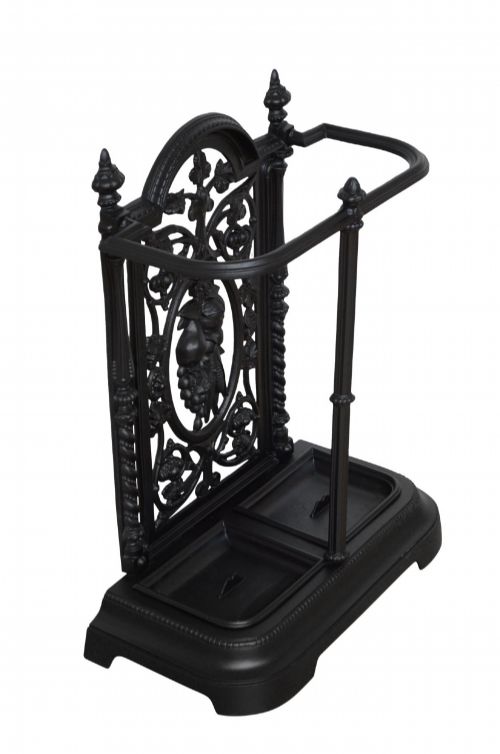
Cast Iron Umbrella Storage
Cast iron umbrella storage keeps hallways tidy with heavy metal frames designed to hold wet walking gear.
Cast Iron Umbrella Storage
Cast iron umbrella storage comprises heavy hallway fixtures designed to hold wet walking gear, sticks and parasols. When you search for cast iron umbrella storage, you encounter functional hall furniture dating from the Victorian and Edwardian eras through to the 1930s.
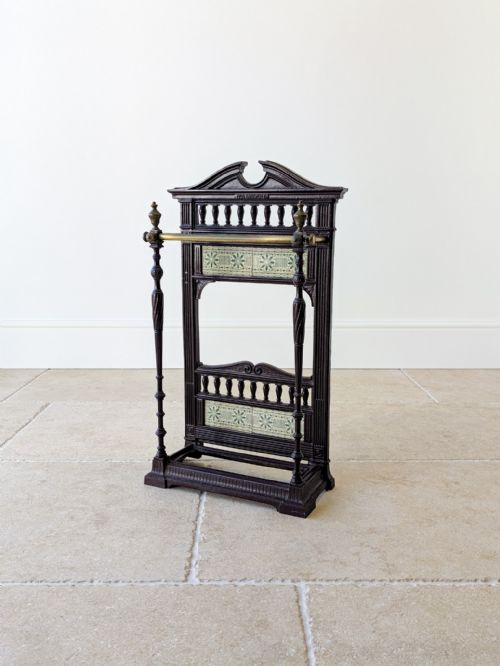
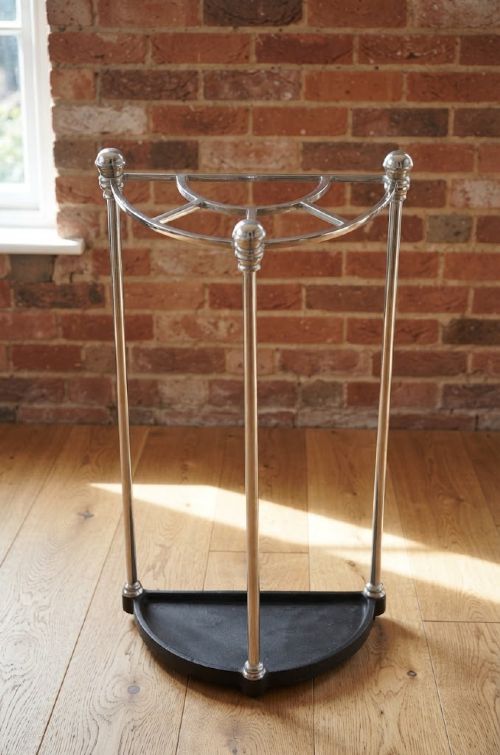
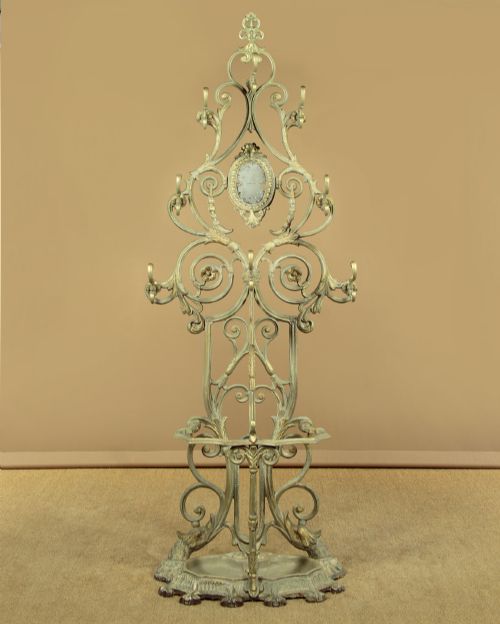
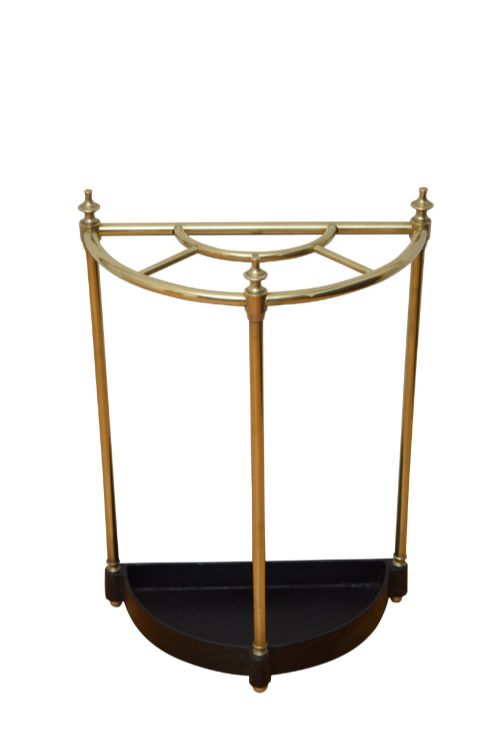
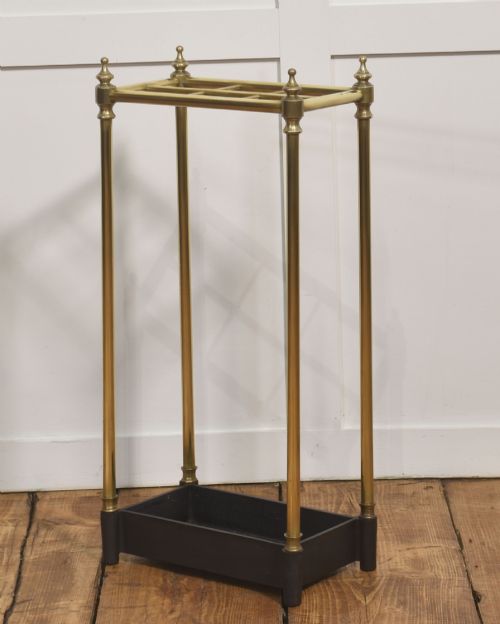
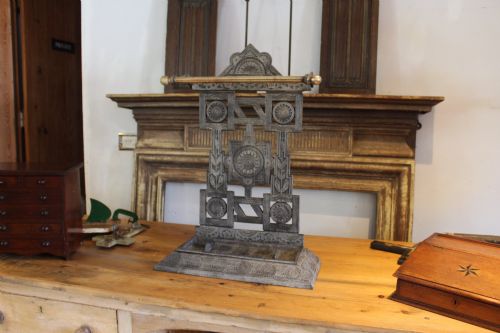
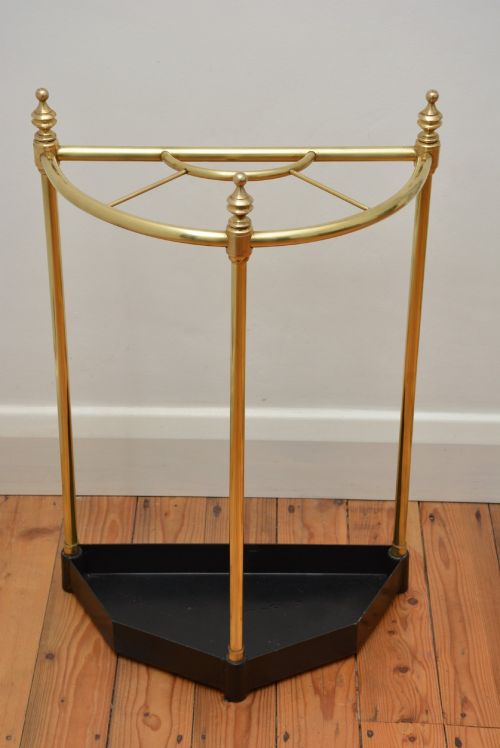
These pieces appear primarily as dedicated stick stands, demi-lune umbrella racks and larger hall stands incorporating coat hooks and mirrors. The most frequent examples span the Victorian period, often featuring open lattice patterns or naturalistic plant motifs designed to manage dripping water.
Makers such as Coalbrookdale, Thomas Jeckyll, A. Kenrick & Sons and Falkirk produced these utilitarian objects in iron, sometimes combining them with brass, steel and ceramic drip pans. They range from small corner units to large architectural hallway furnishings.
Materials and production methods
Foundries produced these items using sand casting techniques, pouring molten iron into moulds to create intricate openwork patterns, lattice grills and faux bamboo stems. This method allowed makers to achieve sharp geometric lines for Art Deco designs as well as fluid organic shapes for French Art Nouveau and Aesthetic Movement examples.
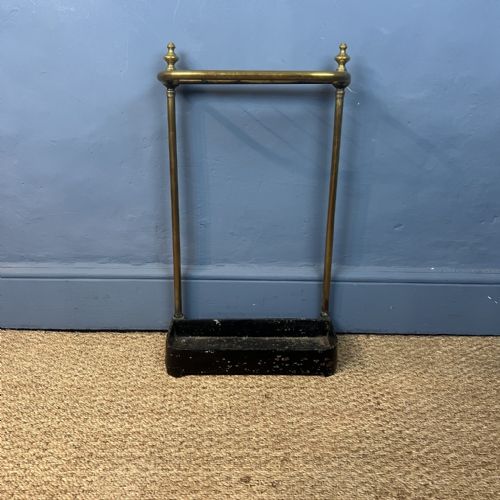
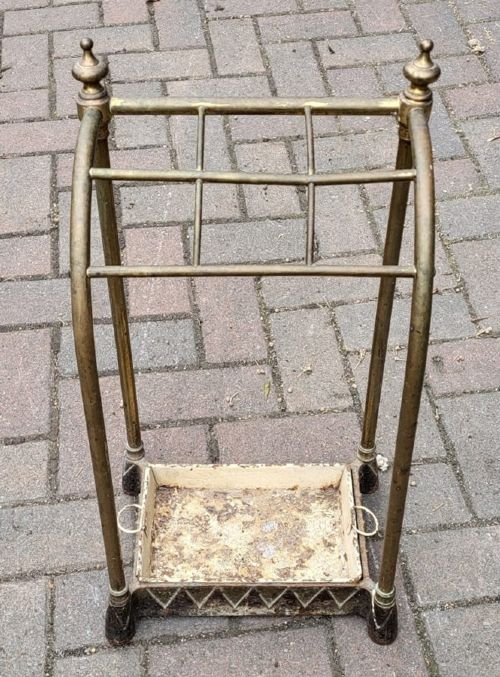
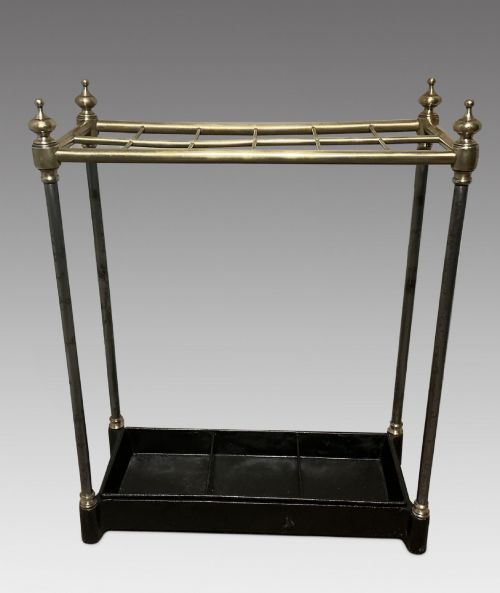
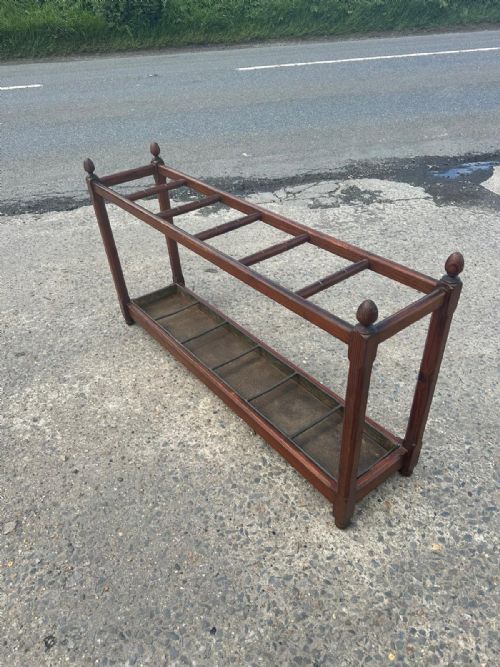
Makers combined cast iron with complementary metals and practical additions, pairing iron frames with brass rails, nickel plating, steel components and removable ceramic or metal drip pans at the base. Pitch pine and glass also appeared in composite hallway furniture from the late nineteenth century.
Listings feature cast iron alongside brass, ceramic, nickel plating, tubular metal, glass, steel and pitch pine.
Distinctions in construction and design
Quality rests in the crispness of the casting detail and the integrity of the structural joints. Pieces produced by documented foundries like Coalbrookdale or designers such as Thomas Jeckyll display sharper relief work and more considered proportions than unmarked utilitarian alternatives.
The survival of original drip pans and the condition of secondary materials like brass rails and nickel plating also separate standard utilitarian items from finer decorative hallway furnishings.
Coalbrookdale·Thomas Jeckyll·A. Kenrick & Sons·Falkirk·Shoolbred
The Cast Iron Umbrella Storage Glossary
- Demi-lune
- Half-moon shape designed to sit flush against a hallway wall. This profile allowed stands to occupy narrow corridors while still accommodating multiple walking sticks and umbrellas.
- Drip pan
- Removable tray positioned at the base of a stand to catch water from wet umbrellas. These pans were commonly manufactured in metal or ceramic to protect floor surfaces.
- Aesthetic Movement
- Design movement of the late nineteenth century prioritising visual beauty over narrative content. Pieces from this style often incorporate stylised Japanese motifs and linear metalwork.
- Gothic Revival
- Architectural and decorative style drawing inspiration from medieval forms. Stands in this grouping utilise pointed arches, trefoils and heavy structural ironwork.
Cast Iron Umbrella Storage: Frequently Asked Questions
Where should I place a cast iron umbrella stand?
These stands suit entrance halls, boot rooms and corridors where wet weather gear needs a designated drop-off point near the door.
Ensure the stand has its original drip pan or place a protective mat underneath to protect wooden flooring from residual moisture.
How do I clean a cast iron umbrella stand?
Dust the iron framework regularly with a soft brush and wipe metal surfaces with a dry cloth to prevent moisture buildup.
Avoid using harsh chemical cleaners that can strip historic painted finishes or damage secondary brass and nickel components.
Are all these stands made entirely of iron?
Many combine cast iron frames with brass rails, steel rods, nickel plating or pitch pine sections to create varied decorative effects.
Removable drip pans at the base were frequently fashioned from ceramics, zinc or brass to catch water without rusting the main structure.
How can I tell a Victorian stand from a 1930s one?
Victorian and Edwardian examples often feature ornate Gothic, Aesthetic Movement or naturalistic plant casting, whereas 1930s pieces lean towards clean Art Deco geometric lines.
Examining the complexity of the casting patterns and the presence of secondary metals helps indicate the period of manufacture.